



Find the two yields
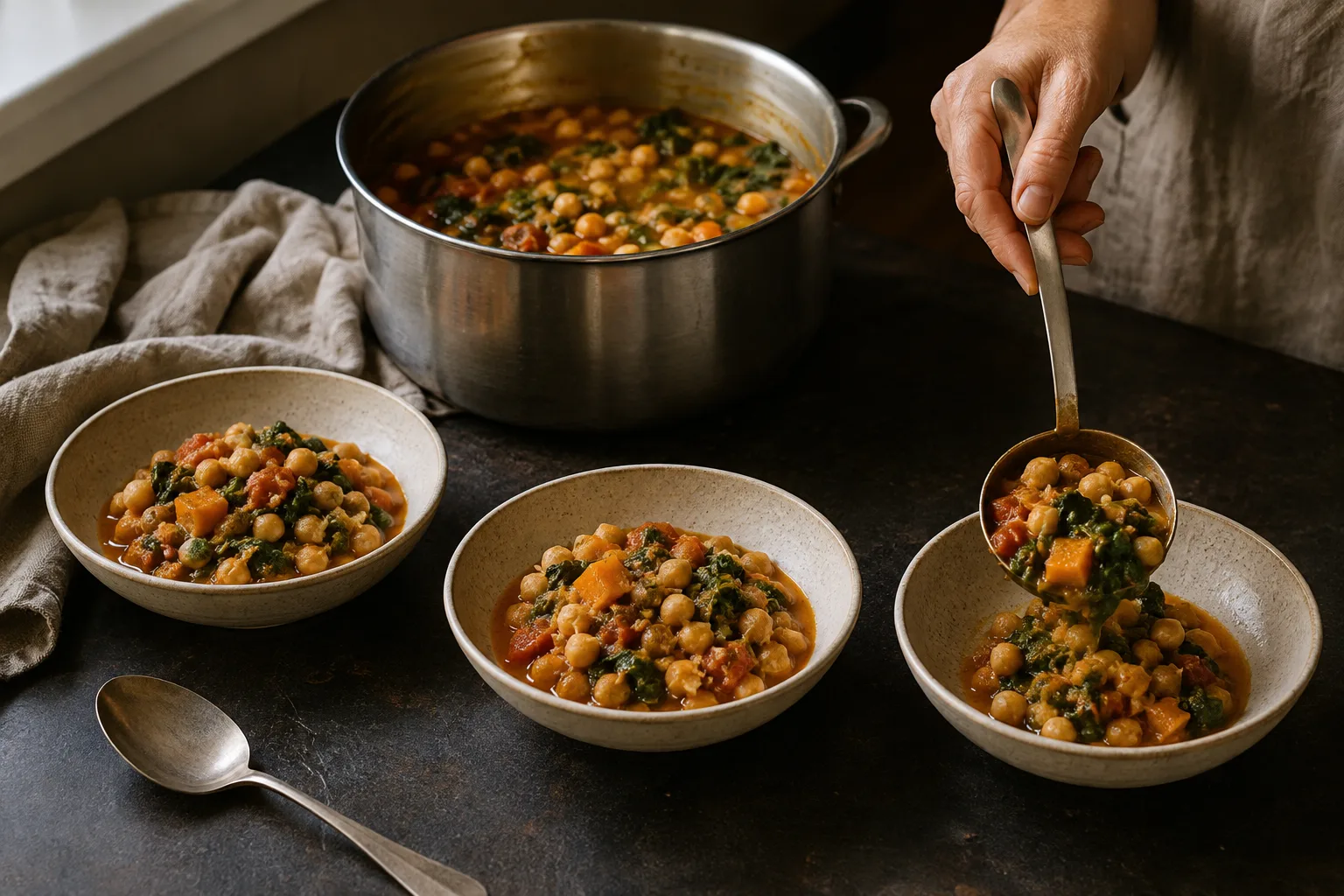
Find the recipe's original yield before touching the ingredients. If it makes six portions and you want four of the same kind, the factor is four divided by six: two-thirds. Six hundred grams of one ingredient becomes four hundred grams. The calculator below performs that arithmetic without asking you to round the factor first.
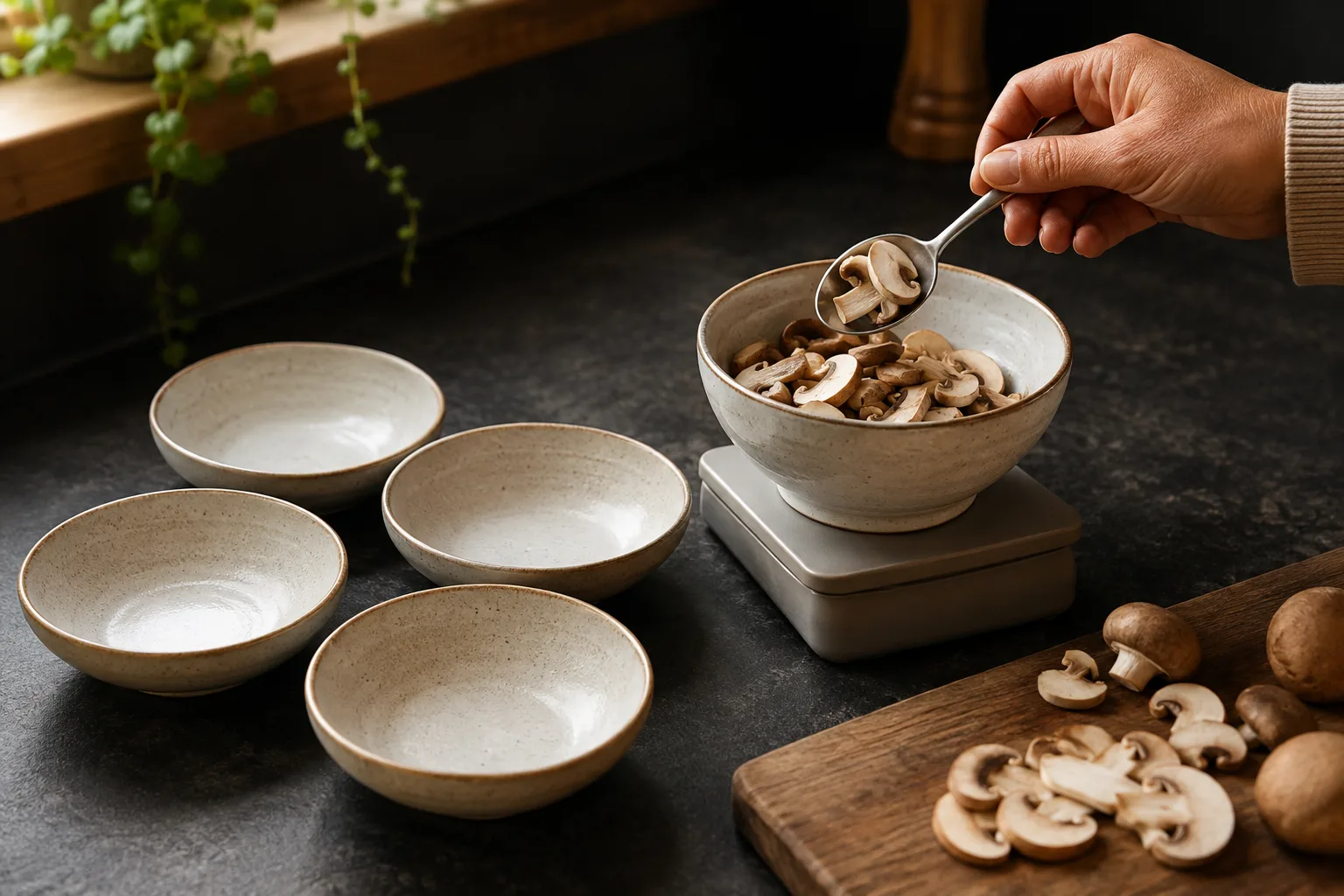
The two yields must describe the same thing. Four small tasting portions are not automatically comparable with six large dinner bowls. When you regularly make a recipe and know its actual household yield, use that consistent definition. The glossary page explains the difference between the amount a batch produces and the amount placed in one serving.
Enter one ingredient at a time. The initial quantities are a worked example, not a recommendation for how much anyone should eat. Replace them with your recipe's amounts. A blank or zero original yield cannot produce a meaningful scaling factor and is rejected.
Keep the form
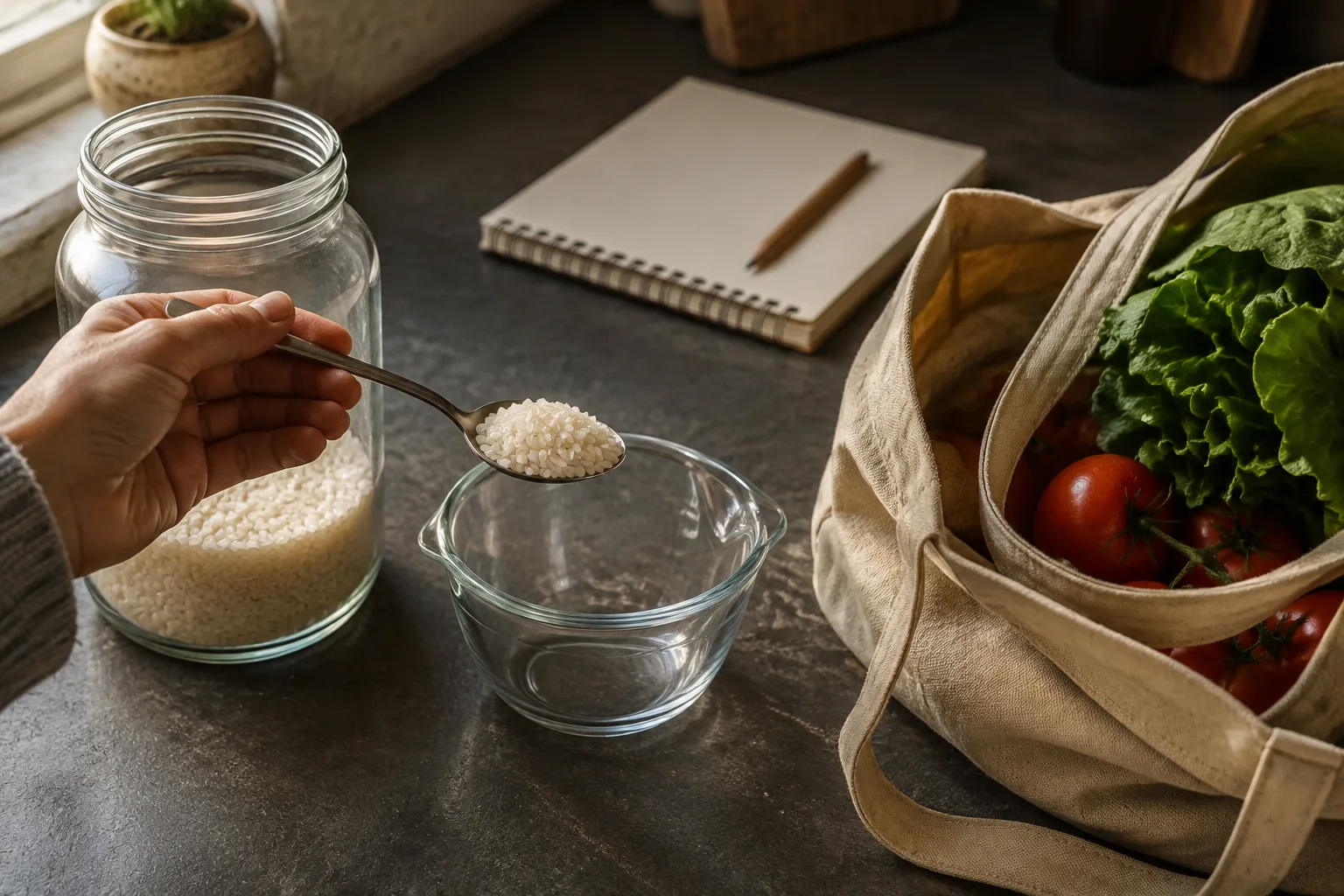
Keep the form stated in the recipe attached to every amount. If the recipe says dry rice, scale dry rice. If it says drained chickpeas, scale the drained amount. Changing the form while keeping the number is not recipe scaling; it adds another conversion that this tool does not estimate.
Use the same unit for the original and resulting ingredient quantity. The tool shows grams, so convert a kilogram amount to grams first. Do not enter cups as though they were grams. If a recipe only gives a volume, use a reliable ingredient-specific measurement or keep the calculation in that original volume rather than inventing a universal density.
The USDA buying guide distinguishes purchased quantities from prepared yields. Its institutional examples are not personal portion advice, but the distinction is useful in a home kitchen: trimming, draining and cooking can change the amount available. Resolve that distinction before moving the scaled result to the shopping list.
Keep the method separate
Keep the timer separate from the ingredient factor. A larger quantity may need more batches, another pan or a different method; a smaller quantity may behave differently in the original cookware. Follow the recipe's actual instructions and relevant doneness and safety checks so the changed amount still leads to a properly cooked meal.
Be especially careful with recipes whose structure depends on precise ratios, mixing, evaporation or baking conditions. The arithmetic can still describe a changed quantity without establishing that the finished recipe will work. When a recipe supplies tested smaller or larger versions, those instructions are more informative than an amount-only calculator.
If the scaled result would crowd your pan or exceed a container, split the preparation into batches you know work or choose an appropriate tested recipe. Use the batch count below to organise the cooking. Pan capacity, leavening adjustments and safe cooking endpoints still need the recipe's method, not another multiplication.
Carry the amount forward
Write the scaled amount beside the ingredient in your recipe notes, including its form and unit. Then repeat for the other ingredients that can be adjusted in the same way. Keep a note of the yield you intended so that a later reader does not mistake the changed amounts for the original recipe.
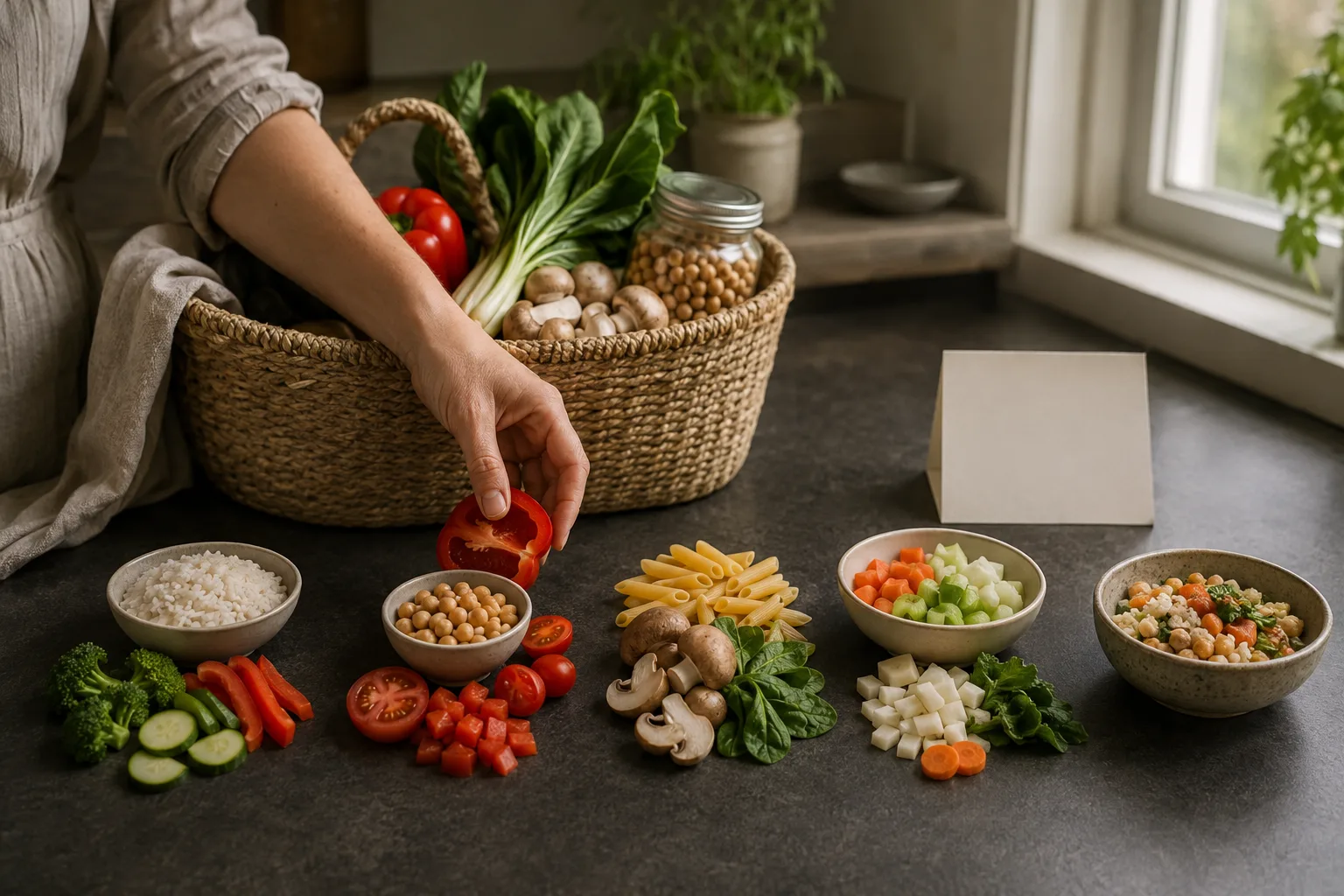
Take those adjusted quantities to the shopping-list guide. There, matching ingredients from several recipes are added before usable stock is subtracted once. Do not subtract the cupboard contents from every scaled recipe separately: one packet cannot satisfy the same purchase gap several times.
If the number of people changes again, return to the original recipe and calculate a fresh factor. Repeatedly scaling rounded amounts adds avoidable rounding differences. Keep a sensible measurement precision for your equipment rather than treating every decimal place as something the kitchen must reproduce.