



Batch and portion
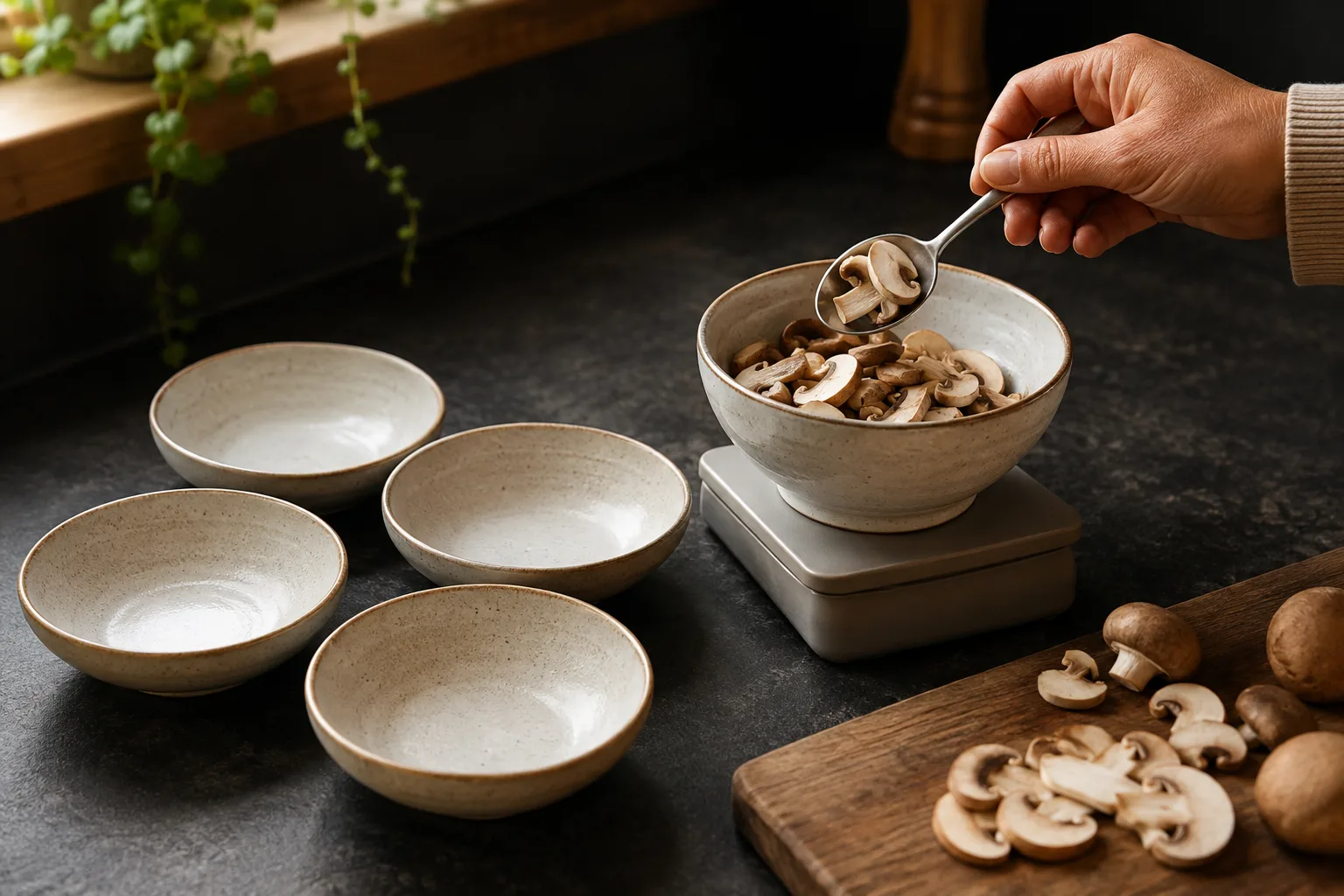
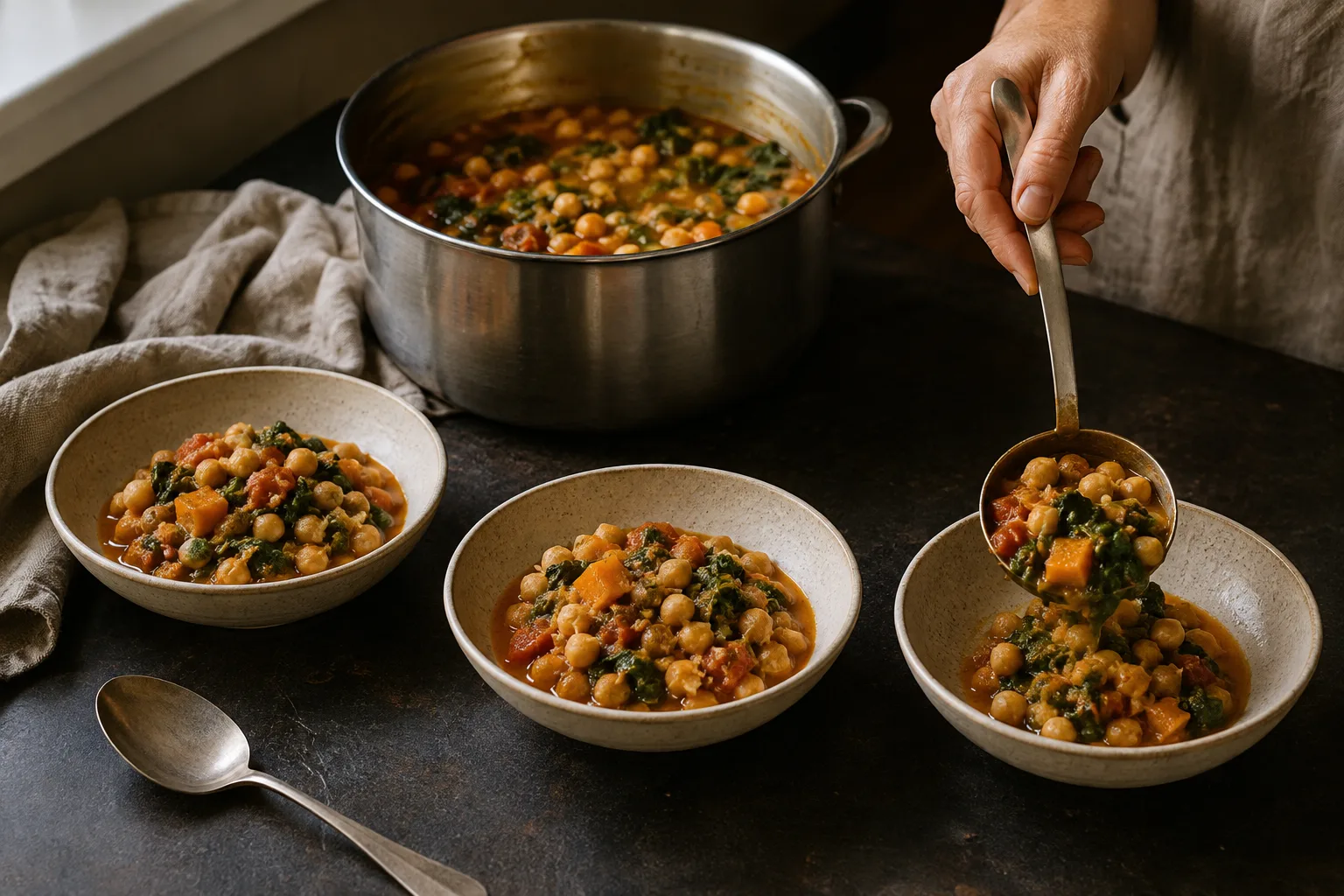
A recipe that produces twelve rolls has a count-based yield. A soup described as two litres has a volume-based yield. 'Serves four' is useful only when the intended serving size is understood. Four small bowls and four large bowls are the same count but different amounts of food.
When scaling, compare like with like. Wanting eight rolls from a twelve-roll recipe gives a factor of eight divided by twelve. Do not use the number of people as though it were automatically the same as the recipe's portion count; decide what amount you actually intend to serve.
Preparation yield
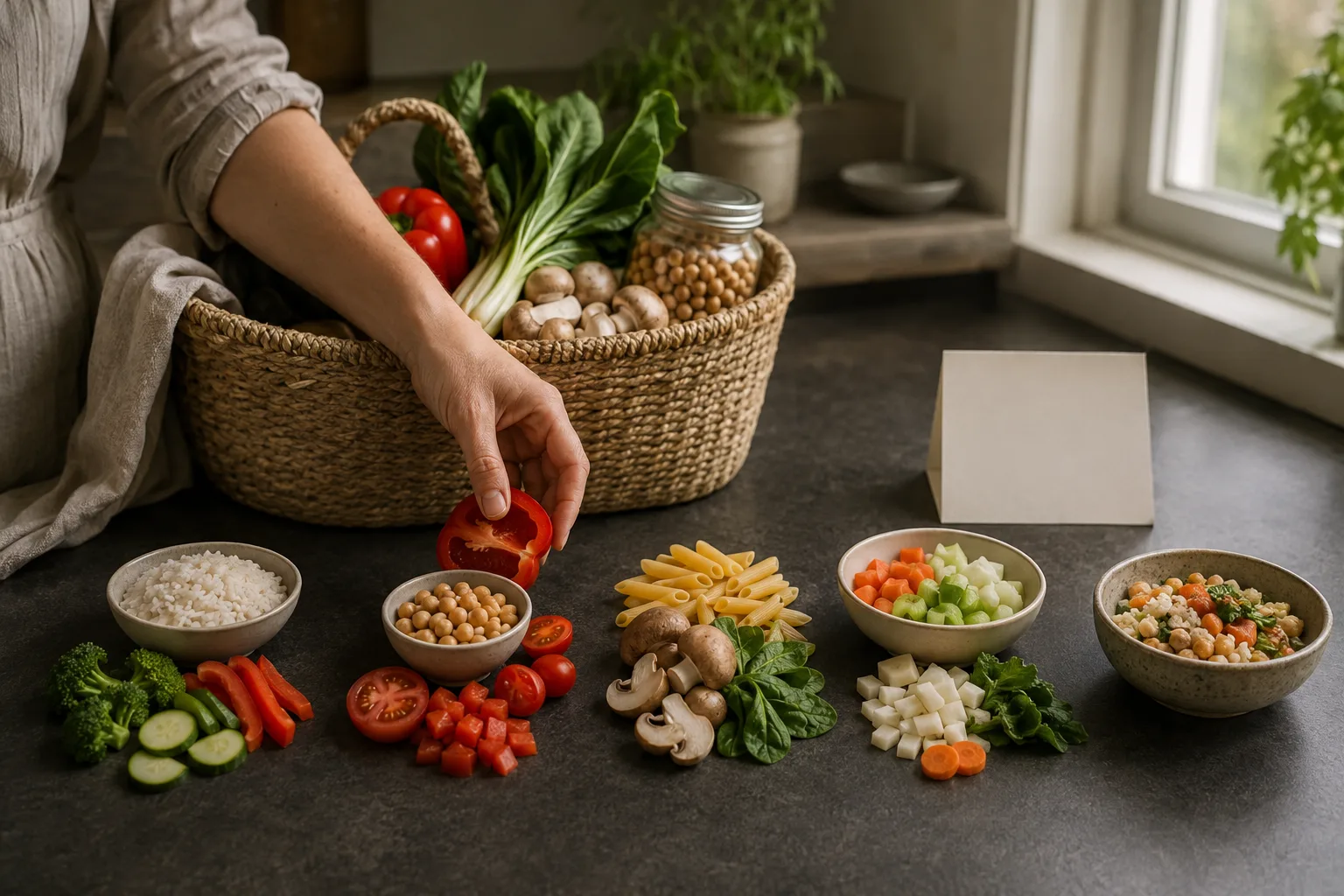
Preparation yield concerns what remains or becomes available after a food is prepared. A whole vegetable and its trimmed usable part can have different weights. A can's total contents and its drained beans can also differ. Cooked and uncooked quantities are not interchangeable simply because they name the same ingredient.
USDA's buying guide uses yield information to connect purchased food with prepared quantities. Its food-service tables have their own setting and assumptions. In your recipe, retain the stated form and unit, or use an appropriate measured conversion; do not invent a loss or expansion factor.
Use the definition
Read the recipe yield first, scale its ingredients second, combine the recipe needs third, and subtract usable stock before shopping. Return to the step you need using the links above. Keeping the batch and the serving distinct gives the calculation a clear starting point without treating a printed portion count as a dietary requirement.