



Weigh the recipe first
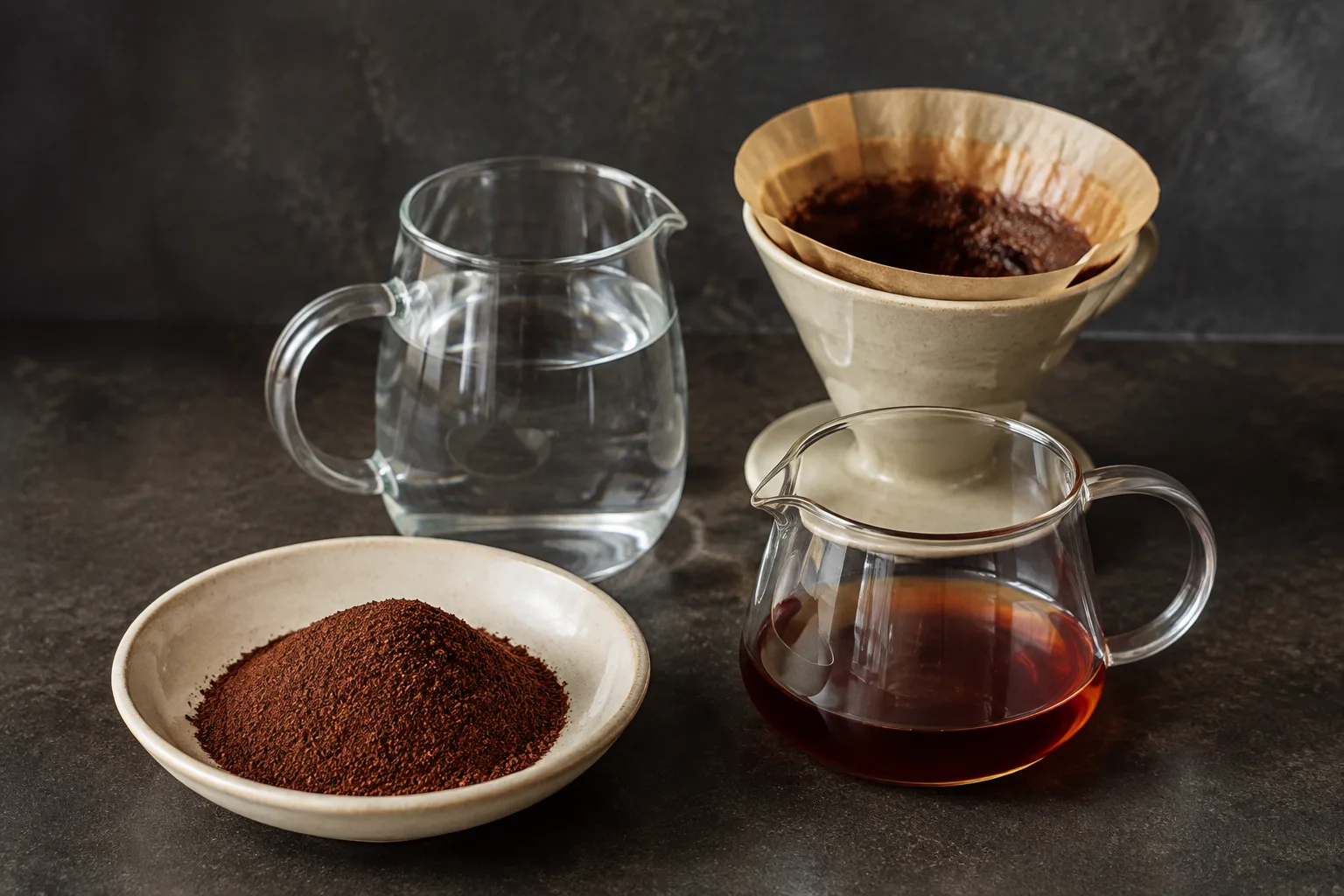
The bag is new, yesterday's cup tasted thin, and the first temptation is to add another spoonful. Before doing that, give the recipe two numbers you can return to: dry coffee and brewing water. A spoonful can vary with the spoon and how it is filled; a recorded mass gives tomorrow's comparison a clearer starting point.
Here, 1:16 means one gram of coffee for sixteen grams of water added during brewing. It is a working example, not a claim that this is the correct ratio for every bean or brewer. If your roaster supplies a method you enjoy, enter its ratio instead. With 300 g water at 1:16, the calculation gives 18.75 g coffee.
Use the calculator before grinding so the dose is deliberate. Its water field is the amount you plan to put through the coffee, not the amount your favourite mug holds. If you need a particular quantity of finished drink, first observe how much your own setup collects from a known recipe; do not quietly treat those two quantities as equal.
Read a recipe you already like
A good existing recipe is a more useful reference than an unfamiliar target chosen only because it looks precise. Enter the dry dose and the brewing water you actually used. An 18 g dose with 300 g water is approximately 1:16.667. Written the other way round, the same recipe uses 60 g coffee per kilogram of brewing water.
The direction matters. A note saying 16:1 without naming its ingredients can be read backwards. Keep coffee first when using the 1:x notation on these pages, and keep the water in grams. A ratio is dimensionless only when the two masses use matching units; mixing grams with a mug count does not produce the same comparison.
You need not weigh every dose to three decimal places because the calculator displays them. Round only as sensibly as the equipment allows, then record the amount you used. If the scale reads whole grams, a claim that the recipe contained exactly 18.75 g would describe a calculation rather than the measurement in your kitchen.
Choose one change you can follow
Suppose the current recipe is 20 g coffee with 300 g water. A second recipe of 20 g with 340 g changes the input ratio from 1:15 to 1:17. That is a clear record. If you also change the bean, grinder setting, filter and pouring method, the next cup may be different, but it will be difficult to say which change mattered.
Keep a short note rather than building a burdensome log. Record the recipe, the one deliberate adjustment and what you noticed. Words such as lighter, fuller or more drying are useful when they describe your comparison, not when they become a universal diagnosis. Taste the drinks at a comparable stage rather than judging one immediately and the other much later.
If the second cup is less enjoyable, return to the original recipe before making another deliberate adjustment. A disappointing comparison can still tell you something. The purpose is to find a repeatable preference, not to keep moving every variable until a number happens to land in a fashionable range.
A ratio does not measure strength
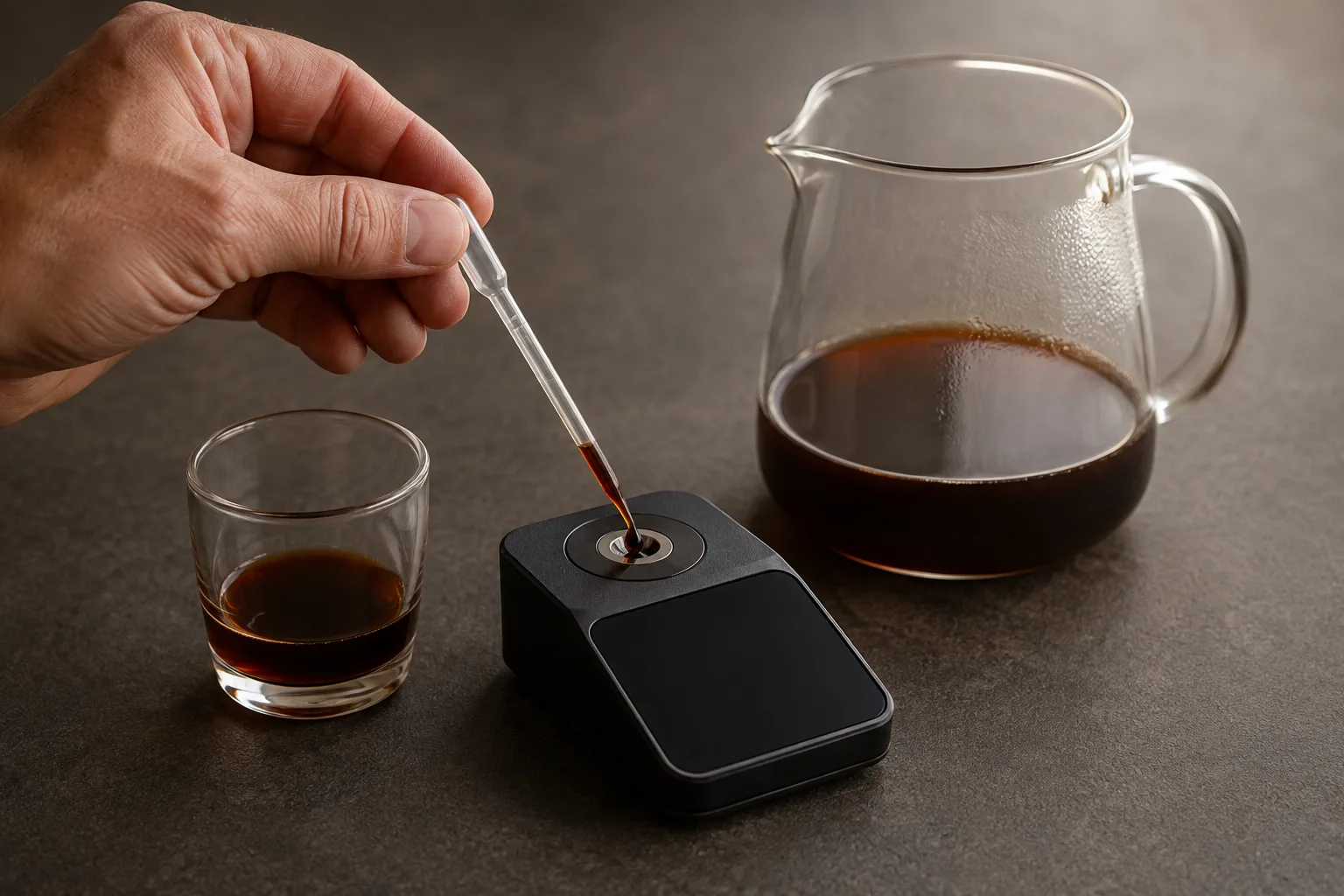
The recipe records what went in. Strength describes the concentration of dissolved material in the drink. Extraction asks a different question about the coffee material recovered from the dry dose. Those distinctions explain why a ratio calculation cannot replace a measurement of the resulting beverage.
For example, two brews can begin with the same dose and water yet finish with different collected amounts or measured concentrations. The ratio calculator has no information about those outcomes. It should not turn a familiar recipe into a fabricated TDS percentage, and it certainly cannot calculate caffeine from that ratio.
The strength guide introduces the measurements needed for the next calculation. There is no requirement to buy measuring equipment to enjoy or repeat a recipe. If you do not have appropriate measured inputs, stay with mass, method and careful tasting rather than entering a guessed percentage to make an advanced tool produce an answer.
Keep the collected amount separate
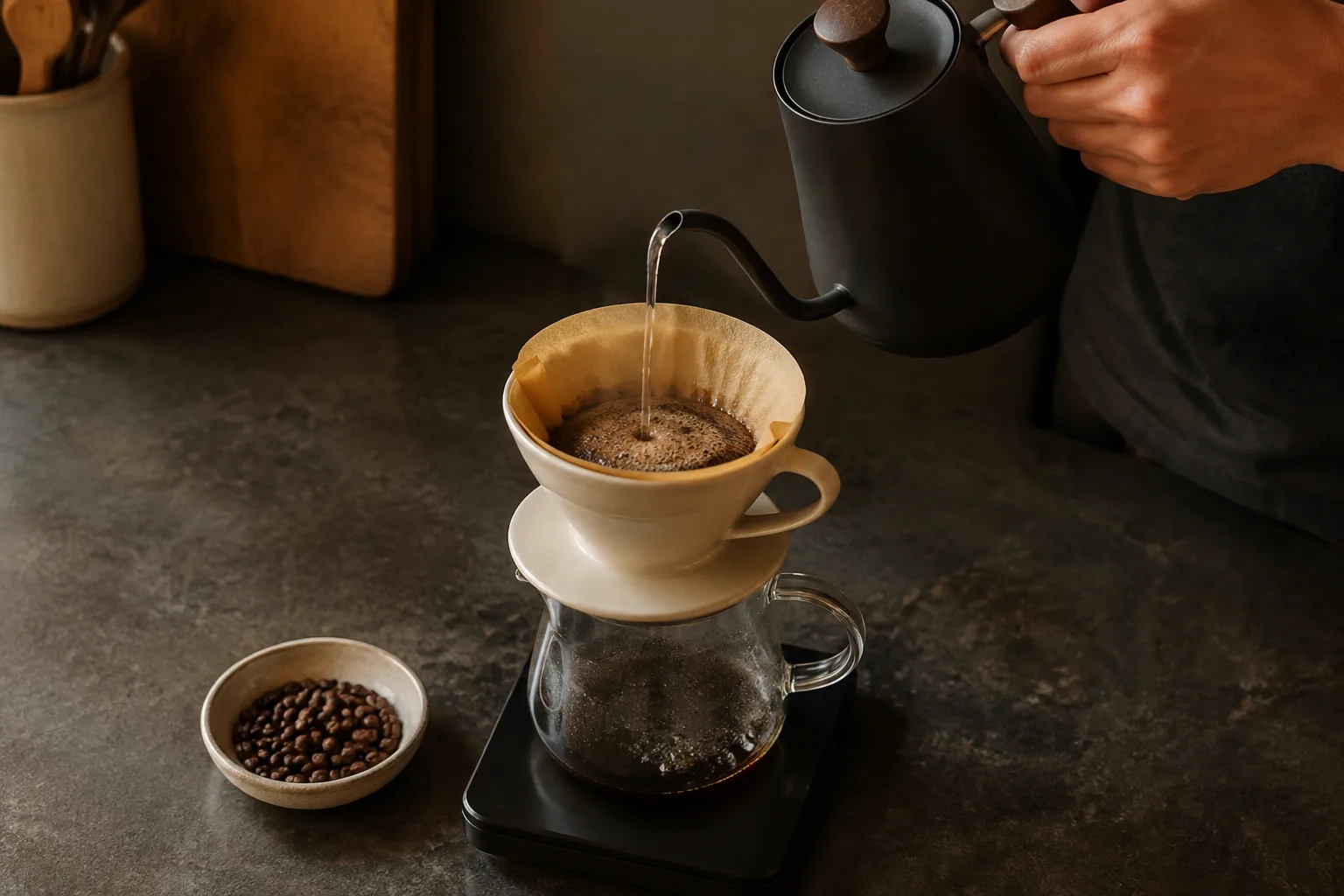
The amount poured into a brewer is not automatically the amount collected in its server. Liquid can remain with the wet grounds and filter; the practical result also depends on the setup and handling. Weigh the collected drink when a calculation asks for beverage mass instead of borrowing the water number from the recipe.
Use the same stopping point when comparing batches. If one server is weighed while the dripper is still draining and another is weighed after it is removed, the two records describe different stages. Consistency does not require an elaborate ritual: a short description of when the measurement was taken is enough to make it interpretable.
Do not transfer a calculation for collected filter coffee directly to a cafetière or another full-immersion system. The liquid remaining among the grounds changes what the measurement represents. A number can be mathematically tidy while counting only part of the physical system; knowing which part it counts is the useful detail.
Let preference remain a preference
A target can help describe a comparison without deciding whether you should enjoy it. Research on drip coffee has identified different preference groups, which is a good reason not to treat one central point on a brewing chart as a universal verdict. A measurement and a personal judgement do different jobs.
If a cup seems too intense, first decide what you mean by that description. Are you noticing concentration, a drying sensation, an aroma or simply more flavour than you want at that moment? The answer affects whether a small dilution trial is informative or whether you would prefer to revisit the recipe.
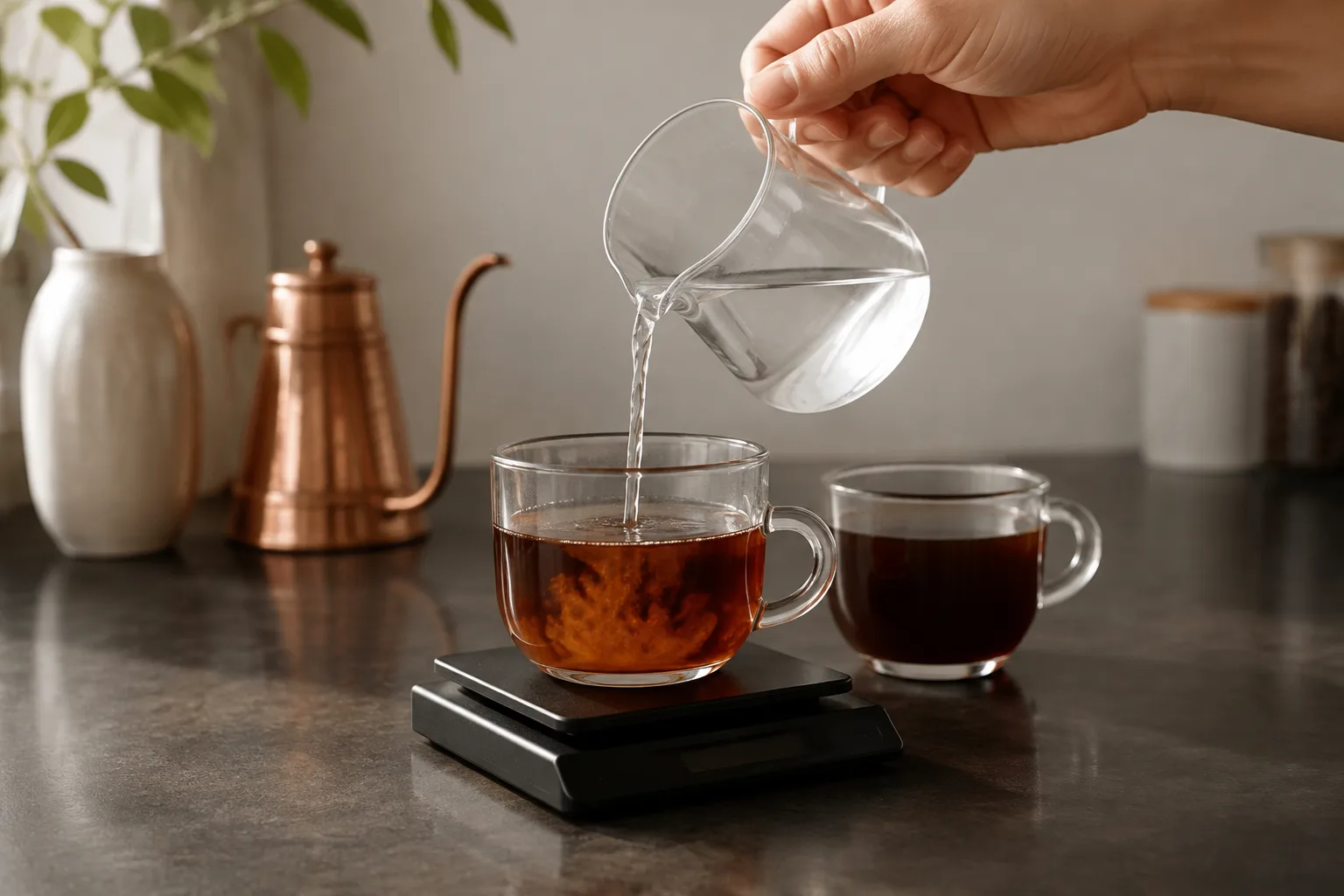
A little added water changes the mixture after brewing; it does not repeat the earlier extraction or selectively remove a flavour. The dilution guide lets you calculate the concentration change when a measured TDS is available. Without it, an ordinary tasting trial can still guide preference, but it should not be labelled a measured strength result.
Price the dose you actually use
Changing the dose changes how quickly a bag is used. The useful comparison is the coffee cost for your actual recipe, not a vague claim that one bag is cheap or expensive. Enter the bag's coffee mass, its price in your currency and the dose for one brew. The tool keeps those inputs separate from energy, filters and other costs.
A 250 g bag priced at 12, used at 18 g per brew, allocates about 0.86 of that currency to each dose. It contains thirteen complete doses with 16 g remaining. That remainder is still coffee: decide how it will be used rather than counting it as either a full extra brew or automatic waste.
Compare bags in the same currency and with a dose that makes sense for the recipe. A lower price per brew does not establish better quality, and a larger bag is not automatically a better purchase. The calculation is most useful when it makes the actual trade-off visible before you change your routine.
Keep only the note you will use
A reusable note can be short: the coffee, dry dose, input water, brewer, grind setting where available and the one method detail you changed. Add a plain description of the result. A note you can read before the next brew is more useful than a long record you will never open again.
Record measurements as measurements and examples as examples. If you used a quick setup from a calculator, replace its sample values with your own before treating the result as your recipe. The buttons demonstrate the calculation; they do not know which coffee is on the counter.
When a term becomes the obstacle, use the coffee definitions and return to the same step. There is no benefit in memorising a technical abbreviation if the quantity it names remains unclear. The point of the vocabulary is to make your next comparison easier to understand.
Repeat once before scaling up
The arithmetic scales cleanly: double both dry dose and brewing water and the input ratio remains unchanged. The physical method may not scale so neatly. A larger batch can fit differently in the basket and follow a different pouring or draining pattern. Treat the preserved ratio as one useful condition, not a promise that every result stays the same.
Start with a repeatable amount suited to the brewer you have. If you increase it, keep the manufacturer's operating limits and a stable, heat-safe setup in view. A kitchen scale's capacity is also a real limit; it is not determined by the amount a calculator permits you to type.
When you can repeat a recipe you enjoy, the numbers have done their job. Move into measurement only when it answers a question you actually have. The next guide separates coffee strength from extraction estimates so that a more detailed comparison remains connected to the cup rather than to a score.