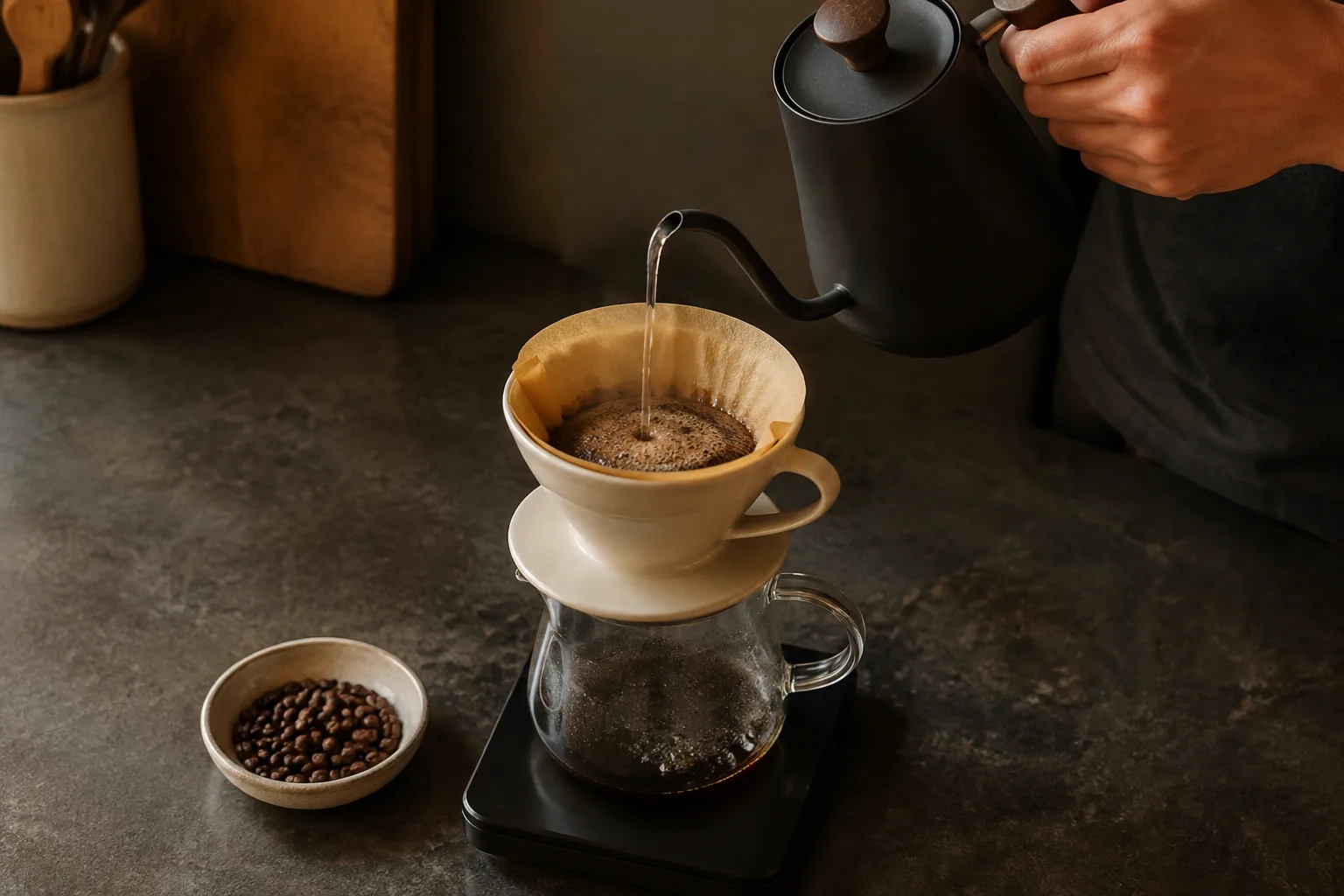




Dose and brewing water
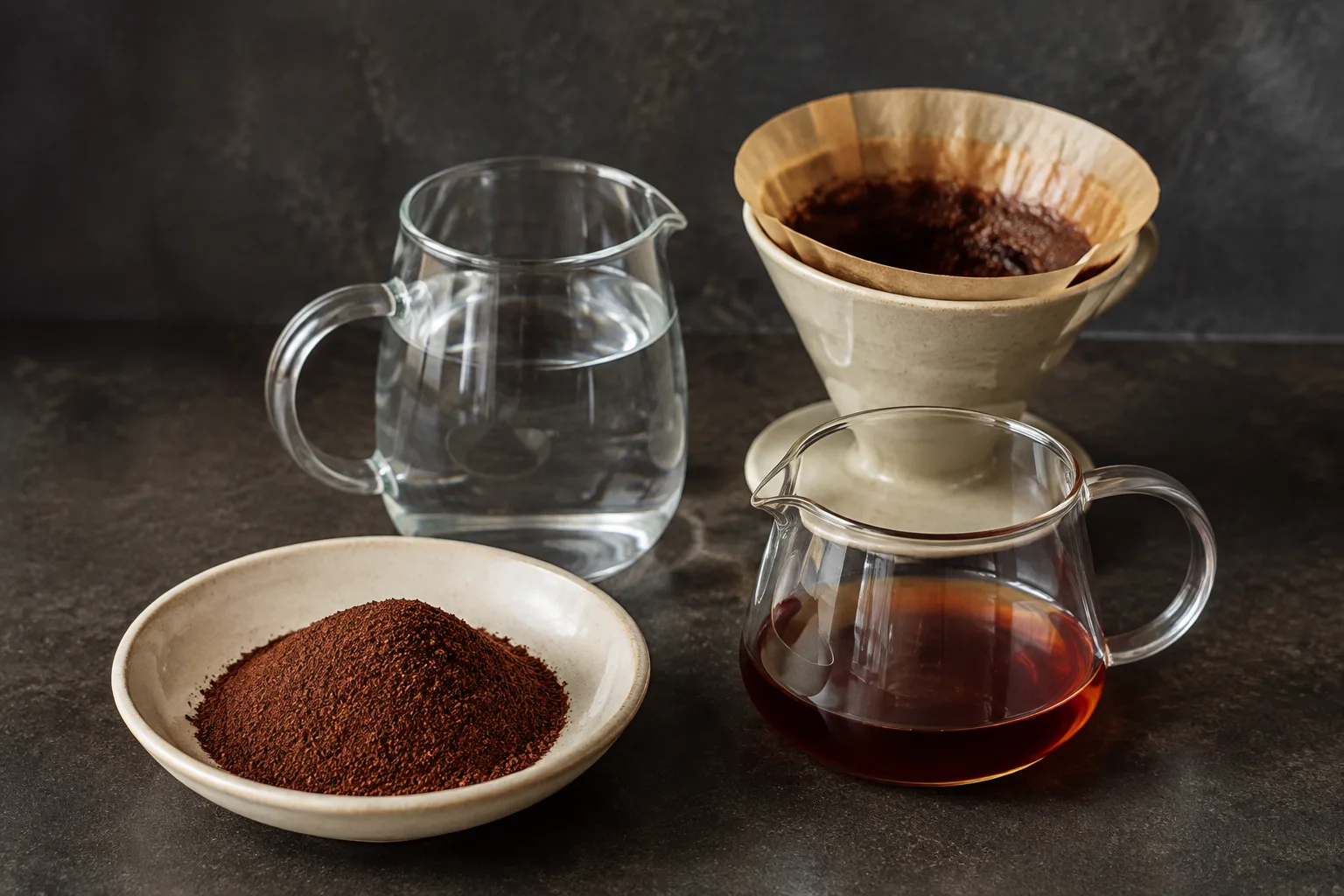
The dose is the dry coffee used for a brew. Brewing water is the water added to prepare it. On these pages, 1:16 means one gram of coffee to sixteen grams of brewing water. The ratio guide calculates either the dose for a chosen recipe or the ratio in an existing one.
Collected beverage is a separate quantity: the coffee that reaches the server or cup. Do not replace it with the input-water amount when a tool asks for the finished drink. Keeping both masses in a note prevents an apparently minor change of label from changing the calculation.
Strength and TDS
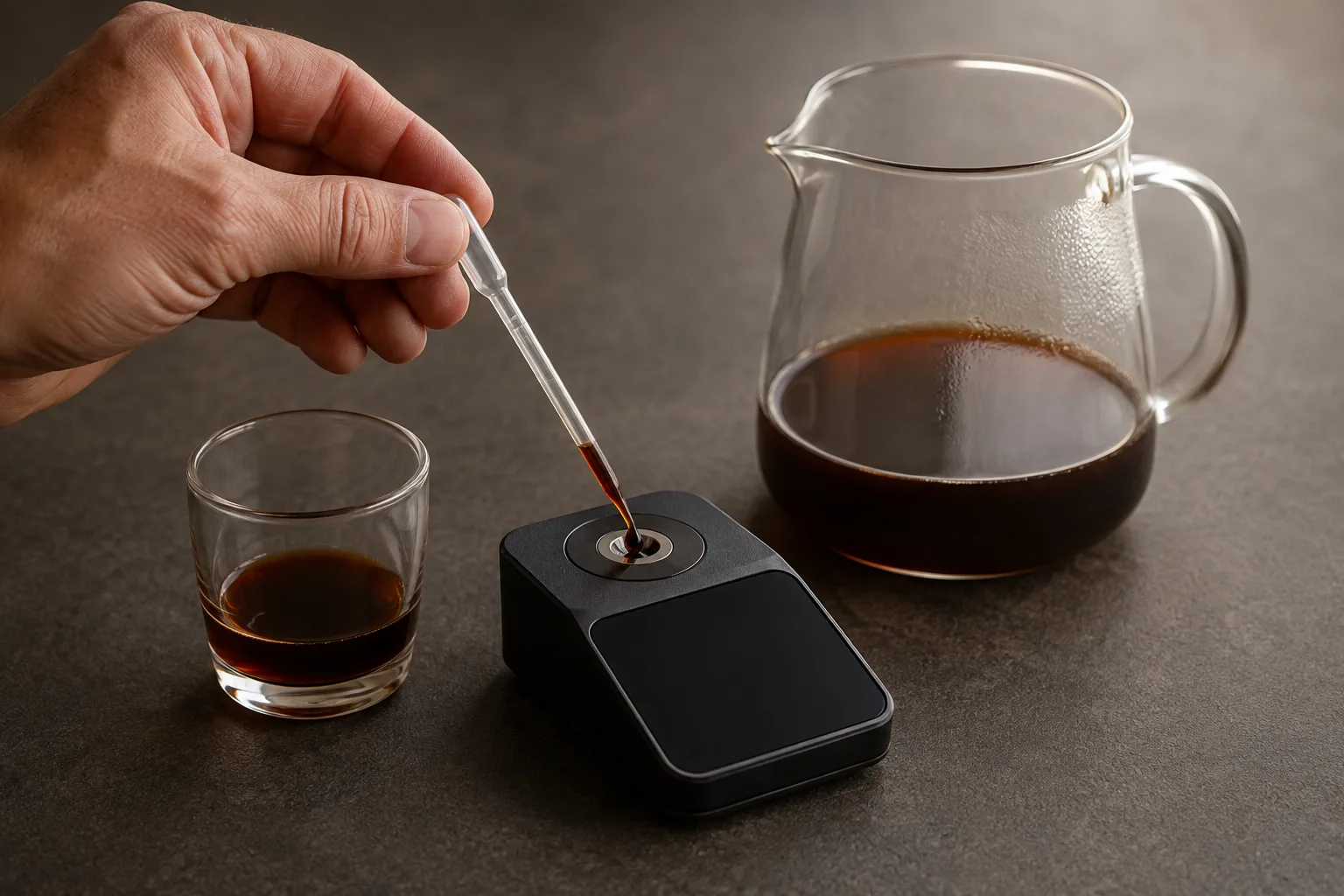
TDS abbreviates total dissolved solids. In these calculations it is the measured coffee-solubles percentage of the beverage. A 1.35% reading in 300 g collected coffee represents approximately 4.05 g solubles. It is not a caffeine percentage, a bitterness scale or an assessment of how much you should enjoy the drink.
A suitable coffee measurement is required before entering a TDS value. A guessed number, a Brix reading or a water-conductivity reading cannot simply be relabelled to fill that field. The strength guide explains the measurement boundary before using the number in a calculation.
Extraction yield
Extraction yield relates extracted coffee material to the original dry dose. Dividing the estimated solubles collected in a filter brew by the dry dose gives the bounded cup-recovery calculation used here. It does not count liquid left among the grounds or reproduce a complete full-immersion model.
The dilution guide works with a different change: adding plain water after brewing. The estimated coffee-solubles mass stays the same while the mixture becomes larger and less concentrated. Keeping concentration, recovered mass and recipe inputs separate makes the next adjustment easier to interpret.