



Name the three inputs
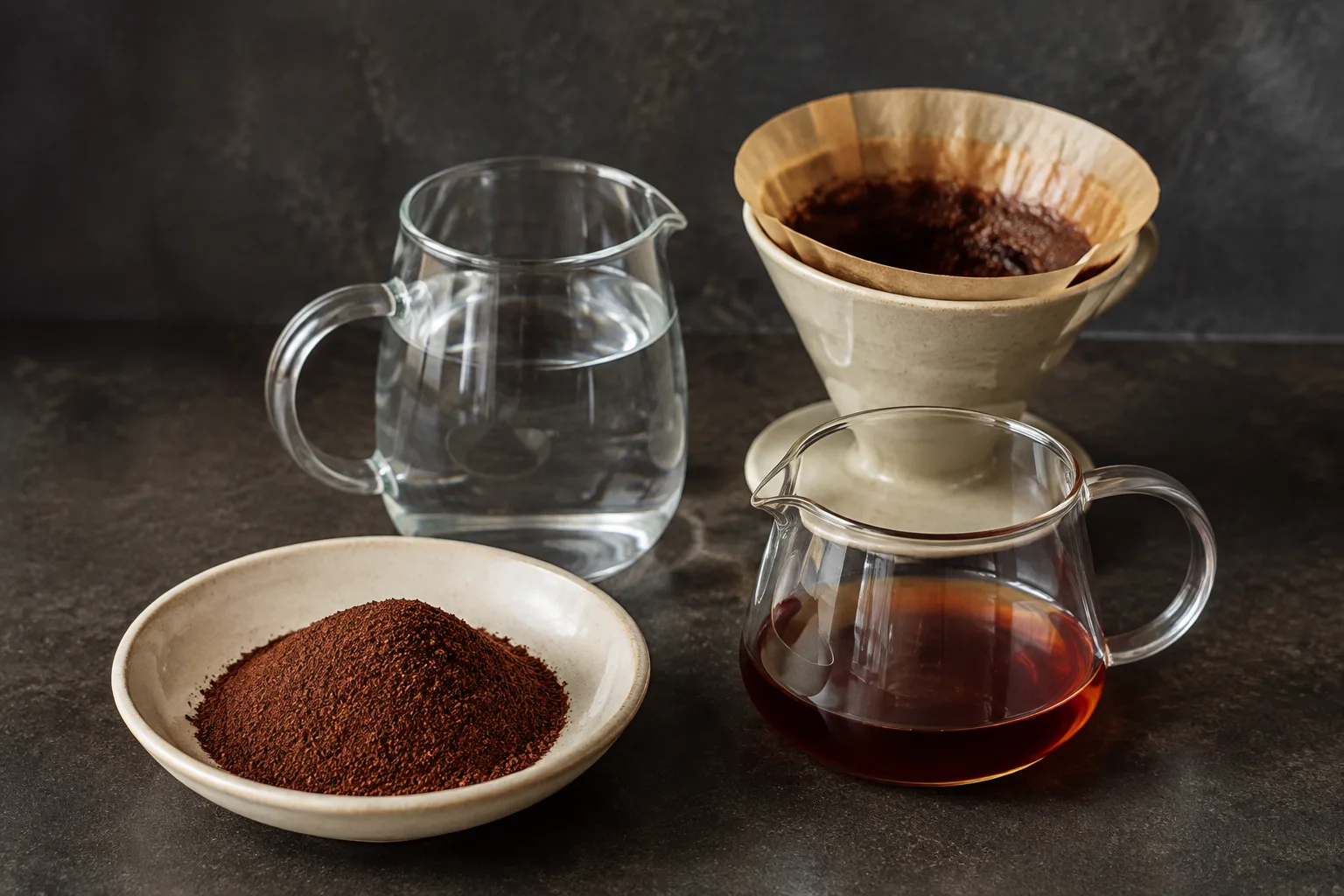
Start with a finished filter brew and keep three quantities apart. The dry dose is the coffee weighed before brewing. Beverage mass is the drink collected in the server. TDS is the measured concentration expressed as a percentage. The input-water number from the ratio guide belongs to a different part of the process.
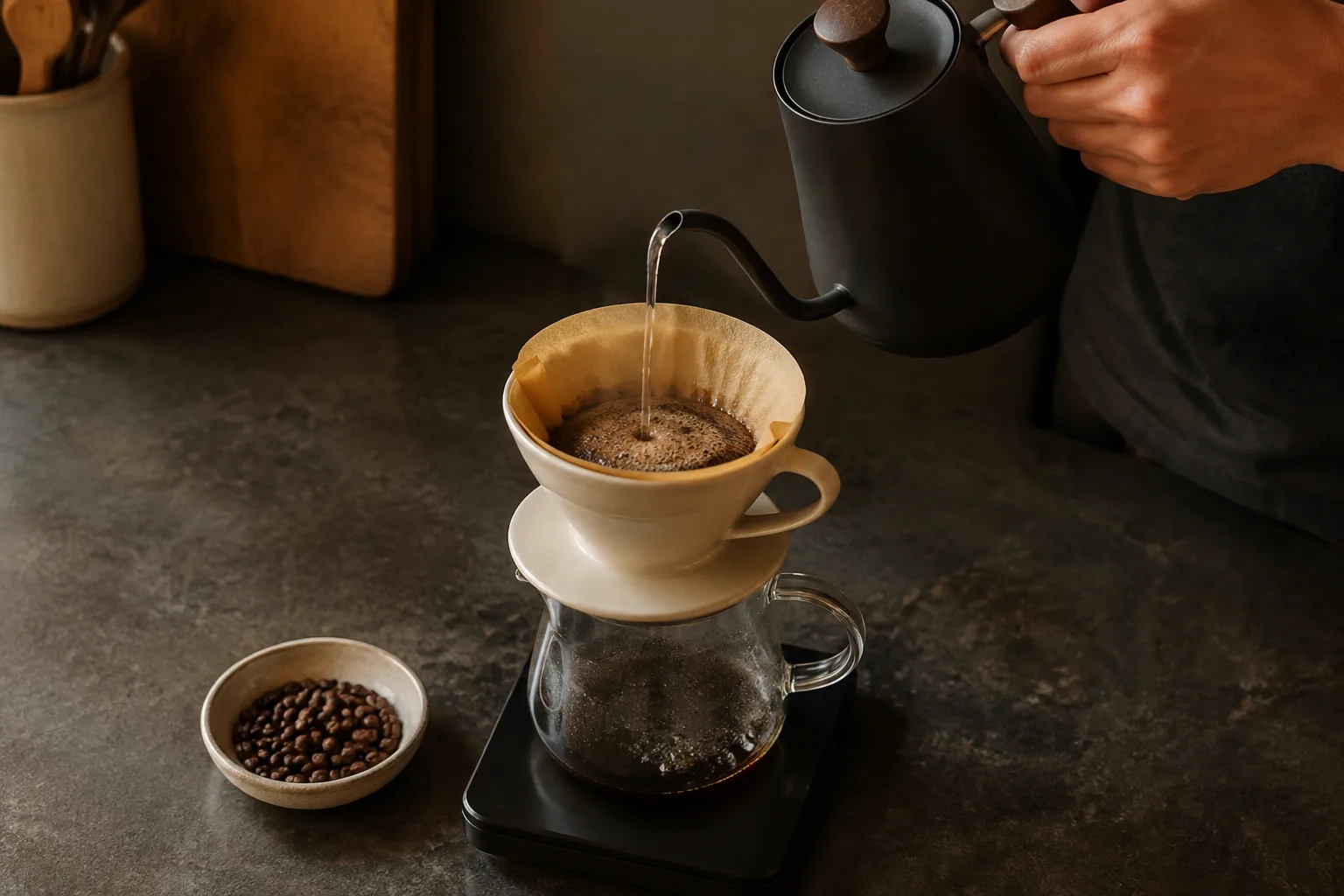
Put the empty server on the scale and account for its mass before weighing the drink. Avoid changing the measurement while the dripper is still adding liquid. If the recipe is being compared with another batch, use the same practical stopping point so the records describe equivalent stages.
The distinction can change the conclusion substantially. Suppose a recipe used 340 g water but collected 300 g beverage. At 1.35% TDS, using 340 g in place of 300 g would assign 4.59 g solubles to the cup rather than 4.05 g. The misplaced input makes the result look more exact without making it correct.
Take a reading on the right scale
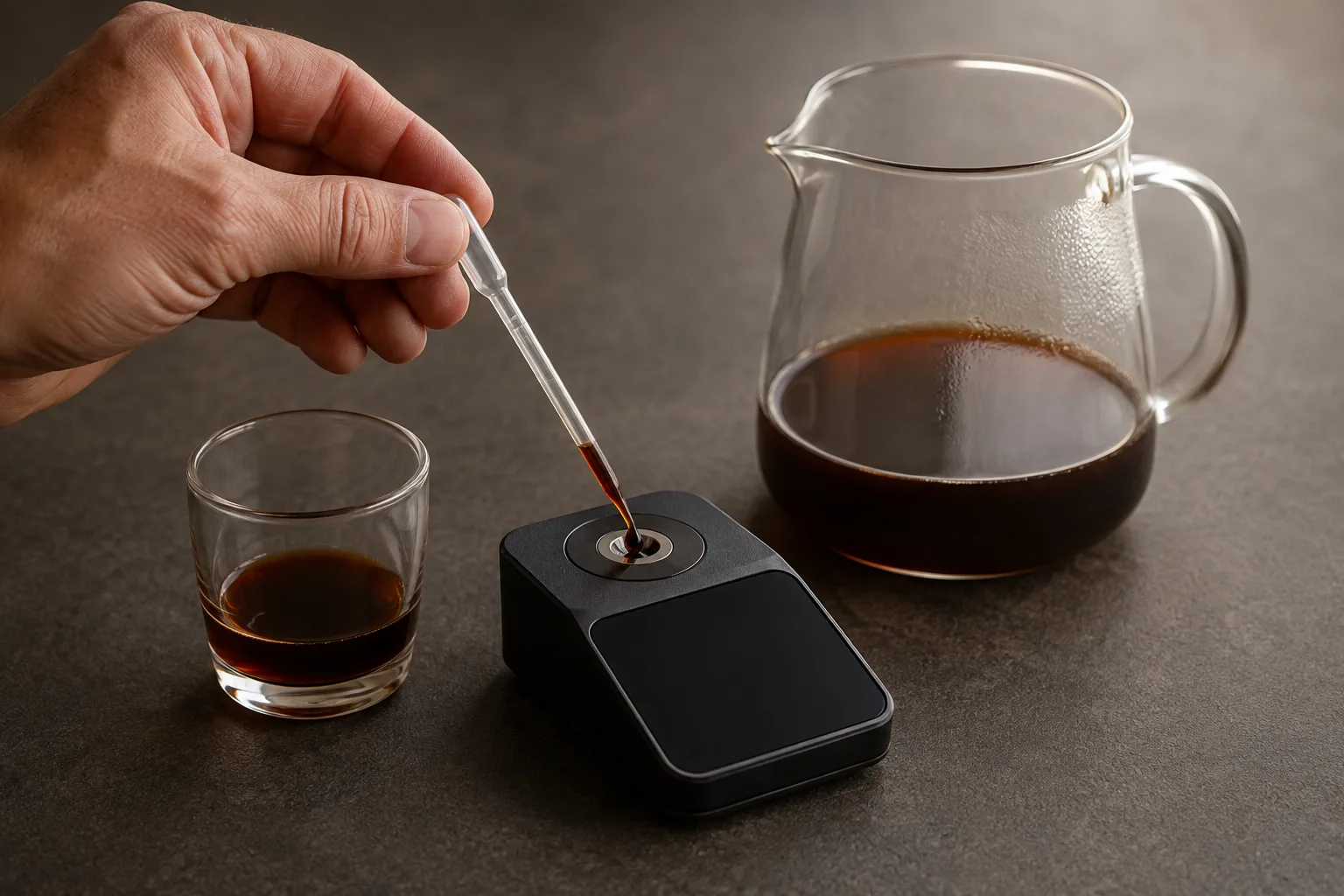
Use an instrument and scale intended for measuring coffee concentration. A device displaying a number called TDS is not automatically measuring the same property in the same way. These tools expect a coffee-TDS percentage, not a conductivity meter's water reading, a Brix value or a sensory guess.
Follow the actual instrument's instructions for calibration, cleaning, sampling and temperature. Prepare a representative sample and wait for the reading to stabilise as directed. A screen that displays two decimal places does not, by itself, establish accuracy to two decimal places; resolution and accuracy are different properties.
You can still repeat a useful coffee recipe without this measurement. If the required input is unavailable, do not substitute a commonly quoted percentage just to unlock a result. Return to dose, water and method, or use the Real sample button explicitly as an arithmetic example rather than a measurement of your drink.
Calculate what reached the cup
Convert the measured percentage into a fraction of the collected drink: beverage mass multiplied by TDS divided by 100. A 300 g drink at 1.35% therefore contains approximately 4.05 g dissolved coffee material. Dividing 4.05 g by a 20 g dry dose and multiplying by 100 gives the 20.25% cup-recovery estimate.
Read that result within its boundary. It estimates the material represented by the collected beverage and its sample. It does not count every drop left in the grounds, identify the individual compounds or implement an equilibrium model for an immersion brewer. Those differences matter if you are comparing numbers produced by different methods.
If the result exceeds 100%, stop and check the inputs. More coffee solubles cannot be recovered from the cup than the original dry-coffee mass under this simple accounting model. Common mistakes include a misplaced decimal, using the water mass, or reading 1.35% as 135. A rejected result is more useful than an impossible percentage presented confidently.
Try a concentration change separately
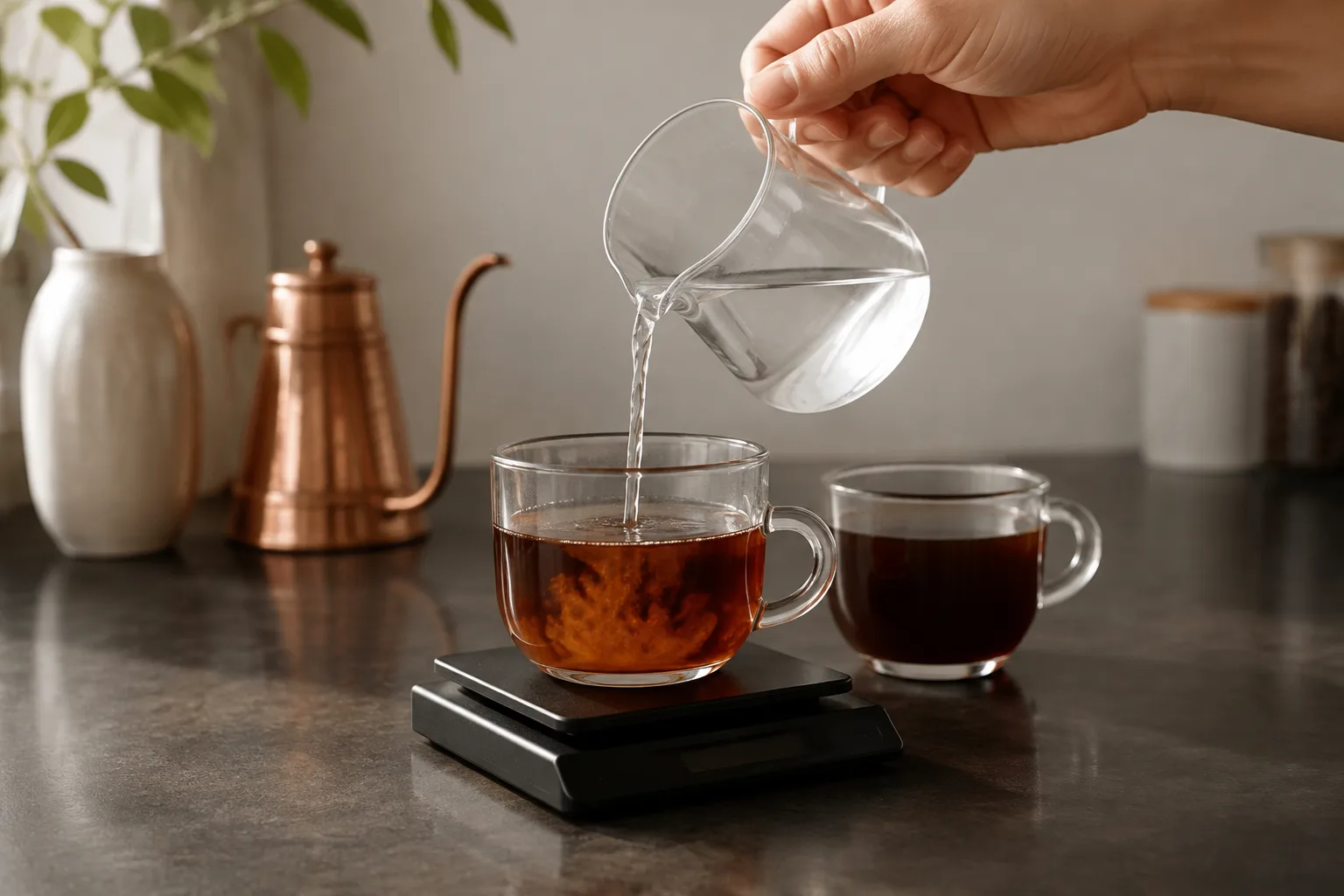
Plain water added after brewing changes the concentration of the mixture without passing through the grounds again. That makes dilution a different experiment from changing the next recipe. It does not reverse the extraction that already occurred or selectively remove whichever flavour you dislike.
With a measured starting concentration, the dilution calculator estimates the water needed for a lower target. It assumes the added water contributes negligible coffee solubles and that the existing drink is evenly mixed. Choose a target as a comparison, not as a declaration that the first drink was objectively wrong.
You may prefer to try a small measured sample before changing the entire server. Account for the sample's mass, not the original whole batch. Temperature also changes when liquids are mixed, so judge the result with that practical difference in mind. The dilution guide carries this calculation through both forward and reverse examples.
Compare the measurements without grading taste
Two measurements can help describe a difference without deciding whether it is an improvement. Research does not support assigning every drinker the same preferred point on a brewing chart. Keep your actual tasting response beside the numbers, particularly when the coffee, roast or method differs from the studies being discussed.
For a useful record, write the dry dose, input water, collected mass and measured TDS together. Then note the deliberate change and what you preferred. If only concentration was adjusted after brewing, say so; that is not the same experiment as a new grind setting or a different water-to-coffee recipe.
The next action depends on the question. Use the ratio guide to change recipe inputs, the dilution guide to estimate an addition to a measured drink, and the coffee definitions when two terms appear to overlap. There is no need to turn a practical comparison into a universal score.