



Count the seats
Start a five-dinner plan with who will actually be at the table. A late shift, a school event or dinner with friends changes the shopping more than a new recipe does. Write the number eating beside each evening before choosing what to cook. Include a guest when the invitation is confirmed, rather than adding a vague extra margin to every meal.
In the worked week below, four people eat on Monday, two on Tuesday, four on Wednesday, two on Thursday and four on Friday. That makes sixteen places at dinner, not twenty. The total is useful for checking a plan, but it does not mean everyone needs the same serving size. A familiar recipe still needs adjusting to the people eating it.
Change the five values to your own week. If a night disappears, enter zero rather than keeping its groceries on the list just because the plan has five rows. Breakfasts, lunches and snacks remain outside this dinner total; add them separately to your shopping so a tidy dinner plan does not quietly empty the rest of the kitchen.
Start with tonight
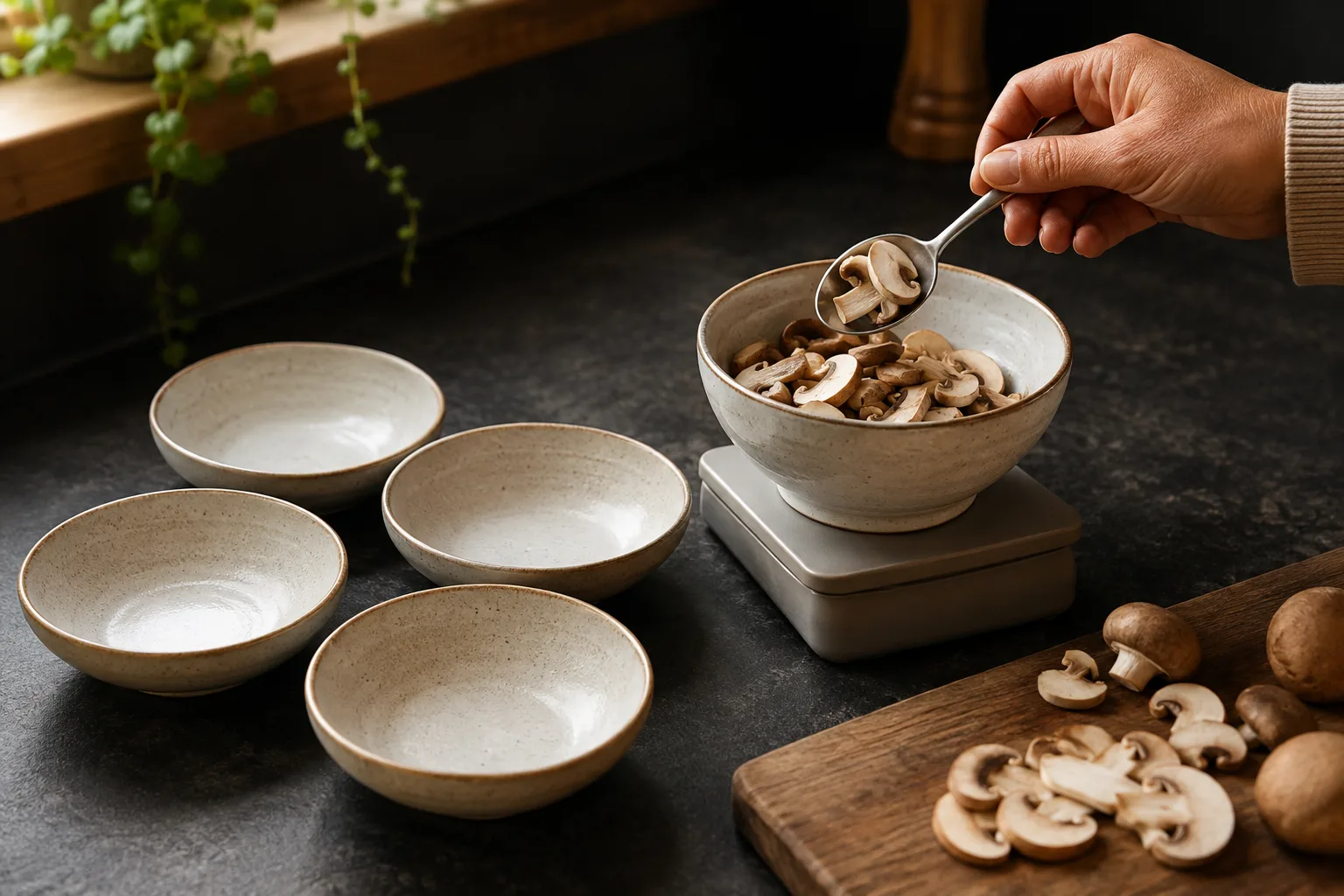
Open the kitchen before opening a recipe collection. Look for ingredients you already meant to use: the half pepper, the opened pack of mushrooms, the vegetables bought for a meal that never happened. Check whether they are still suitable to use, following their labels and relevant safety guidance. An attractive menu is not a reason to rescue food whose history you cannot establish.
Choose tonight's meal around one or two suitable ingredients, then work outward. Mushrooms might go into a rice bowl, pasta or a sauce, but they do not need three promises at once. Pick one destination and write the amount against it. Keep ingredients needed for somebody else's breakfast or lunch out of the available dinner stock, even when they happen to be on the same shelf.
Keep a short use-first list rather than cataloguing every spice and unopened tin. That gives suitable food already in the kitchen a destination before another shopping trip buries it. If nothing needs attention, start with a household favourite and let the rest of the week share a few ingredients with it.
Repeat an ingredient
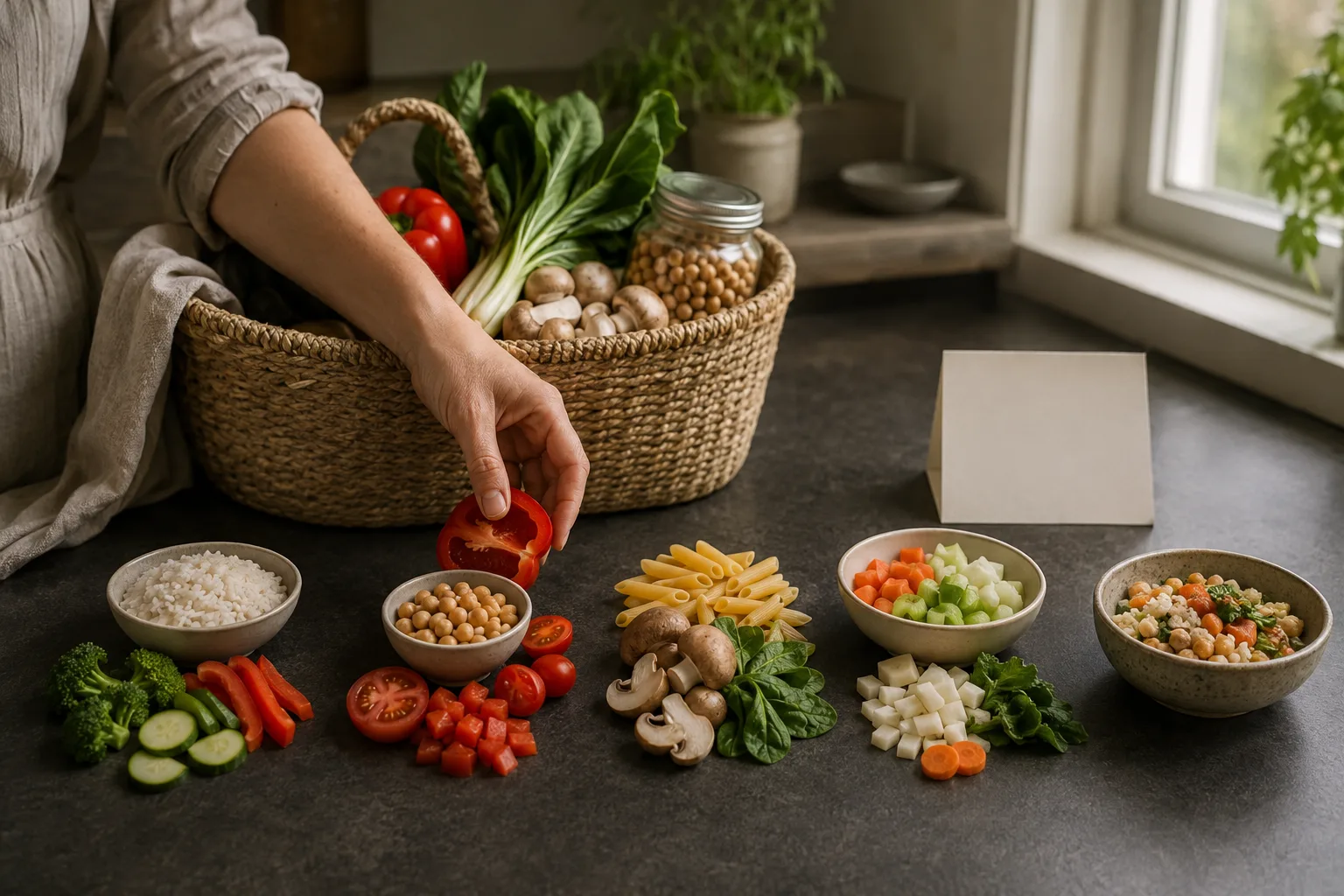
Repeat an ingredient, not necessarily a finished dish. A pepper can appear in a rice bowl and a tomato-based stew; mushrooms can accompany pasta on another night. Choose the pair because both meals are wanted, not because using the same ingredient twice has become a rule. A second meal nobody looks forward to is a weak destination for the rest of a pack.
Keep the connection specific. Instead of writing 'vegetables for the week', write the ingredient beside the two recipes that need it. The shopping-list guide in this family shows how to combine those amounts without counting the same pantry stock twice. You do not need to force every ingredient through several meals; a shelf-stable staple may simply remain for another week.
Change something that matters between the meals: texture, sauce, cooking method or what is served alongside. Then check equipment. Two meals that both need a long oven session may share ingredients beautifully but fit the week badly. Variety and practicality should be visible in the menu before you calculate a single gram.
Leave a flexible night
Give one evening a flexible meal you can assemble from ingredients already assigned to the week. This is not a promise that Friday will absorb every leftover. It is a real dinner with a few acceptable variations: a rice bowl with whichever planned vegetables remain, or a pantry meal that does not depend on buying another fresh set of ingredients.
Distinguish that flexible meal from a leftover dinner. A leftover dinner needs a known quantity of suitable cooked food and a safe storage plan. A flexible meal can be cooked fresh. Combining the two labels hides the important question of whether enough food will actually be available when people sit down.
Assign each dinner evening once: newly cooked, suitable leftovers or a flexible meal. Choose a quick setup below to see the difference, then adjust the evenings to your week. If the assignments exceed the days available, remove a duplicate. If an evening remains open, give it a real dinner before shopping rather than hoping the unused groceries will come together.
Fit the cooking time
Put the most forgiving meal on the least predictable evening. A recipe that requires several pans, continuous attention and washing vegetables at the last moment may be entirely reasonable on Sunday and an awkward choice after a late journey home. Use the time from entering the kitchen to serving dinner, not only the cooking time printed at the top of a recipe.
List the tasks that must happen one after another. Chopping before frying is sequential; an oven dish cooking while you set the table may overlap. The check below subtracts the tasks you enter as sequential from the minutes available. It intentionally does not guess which activities can safely happen together or whether another person will help.
If the plan is tight, simplify a real step: choose already-prepared ingredients you actually want, move a suitable preparation task earlier, or pick another dinner. Do not shorten a food-safety step or assume that a larger batch cooks in the same time. A modest meal that gets served is more useful than a detailed plan that starts too late.
Adjust the recipes
Now open the recipes. Read what each one produces and decide how much you want to make. A recipe described as six portions may not match your household's usual servings, so start with a recipe and portion size you understand. The scaling guide explains the small calculation separately, including the limits that matter for heat, pans and baking.
For straightforward ingredient quantities, divide the wanted yield by the original yield, then multiply the ingredient by that factor. In the example below, four portions from a six-portion recipe use two-thirds of the original ingredient amount. Six hundred grams becomes four hundred grams. This is arithmetic, not a claim that four hundred grams is the right amount for every four-person meal.
Keep the ingredient's form attached to the number. Dry rice is not cooked rice; a whole vegetable is not automatically its trimmed weight. When a recipe is unclear, resolve that before shopping. A very precise number attached to the wrong form is less useful than a simple quantity you can measure and recognise.
Buy the gap
Combine the amounts needed across recipes before subtracting stock. If two meals each use rice, there is still only one pantry jar to subtract. Work one ingredient at a time, using matching units and matching forms. The detailed shopping-list article handles this step; the calculator here gives the result for one ingredient you can check immediately.
With four hundred and fifty grams needed and one hundred usable grams already at home, the gap is three hundred and fifty grams. If the shop sells two-hundred-gram packs, two packs leave fifty grams beyond the entered recipes. That extra amount is not automatically waste, but it needs a believable use or suitable storage rather than disappearing from the plan.
Leave pack size blank if you buy a weighed amount or do not know the available pack. Check the actual shelf option before treating a calculated pack count as a purchase. Price, availability, dietary requirements and condition can all change the choice. The number helps you notice the difference; it does not choose the product for you.
Plan the leftovers
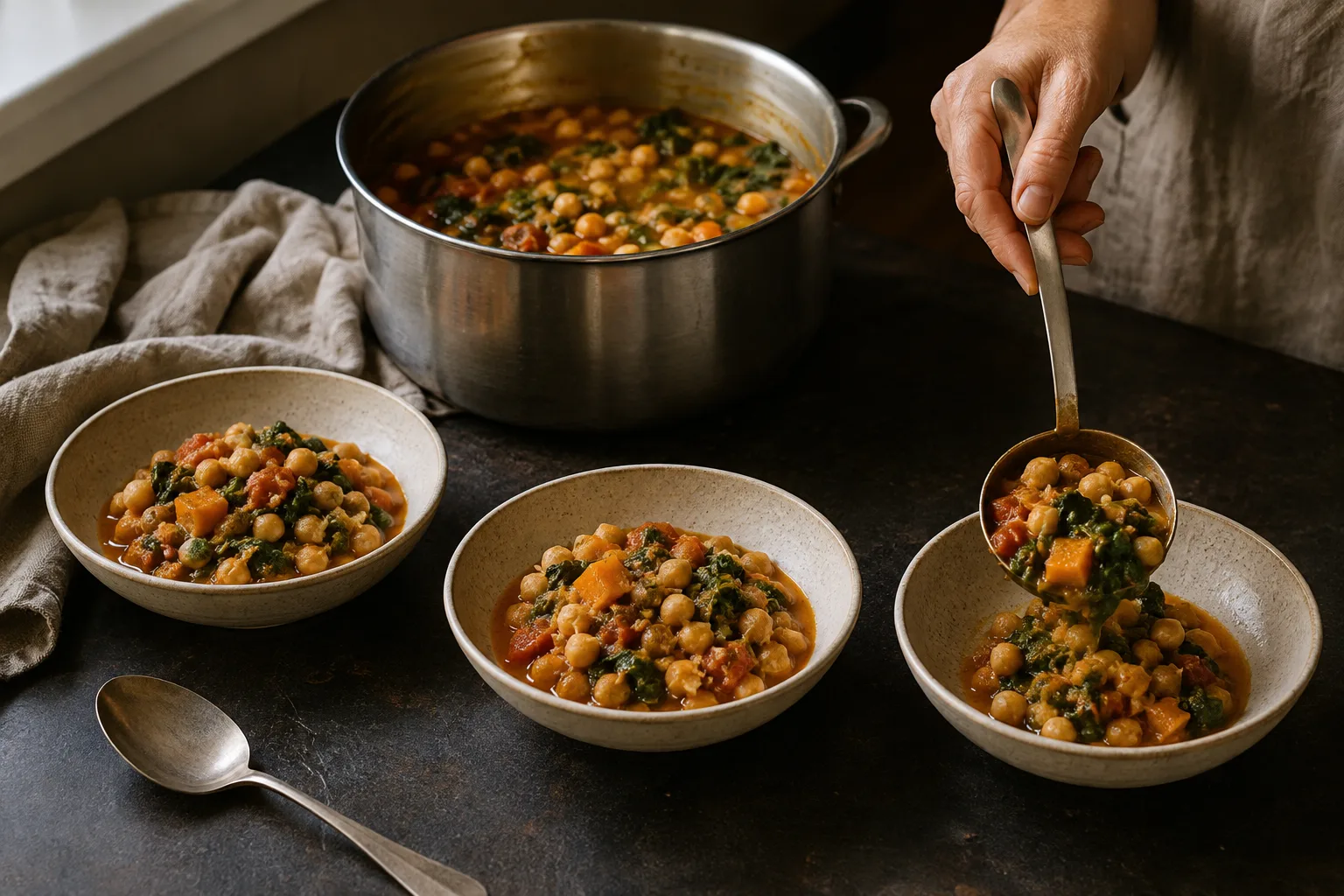
Plan a second meal from cooked food only when you intend to make enough and can handle it appropriately. 'There might be some left' is not the same as setting aside the amount needed for lunch or another dinner. Separate the quantity decision from the safety decision: a spare portion can be counted without being declared safe to store or reheat.
Singapore Food Agency advises portioning food intended for later meals and cooling and refrigerating it promptly. Follow the applicable guidance for the food and the place you live. This planner does not evaluate cooling, temperature, elapsed time or the needs of someone at higher risk; those questions should not be answered by a calendar or portion total.
Give each set-aside portion a named meal in your plan. If the week changes, revise that destination rather than promising the same cooked food on two days. Keep a fresh or pantry-based alternative ready when the amount or suitability of the stored food is uncertain; a useful plan leaves you another way to feed the table.
Finish the week
At the end of the week, look at the meals rather than giving yourself a score. Which dinner was easy to start? Which ingredient was bought twice? Which pack remained because its second use never happened? One concrete answer is enough to improve the next plan. A changed work schedule or appetite is information, not proof that planning has failed.
Keep the familiar meals that worked and alter the awkward connection. You might move a quick dinner earlier, reduce an ingredient next time, or stop relying on leftovers for a night when the whole household is hungry. Check the quantities again after making that change; copying last week's list can preserve the very mismatch you meant to remove.
Continue to the shopping-list guide when you have the menu but not the quantities. Use the recipe-scaling page when the number of portions changes. Open the yield definition when a recipe's wording is the obstacle. These are separate questions in one sequence, so you can go straight to the step that will make tonight easier.