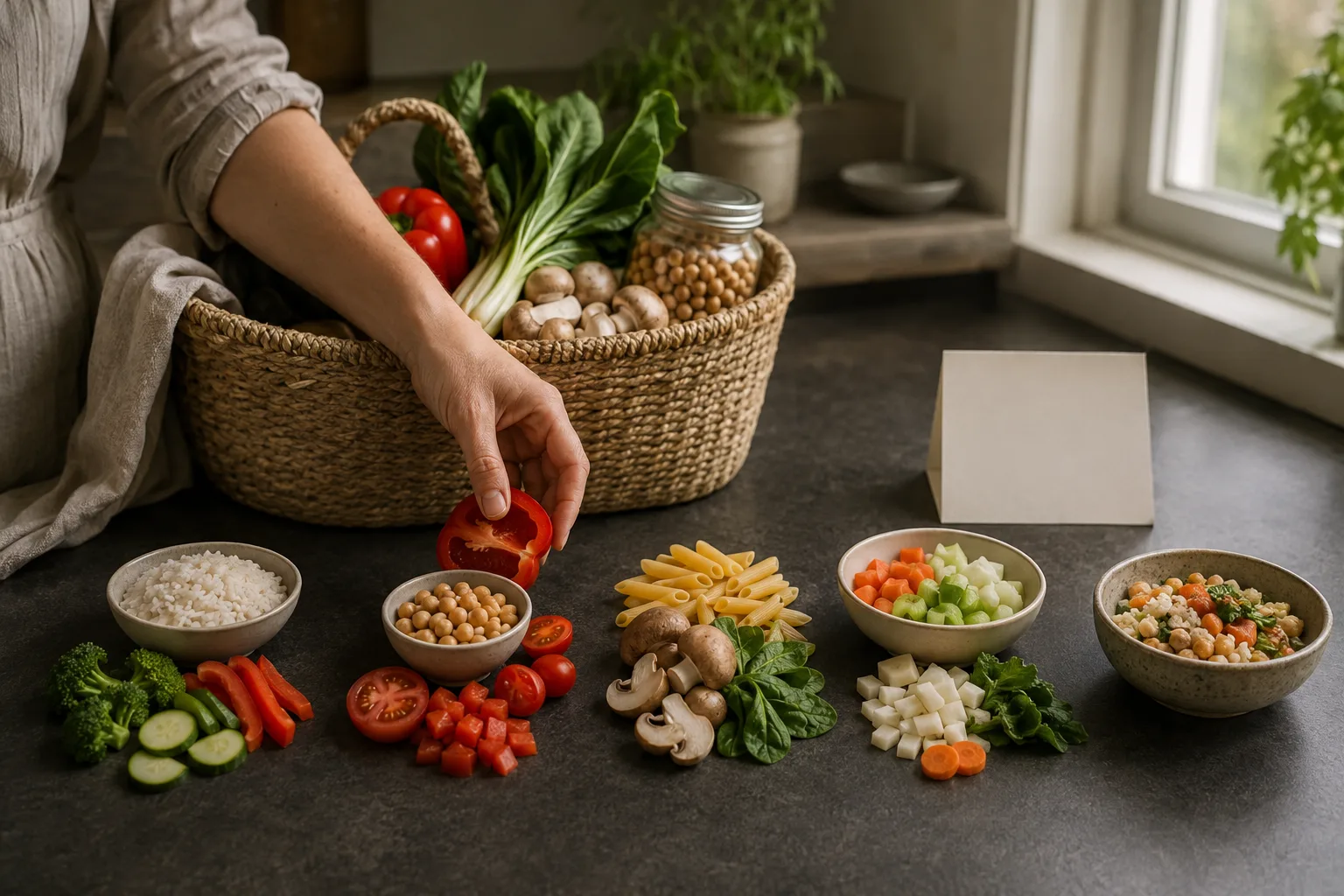




Adjust before adding
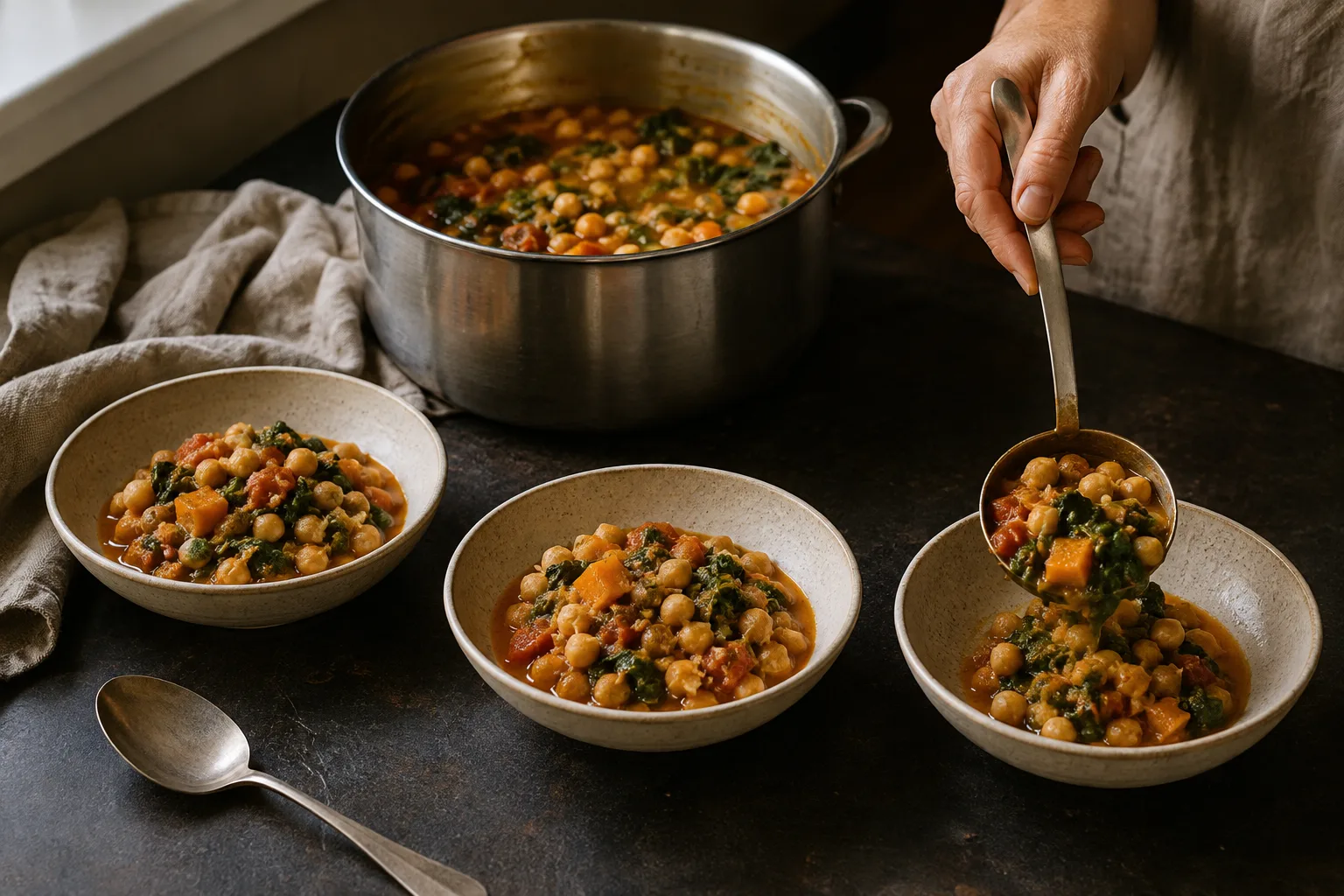
Put the recipes beside one another and check their yields. A four-portion pasta and a six-portion stew do not automatically belong on the same four-person shopping list at their printed quantities. Adjust each one first. Otherwise a neatly combined list can preserve an extra two portions of every ingredient from the larger recipe.
Write the adjusted quantity beside the ingredient before moving on. For a recipe you regularly cook, use the yield you know it actually produces for your household. If the printed yield is unclear, open the short yield definition rather than guessing whether 'four' describes small side portions or full bowls. The scaling page in this series walks through one ingredient without changing the recipe's cooking instructions.
Do not subtract stock yet. That step comes after the same ingredient has been collected from every recipe. Working in this order keeps one half-used packet from being deducted separately for Monday, Wednesday and Friday.
Match the ingredient
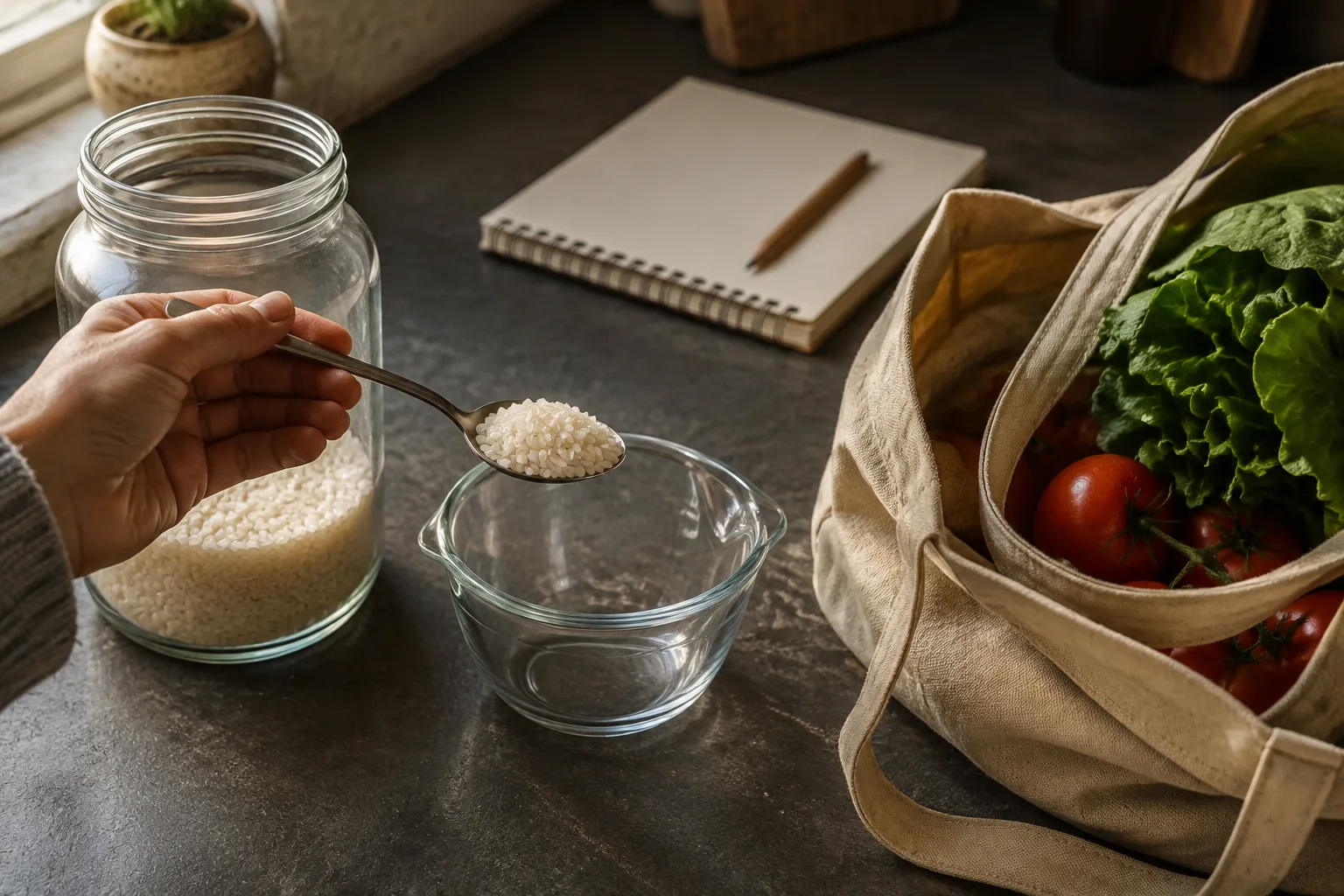
Make one line for each ingredient and form. 'Rice, dry' is a different line from 'rice, cooked'. 'Chickpeas, drained' is not the gross weight printed on a can that also contains liquid. Keep distinctions that change the amount you will use, even when the food has the same name.
Convert compatible units before adding. One hundred and fifty grams and two hundred grams make three hundred and fifty grams; one cup and two hundred grams cannot be combined without knowing what that cup of the particular ingredient weighs. Avoid universal cup-to-gram conversions. A cup is a volume, while grams describe mass, and the relationship depends on the ingredient and how it is measured.
Use the three-recipe total below for one matching ingredient. Enter zero for an unused line. The initial amounts illustrate a four-hundred-and-fifty-gram total; replace them with the amounts from your own adjusted recipes and keep the unit visible on the list.
Subtract stock once
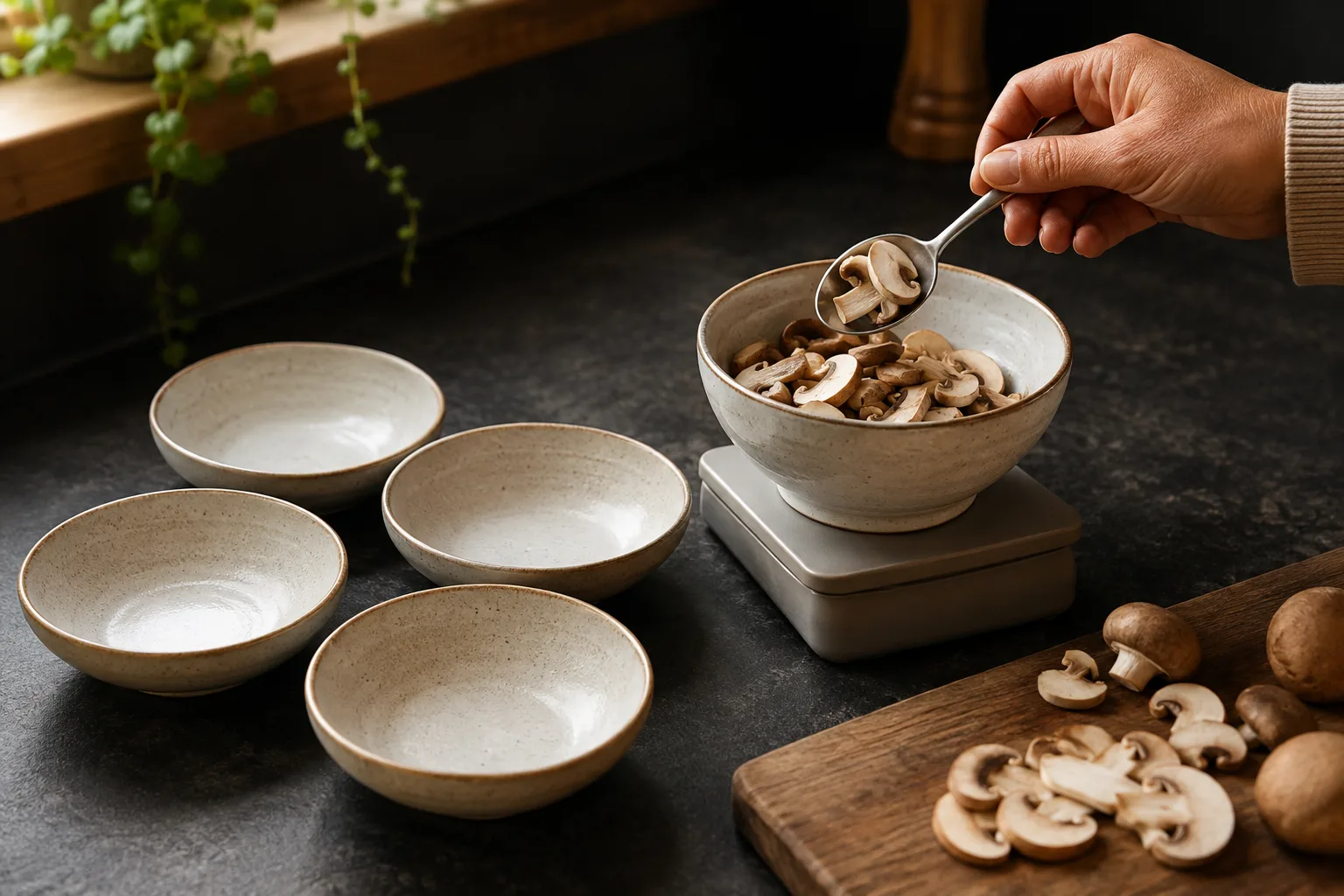
Measure the usable amount you already have in the same form as the recipe total. Take account of other uses before calling it available. If part of the rice is reserved for another meal outside this plan, it cannot also cover the dinners here. A cupboard quantity and an available quantity can be different numbers.
Subtract that available amount once from the combined requirement. In the example, four hundred and fifty grams are needed and one hundred grams are available. The remaining shopping quantity is three hundred and fifty grams. If there is more stock than the recipes need, the amount to buy is zero; the surplus does not create a negative purchase or an instruction to eat more.
Put the net quantity on the list, then check the ingredient itself: its label, storage history and any other meal it is reserved for. Assess an allergy-related substitution separately. Keeping those decisions beside the amount helps you arrive at the shelf with a useful requirement rather than a number detached from the food.
Read the pack
A recipe gap and a shop pack are different things. Three hundred and fifty grams needed, sold in two-hundred-gram packs, means two packs if those are the only suitable option. The purchased total is four hundred grams, leaving fifty grams beyond the entered recipes. The calculator reports both the pack count and that extra amount so neither disappears from the decision.
Check what the pack's quantity describes. If a recipe needs drained beans, use the relevant drained quantity rather than the combined beans-and-liquid weight. If the exact form or pack is unavailable, adjust the calculation using the option you can actually buy instead of rounding an old result until it seems close.
Leave the optional pack field blank for a weighed purchase or while you are planning before the trip. Then write the net amount on your list. You can decide between packs at the shop without pretending that their sizes, condition and availability were already known.
Compare like prices
Compare price per equal weight only after confirming that the products are comparable. A lower number for a different ingredient, food form or quality is not a like-for-like saving. Use the same currency and include the actual price you would pay; the calculator does not know promotions, membership conditions or delivery charges.
The weight field below uses kilograms. For a four-hundred-gram pack, enter 0.4 kilograms. A price of 2.40 in your chosen currency then becomes 6.00 per kilogram. This change of unit makes small prices easier to read than rounding a cost per gram to an unhelpful zero.
Price per kilogram is one part of the choice. A pack that leaves an amount you will not use may cost less by weight and still cost more for the meals you intend to make. Keep the extra quantity beside the price comparison. A clear list should reveal that trade-off, not quietly decide that larger is always better.
Make the list readable
Write a line you can use while standing at the shelf: the ingredient, its needed form, the net quantity, and any pack decision you already made. 'Chickpeas, drained quantity needed' carries more useful information than 'one tin' when can sizes differ. Keep the wording short enough that the important amount does not get lost.
Group lines by the way you shop: produce together, chilled items together, dry goods together. This is an organisational choice, not another calculation. Keep a small separate note for an acceptable substitute only when you know it will work in the recipe; otherwise decide at the recipe level before changing the ingredient.
Before leaving, check the list against the planned dinners once. Each meal should have its required ingredients covered by either stock or shopping, with no cupboard amount assigned twice. If a dinner changes, update its ingredient quantities before reusing the list. Return to the weekly plan for the menu, or to recipe scaling for a change in portions.