



Choose the sample you will change
Enter the mass of the coffee that will actually receive the water. If you take 50 g from a 250 g server to make a small trial, the tool needs 50 g. Keeping the larger amount in the field would calculate an addition for the whole server and overwhelm the sample you intended to compare.
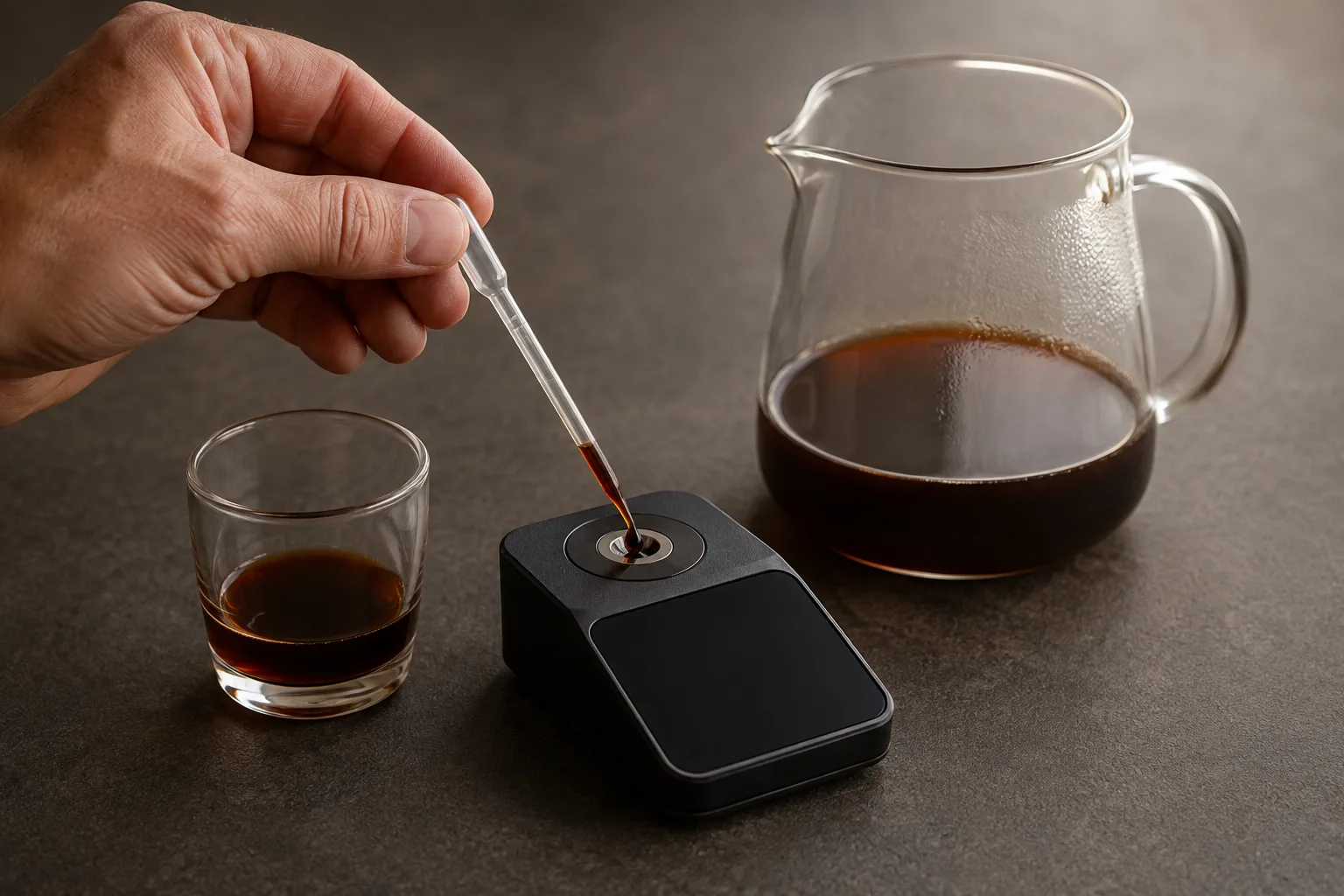
Use a representative, mixed sample and an appropriate measured coffee-TDS percentage. Follow the instrument's preparation instructions. The sample's temperature and the added water also affect the drinking experience, but this calculator does not estimate either a safe temperature or a preferred one.
Without a measured TDS, you can still add a small measured amount of water and taste the result. Record it as a tasting trial, not as proof that the coffee reached a particular percentage. The Real sample button provides numbers for practising the arithmetic; it does not fill in missing evidence about your drink.
Set a lower target
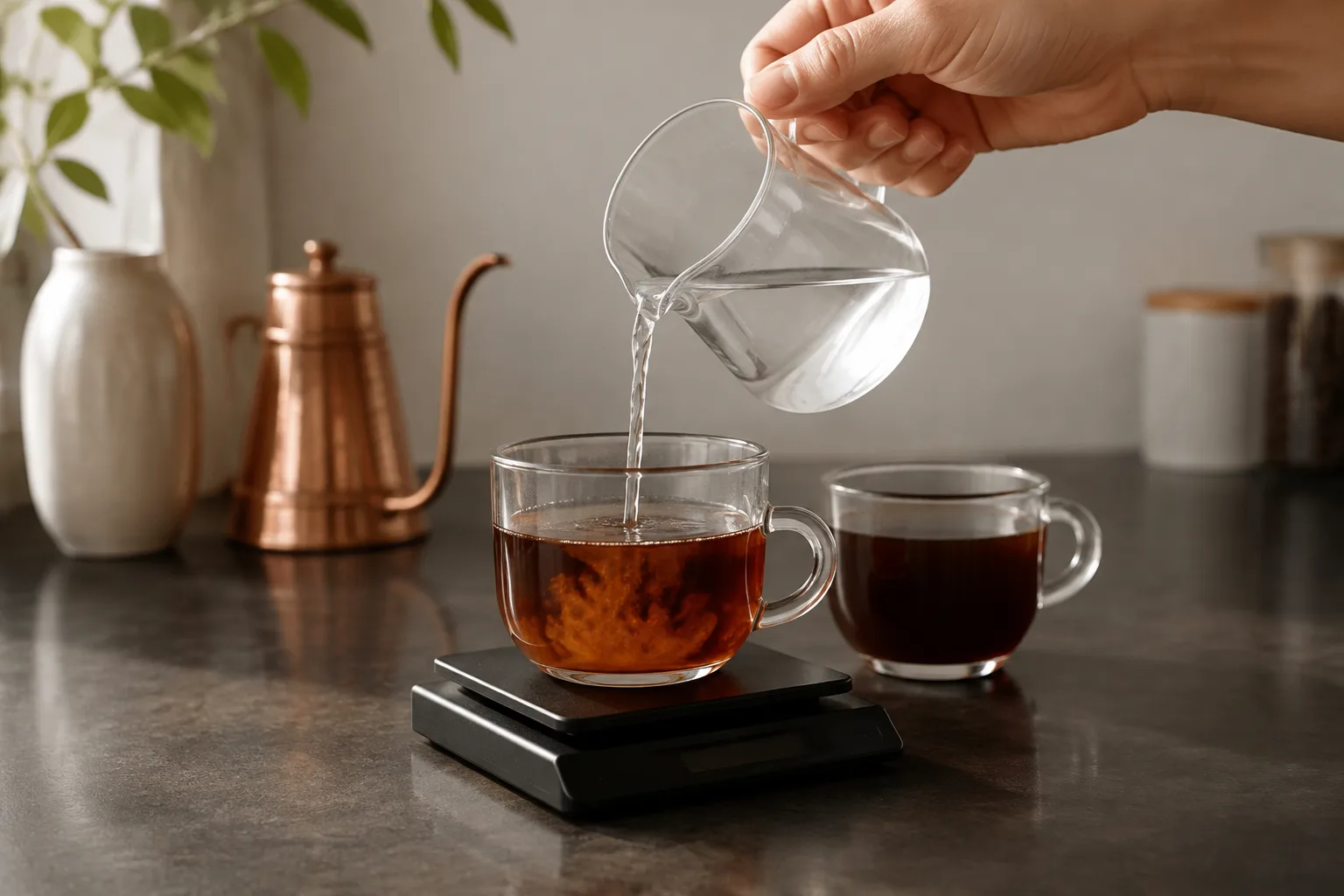
The tool first estimates the solubles already present, then finds the larger total mass needed to reach the target concentration. With 250 g at 1.6%, there are approximately 4 g coffee solubles. At a target of 1.25%, those 4 g occupy 320 g of final drink. The difference is the 70 g water to add.
A target above the starting percentage cannot be reached by adding plain water. An equal target needs no additional water. Both cases are useful checks on the direction of the calculation: dilution should never produce a negative water instruction or pretend to strengthen the coffee.
Check an amount before pouring
You may already have a practical addition in mind. Enter that amount in the second calculator rather than working backwards by trial and error. Adding 25 g water to the same 250 g coffee at 1.6% gives an estimated 1.455% TDS in 275 g total drink; adding 70 g gives 1.25% in 320 g.
These figures assume that no drink is lost, the mixture is even and the added water contributes negligible coffee solubles. They are a simple concentration model. Do not use the result unchanged for milk, syrup or ice: extra dissolved material and melting behaviour introduce quantities the fields do not represent.
Taste the change you made
A lower concentration does not selectively remove an unwanted flavour or brew the coffee again. It may make the drink more enjoyable to you, or it may simply make an unpleasant drink less intense. Keep that outcome separate from the arithmetic and use the strength guide if the next question concerns extraction estimates.
Record the original coffee mass, measured TDS, added water and the result you preferred. If a small trial worked, calculate the remaining server separately using its actual remaining mass. Do not add the whole-batch allowance after some coffee has already been removed; that would repeat the original sample mistake in a less obvious form.