Baking Science
Why recipes work — the chemistry and physics behind every rise, crumb, and crust. Master the science, improvise any recipe.
Why baking is science, not art
Every baking recipe is a formula. Flour provides structure (gluten network). Fat tenderizes (coats gluten strands). Sugar sweetens and retains moisture (hygroscopic). Eggs bind and leaven (protein coagulation + trapped air). Leaveners produce gas (CO₂ from acid-base reaction or yeast fermentation). Heat sets the structure (protein denaturation + starch gelatinization).
When you understand why each ingredient exists, you stop following recipes blindly and start engineering outcomes.
The five functions of flour
| Function | Mechanism | What happens if too much | What happens if too little |
|---|---|---|---|
| Structure | Gluten proteins (glutenin + gliadin) form elastic network when hydrated | Tough, chewy texture | Flat, crumbly, no structure |
| Absorption | Starch granules absorb water during mixing and baking | Dry, dense crumb | Wet, gummy center |
| Bulk | Starch provides mass and body | Heavy product | Thin, fragile |
| Flavor carrier | Maillard reaction between proteins and sugars during baking | Bitter, burnt crust | Pale, bland surface |
| Thickening | Gelatinized starch sets during cooling | Stiff, stale texture quickly | Custard-like interior |
Protein content matters. Bread flour (12-14% protein) builds strong gluten for chewy bread. Cake flour (7-9% protein) keeps cakes tender. All-purpose (10-12%) is the compromise. Substituting one for another changes the result — not ruinously, but measurably.
Leavening: the three systems
Chemical leavening (baking powder, baking soda): Baking soda (sodium bicarbonate) needs an acid to produce CO₂. Buttermilk, yogurt, vinegar, brown sugar, honey, cream of tartar, and cocoa powder are common acids. Baking powder contains both the base and a powdered acid — it’s self-contained. Double-acting baking powder reacts once when wet and again when heated.
Biological leavening (yeast): Saccharomyces cerevisiae ferments sugars into CO₂ and ethanol. Active dry yeast needs proofing in warm water (38-43°C). Instant yeast can go directly into dry ingredients. Sourdough uses wild yeast and lactobacilli from a maintained starter culture — slower but more complex flavor.
Mechanical leavening (air): Whipping eggs or cream traps air bubbles. Creaming butter and sugar does the same. These bubbles expand during baking. This is why “do not overmix” matters — you’re preserving trapped air.
Why oven temperature is not negotiable
Baking at the wrong temperature doesn’t just slow things down — it produces a fundamentally different product:
- Too hot (>200°C for cakes): Crust sets before interior rises. Result: domed top, raw center, or cracked surface.
- Too cold (<160°C for cakes): Rising happens before the structure sets. Result: rises then collapses, dense texture, pale surface.
- Bread at 220-250°C: High heat creates oven spring (rapid gas expansion in first 10 minutes). Steam in the first 15 minutes keeps the crust flexible for maximum rise before it hardens.
- Cookies at 175-190°C: Balance between spread (butter melting → cookie flattens) and set (egg proteins coagulate → cookie holds shape). Higher = less spread, puffier. Lower = more spread, thinner.
The Maillard reaction vs. caramelization
These are different processes, often confused:
Maillard reaction (110-170°C): Amino acids + reducing sugars. Produces hundreds of flavor compounds — the brown crust on bread, the golden surface of a croissant. Requires protein. Accelerated by alkaline conditions (egg wash, baking soda).
Caramelization (160-180°C): Pure sugar decomposition. No protein needed. Produces nutty, butterscotch, bitter flavors depending on temperature and duration. This is what happens to the sugar on crème brûlée.
Both contribute to browning. Most baked goods involve both simultaneously.
Scaling rules that textbooks skip
Scaling a recipe by 2× is usually safe. Beyond that, physics changes:
- Leavening scales at 0.8× for 3×+ batches. CO₂ production doesn’t need to increase linearly because larger volumes trap gas more efficiently.
- Salt scales linearly. Always.
- Spices scale at 0.75× for 3×+ batches. Flavor compounds interact nonlinearly in larger volumes.
- Baking time increases ~10-15% for doubled volume, not 2×. Heat penetration follows the square of thickness, not volume.
- Never scale egg count in fractions. Round to nearest whole egg and adjust liquid by ~30ml per missing/extra egg.
Related across the network
Articles in this guide
Chocolate Tempering Science — Cocoa Butter Crystal Polymorphism and Form V Targeting
The complete science of chocolate tempering: all six cocoa butter crystal forms with melting points, three tempering methods with exact temperatures for dark, milk, and white chocolate, bloom prevention, and quality assessment.
Leavening Agents — Baking Soda vs. Baking Powder, and the Science of Rise
How chemical leaveners actually work, the acid requirements for baking soda, double-acting powder mechanics, substitution ratios, altitude adjustments, and freshness tests.
The Science of Pie Crust — Fat Mechanics, Gluten Control, and Hydration Windows
A technical guide to pie crust science: fat-flour interaction mechanics, fat type comparison with melting points and water content, gluten management through cold temperature and hydration control, blind baking protocols, and the vodka trick explained.
Yeast Types Compared — Active Dry, Instant, Fresh, and When Each One Works
Complete comparison of yeast types with activation temperatures, hydration ratios, substitution math, shelf life, and kill temperatures for every form of baker's yeast.

Bread Hydration Explained — Baker's Math for Every Dough
Hydration percentage controls crumb structure, crust, and handling. Complete baker's math reference with hydration ranges for every bread type.

Gluten Development — From Shaggy Dough to Windowpane
How gluten forms, why kneading works, when to stop, and what destroys the network. Flour protein comparison table and troubleshooting guide.
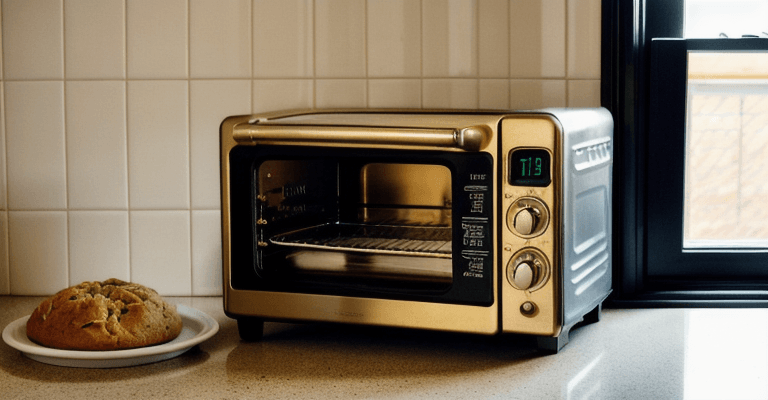
Oven Temperature Guide — Convection, Rack Position, and When to Trust Your Thermometer
Your oven lies. Here's the science of oven heat, rack positions, convection conversion, and why an oven thermometer is the best $10 you'll spend.
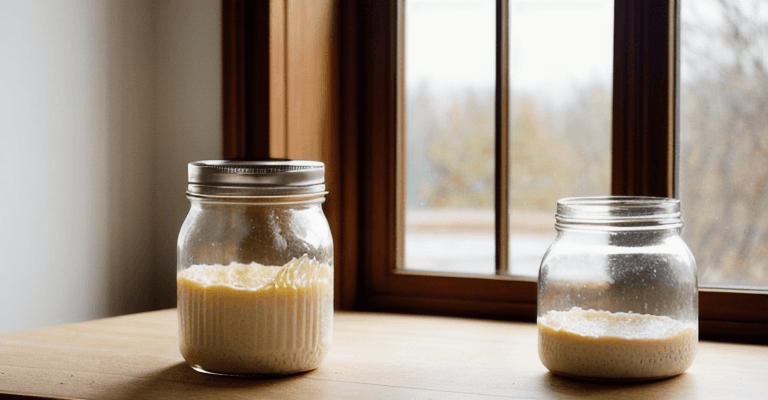
Sourdough Starter From Scratch — The Microbiology Day by Day
Create a sourdough starter in 7-14 days with flour and water. Day-by-day microbial succession timeline, feeding ratios by maintenance style, flour comparison data, troubleshooting matrix, and the science of why Day 4-5 fools everyone.
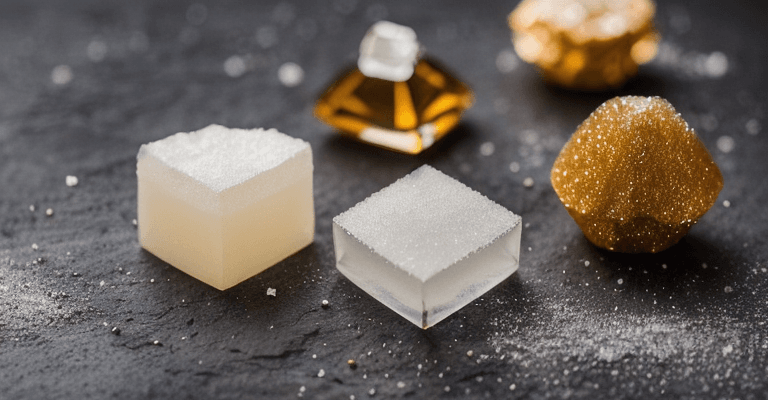
What Sugar Actually Does in Baking (Beyond Sweetness)
Sugar controls moisture, browning, spread, tenderness, and shelf life. Every function explained with adjustment tables for reducing or substituting sugar.
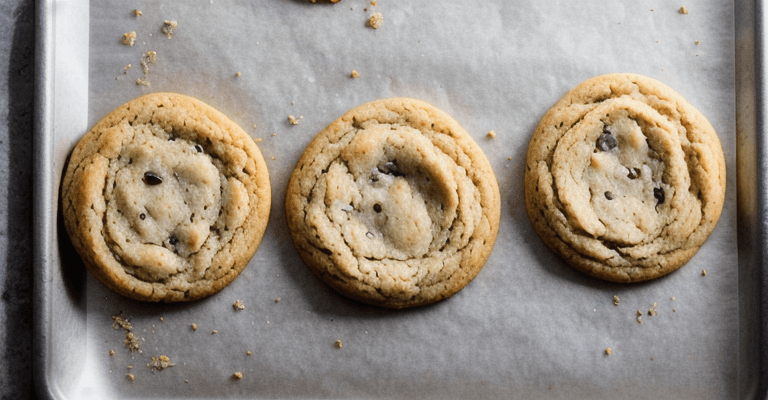
Why Cookies Spread Too Much — The Science of Spread, Set, and Rise (And How to Control Each)
Cookie spread is a race between butter melting, protein coagulation, and leavener activation. Here's the exact thermal timeline, every variable that affects spread, and the fix for each cause.