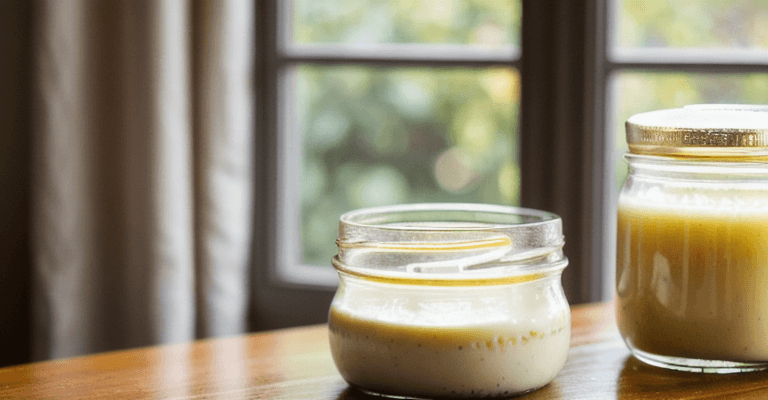
Emulsification in Cooking — The Science of Why Vinaigrettes Break and How to Fix Any Emulsion
Complete emulsification science: HLB values of kitchen emulsifiers, oil-to-acid ratios by dressing type, temperature stability ranges, droplet size data, and the universal rescue technique that works for hollandaise, mayo, vinaigrettes, and beurre blanc.
What Do You Actually Need to Know About Emulsification in Cooking?
What are the common mistakes, the precise measurements, and the science-backed techniques that separate reliable results from guesswork? This guide provides the reference tables, ratio calculations, and decision frameworks for emulsification in cooking — organized for quick lookup and practical application.
What an emulsion actually is — the physics
An emulsion is a stable mixture of two immiscible liquids — almost always oil and water. One liquid is dispersed as tiny droplets (the dispersed phase) suspended throughout the other (the continuous phase). In a vinaigrette, oil droplets are suspended in vinegar. In butter, water droplets are suspended in fat.
Oil and water separate because the system reaches lower energy when like molecules cluster together. To keep them mixed, you need either constant mechanical force (shaking), an emulsifier that sits at the interface, or both.
Droplet size determines stability. This is the single most important variable:
| Mixing Method | Droplet Size | Stability Without Emulsifier | Stability With Emulsifier |
|---|---|---|---|
| Hand-shaken jar | 100-500 μm | 30-90 seconds | 2-5 minutes |
| Fork/whisk | 50-100 μm | 2-5 minutes | 15-30 minutes |
| Vigorous whisk | 10-50 μm | 5-15 minutes | 1-4 hours |
| Immersion blender | 1-10 μm | 15-60 minutes | Days to weeks |
| High-speed blender | 0.5-5 μm | 1-4 hours | Weeks to months |
| Commercial homogenizer | 0.1-1 μm | Hours | Months (shelf-stable) |
Smaller droplets resist coalescence because: (1) lower buoyancy force relative to viscous drag, (2) more emulsifier molecules per unit of oil volume, (3) longer diffusion path before droplets encounter each other.
Types of emulsions in the kitchen
| Emulsion Type | Dispersed Phase | Continuous Phase | Examples | Stability | Critical Factor |
|---|---|---|---|---|---|
| Oil-in-water (O/W) temporary | Oil | Water/acid | Shaken vinaigrette | Minutes | Mechanical force only |
| Oil-in-water (O/W) semi-permanent | Oil | Water/acid | Mustard vinaigrette | Hours | Weak emulsifier + viscosity |
| Oil-in-water (O/W) permanent | Oil | Water/acid | Mayonnaise, aioli | Days-weeks | Strong emulsifier (lecithin) |
| Water-in-oil (W/O) | Water | Fat | Butter, ganache | Generally stable | Fat crystallization locks droplets |
| Double emulsion (W/O/W) | Water-in-oil-in-water | Complex | Some cream sauces | Fragile | Requires two emulsifier types |
The phase inversion trap: If you add too much dispersed phase (oil) to an O/W emulsion, the system can invert — the oil becomes the continuous phase and the water becomes trapped droplets. This is how broken mayo looks: suddenly thin and greasy instead of thick and creamy. The emulsion didn’t “break” — it inverted.
Kitchen emulsifiers — with HLB values
The HLB (Hydrophilic-Lipophilic Balance) scale runs from 0-20. Low HLB (1-8) favors W/O emulsions. High HLB (8-18) favors O/W emulsions. Every kitchen emulsifier has an effective HLB, which determines what it’s good at stabilizing.
| Emulsifier | HLB Range | Type | Max Oil per Unit | Best Application | Mechanism |
|---|---|---|---|---|---|
| Egg yolk lecithin | 9-11 | O/W | 240ml oil per yolk | Mayonnaise, hollandaise, aioli | Phospholipid coat on droplets |
| Dijon mustard | 7-9 | O/W | 120ml oil per tbsp | Vinaigrettes, pan sauces | Mucilage viscosity + mild surfactant |
| Whole-grain mustard | 6-8 | O/W | 90ml oil per tbsp | Chunky vinaigrettes | Weaker mucilage, textural |
| Garlic paste (raw, fine) | 7-9 | O/W | 180ml oil per head | Toum, garlic aioli | Protein + polysaccharide surfactant |
| Honey | N/A (viscosity only) | Neither | N/A | Vinaigrettes | Increases viscosity, slows coalescence |
| Tomato paste | 6-8 | O/W | 60ml oil per tbsp | Warm vinaigrettes, pasta sauces | Protein + pectin emulsification |
| Miso paste | 7-9 | O/W | 90ml oil per tbsp | Asian-style dressings | Soy protein + fermentation compounds |
| Xanthan gum | N/A (stabilizer) | Neither | N/A | Any dressing | Extreme viscosity; prevents movement |
| Soy lecithin (granules) | 10-12 | O/W | 300ml oil per tsp | Vegan mayo, molecular gastronomy | Pure phospholipid, strongest available |
For understanding surfactant chemistry and the HLB scale at the molecular level, the key insight is that lecithin’s phosphate head is hydrophilic while the fatty acid tails are hydrophobic — it physically straddles the oil-water interface.
Oil-to-acid ratios — the complete table
| Dressing/Sauce | Oil : Acid Ratio | Emulsifier | Temperature | Stability | Notes |
|---|---|---|---|---|---|
| Light vinaigrette | 2:1 | 1 tsp Dijon | Room temp | 1-2 hours | Sharp, bright, thin |
| Classic French vinaigrette | 3:1 | 1 tsp Dijon | Room temp | 2-4 hours | Balanced, standard |
| Creamy vinaigrette | 3:1 | 1 egg yolk | Room temp | Days | Thick, permanent |
| Caesar dressing | 4:1 | 1 yolk + anchovy + garlic | Room temp | Days | Complex emulsifier system |
| Mayonnaise | 8:1 to 12:1 | 1 yolk + 1 tsp acid | Room temp | Weeks | Must add oil slowly |
| Toum (Lebanese garlic) | 10:1 | 4 cloves garlic (paste) | Room temp | Days | No egg; garlic is sole emulsifier |
| Hollandaise | 5:1 (butter:yolk) | 3 yolks | 55-65C | Hours (held) | Breaks above 82C |
| Beurre blanc | 4:1 (butter:wine) | Casein from butter | 55-68C | Minutes (serve immediately) | No yolk; fragile |
| Pan sauce | 2:1 (stock:fat) | Gelatin from stock | 70-85C | Minutes | Deglazing creates emulsion |
For mayonnaise: Start with yolk, acid, and mustard whisked together. Add oil a few drops at a time for the first 60ml. Once the emulsion catches (visible thickening), increase to a thin steady stream. Adding oil too fast in the early stage is the #1 cause of broken mayo.
Temperature stability ranges
Every emulsion has a temperature window. Outside it, the emulsifier fails and the emulsion breaks.
| Emulsion | Min Temp | Optimal Range | Max Temp | What Happens Outside Range |
|---|---|---|---|---|
| Vinaigrette | 4C (fridge OK) | 15-25C | 40C (oil thins) | Below 4C: oil may solidify. Above 40C: viscosity drops |
| Mayonnaise | 4C (fridge OK) | 10-22C | 35C | Above 35C: yolk proteins loosen, oil separates |
| Hollandaise | 45C | 55-65C | 82C | Below 45C: butter solidifies into granules. Above 82C: yolk proteins coagulate, squeeze out fat |
| Beurre blanc | 50C | 55-68C | 68C | Above 68C: casein can’t hold emulsion, butter oil separates |
| Ganache | 28C | 30-35C | 50C | Below 28C: cocoa butter crystallizes (can be intentional). Above 50C: may separate |
| Pan sauce (gelatin-based) | 35C | 60-85C | 100C | Below 35C: gelatin sets (intentional for chilled sauces). Above 100C: rapid evaporation |
Why emulsions break — diagnostic table
| Symptom | Cause | The Physics | Fix | Prevention |
|---|---|---|---|---|
| Dressing separates in 2 minutes | No emulsifier, large droplets | Buoyancy drives oil upward | Add 1 tsp Dijon, re-whisk | Always include emulsifier |
| Mayo suddenly thin and oily | Oil added too fast → phase inversion | Emulsifier overwhelmed | New yolk in clean bowl, drizzle broken mix in slowly | Add oil drop-by-drop for first 60ml |
| Hollandaise curdled, grainy | Overheated (>82C) | Yolk proteins coagulated | 1 tbsp ice water + vigorous whisk off heat | Hold at 55-65C, never boil |
| Hollandaise stiff then broke | Too much butter per yolk | Dispersed phase exceeded emulsifier capacity | Add 1 tbsp warm water, whisk | Max 80g butter per yolk |
| Hollandaise cold and grainy | Cooled below 45C | Butter solidified into granules | 1 tbsp warm water + gentle heat + whisk | Keep warm in bain-marie |
| Beurre blanc separated into grease | Temperature exceeded 68C | Casein failed, free butterfat | Start over — rarely recoverable | Maintain 55-68C strictly |
| Ganache split, oily surface | Chocolate overheated or wrong ratio | Cocoa butter destabilized | Add 1 tbsp warm cream, stir from center outward | 2:1 cream:chocolate for dark, 3:1 for milk |
| Vinaigrette broke overnight | Normal for temporary emulsion | Droplets coalesced over time | Re-whisk, or add 0.1% xanthan for permanent stability | Xanthan gum (1/8 tsp per cup) |
The universal rescue technique
When any emulsion breaks, the fix follows one principle: reintroduce a small amount of continuous phase with emulsifier, then slowly re-incorporate the broken mixture.
- Place 1 tablespoon warm water (warm sauces) or room-temp acid (cold dressings) in a clean bowl
- Add emulsifier: half a yolk, 1 tsp mustard, or 1 tsp of sauce that still looks emulsified
- Whisk until combined
- Add broken sauce one teaspoon at a time, whisking after each addition
- Once it re-catches (thickens and becomes smooth), increase to a thin stream
This works for hollandaise, mayo, vinaigrettes, and beurre blanc. The key is patience in steps 3-4.
The technique that won’t work: Adding more oil or fat to fix a broken emulsion. This is the opposite of what’s needed — the system already has too much dispersed phase relative to emulsifier. You need more continuous phase (water/acid) and more emulsifier.
The honest limit
Some emulsion failures are not rescuable. If hollandaise has been held above 85C for more than 30 seconds, the yolk proteins are permanently denatured — the curds can’t re-emulsify. If beurre blanc has boiled, the casein is destroyed. In these cases, start over. The ingredients are inexpensive; the time spent fighting a permanently broken emulsion is not.
Understanding emulsifier safety classifications helps when choosing between natural emulsifiers (egg yolk, mustard) and processed ones (soy lecithin, xanthan gum) — both are safe, but knowing the E-number system prevents unnecessary avoidance of ingredients that have been used for decades.
Quick Reference Summary
| Emulsion type | Example | Emulsifier | Stability | Break recovery |
|---|---|---|---|---|
| Temporary | Vinaigrette | Mustard (lecithin) | Minutes | Re-whisk |
| Semi-stable | Hollandaise | Egg yolk (lecithin) | Hours (warm) | Add warm water, re-whisk slowly |
| Stable | Mayonnaise | Egg yolk (lecithin) | Days-weeks | Restart with new yolk, add broken mayo slowly |
| Permanent | Butter | Milk proteins + fat crystals | Months | Cannot recover — re-churn |
Decision rule: Add oil/fat to the continuous phase slowly (drip, not pour) while whisking constantly. Temperature must match the emulsion type — cold for mayo, warm for hollandaise, any for vinaigrette.
How to apply this
Use the recipe-scaler tool to adjust portions to scale ingredient quantities based on the data above.
Start with the reference tables above to identify the correct parameters for your specific ingredient or technique.
Measure your key variables (temperature, weight, time) before beginning — precision prevents waste.
Check the comparison tables to select the best approach for your situation and equipment.
Adjust quantities using the recipe-scaler when scaling up or down from the tested ratios.
Test with a small batch first, using the exact measurements from the tables before committing to full volume.
Verify your results against the expected outcomes listed in the quick reference section.
Honest Limitations
Emulsion stability depends on factors beyond technique — egg freshness (older eggs emulsify better due to thinner whites), oil type (neutral oils emulsify more easily than olive oil), and temperature precision. “Slowly” is vague but critical — for mayonnaise, the first 1/4 cup of oil should take 2-3 minutes; rushing causes breaking. Lecithin content varies between egg yolks. Commercial emulsifiers (xanthan gum, lecithin powder) behave differently than whole-food emulsifiers. This guide covers mechanical emulsification; chemical emulsification in processed foods uses different mechanisms. Broken emulsions are not always recoverable — severely overheated hollandaise produces scrambled egg, not a recoverable emulsion.
