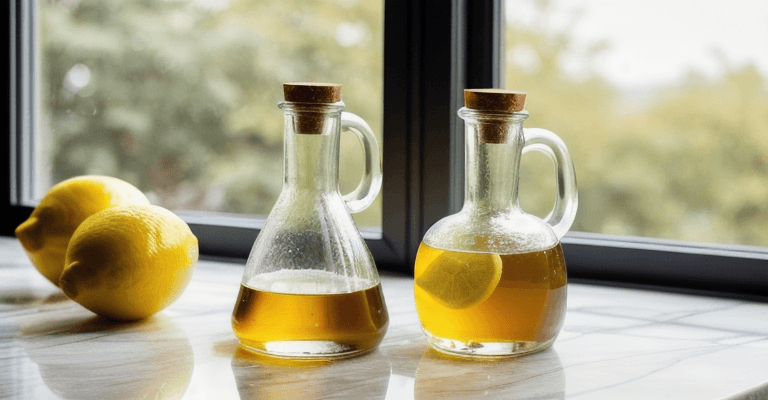
Acid in Cooking — Vinegar, Citrus, Wine, and How to Balance Flavor
pH levels of common cooking acids, when to add acid early vs. late, how acid reacts with heat and proteins, and the science of brightness vs. sharpness in flavor.
What Do You Actually Need to Know About Acid in Cooking?
What are the common mistakes, the precise measurements, and the science-backed techniques that separate reliable results from guesswork? This guide provides the reference tables, ratio calculations, and decision frameworks for acid in cooking — organized for quick lookup and practical application.
Why acid is the most neglected seasoning
Salt enhances existing flavors. Fat carries flavors across your palate. But acid is what creates the sensation of brightness — that lift that makes food taste alive instead of flat. A soup that tastes “good but missing something” almost always needs acid, not more salt.
Acid works by stimulating sour taste receptors and by suppressing the perception of bitterness and heaviness. A squeeze of lemon on braised greens does not make them sour — it counteracts the bitterness of the greens and the heaviness of the braising fat, making the whole dish taste cleaner and more defined.
Professional kitchens finish almost every savory dish with acid. A few drops of vinegar in a stew. Lemon juice squeezed over roasted vegetables. A splash of wine swirled into a pan sauce. This final acid addition is as routine as final seasoning with salt — and far more transformative.
pH levels of common cooking acids
pH is a logarithmic scale. Each whole number represents a 10x difference in acidity. Lemon juice (pH 2.0) is 10 times more acidic than tomato (pH 3.0) and 100 times more acidic than coffee (pH 4.0).
| Acid source | pH range | Acidity character | Typical use |
|---|---|---|---|
| Distilled white vinegar (5%) | 2.4–2.6 | Sharp, clean, one-note | Pickling, cleaning, baking (with baking soda) |
| Apple cider vinegar | 3.1–3.5 | Mellow, fruity, rounded | Dressings, braises, BBQ sauce |
| Red wine vinegar | 2.8–3.2 | Tannic, deep, slightly bitter | Vinaigrettes, Mediterranean sauces |
| Balsamic vinegar (aged) | 3.5–4.5 | Sweet, complex, low bite | Finishing, glazes, reductions |
| Rice vinegar | 4.0–4.5 | Mild, slightly sweet | Sushi rice, Asian dressings, stir-fry |
| Lemon juice | 2.0–2.6 | Bright, sharp, volatile | Finishing, dressings, ceviche |
| Lime juice | 2.0–2.4 | Bright, floral, slightly bitter | Mexican, Thai, ceviche, cocktails |
| Orange juice | 3.3–4.2 | Sweet, mild acid | Glazes, marinades, slow-cooked sauces |
| Tomato (crushed) | 3.5–4.5 | Savory-acid, umami overlap | Sauces, braises, soups |
| Wine (white, dry) | 3.0–3.5 | Complex, volatile, layered | Deglazing, poaching, cream sauces |
| Wine (red, dry) | 3.3–3.6 | Tannic, full, slightly bitter | Braises, reductions, pan sauces |
| Buttermilk | 4.4–4.8 | Gentle, tangy, creamy | Baking, marinades, dressings |
| Yogurt | 4.0–4.6 | Tangy, thick, stabilized | Marinades, sauces, baking |
| Tamarind paste | 2.0–3.0 | Sour-sweet, deep, fruity | Thai, Indian, Mexican sauces |
Early acid vs. late acid — timing changes everything
When you add acid determines what it does to your dish. The same ingredient added at two different points creates two completely different effects.
Early acid (added at the start or during cooking):
- Integrates fully into the dish — you taste it as part of the overall flavor, not as a distinct acid hit
- Mellows significantly during cooking as volatile acids (acetic acid in vinegar, citric acid in lemon) evaporate
- Toughens legumes and dried beans — acid prevents cell walls from softening. Never add tomato, vinegar, or citrus to beans until they are fully tender
- Keeps vegetables firm — acid reinforces pectin in cell walls. Add acid to green beans or root vegetables if you want them to hold their shape
- Turns green vegetables drab — acid converts bright-green chlorophyll to olive-green pheophytin. Add acid to green vegetables at the end, not the beginning
Late acid (added in the last 1–2 minutes or after cooking):
- Creates brightness — the sharp, high-note lift that wakes up a dish
- Retains volatile aromatics — lemon zest compounds and fresh vinegar aromatics survive when not cooked
- Does not affect texture — proteins and cell walls are already set
- Highest perceptible impact — because the acid has not cooked down, less volume creates more effect
The professional rule: Use a mild acid early for depth (wine, tomato, buttermilk). Use a sharp acid late for brightness (lemon, vinegar, lime). Many dishes benefit from both — wine deglazed into a pan sauce during cooking, then a squeeze of lemon at the very end.
Deglazing — acid meets heat on fond
Fond is the brown layer stuck to the bottom of a pan after searing protein or vegetables. It is concentrated flavor — caramelized sugars, Maillard reaction products, rendered protein bits. Deglazing dissolves fond into liquid, and acid is the ideal deglazing agent.
Why acid works better than water for deglazing: Water dissolves fond, but acid dissolves fond and simultaneously brightens the heavy, rich flavors of the sear. The acid partially neutralizes the slight bitterness of deeply caramelized sugars while carrying the complex flavors into solution.
Deglazing protocol:
- Remove protein from pan. Pour off excess fat, leaving 1–2 tablespoons.
- Return pan to medium-high heat.
- Add 120–180ml (1/2–3/4 cup) of wine, vinegar, or citrus-stock mixture.
- Scrape the bottom immediately with a wooden spoon or stiff spatula.
- Reduce by half — this concentrates flavor and cooks off raw alcohol (wine) or harsh volatiles (vinegar).
- Add stock, cream, or butter to build the sauce.
| Deglazing liquid | Best for | Reduction time |
|---|---|---|
| White wine | Chicken, fish, pork, mushrooms | 2–3 min to half |
| Red wine | Beef, lamb, duck, root vegetables | 3–4 min to half |
| Sherry | Mushrooms, cream sauces, pork | 1–2 min to half |
| Apple cider vinegar | Pork chops, chicken thighs | 1 min (strong — use less) |
| Balsamic vinegar | Steak, roasted vegetables | 1–2 min (watch for burning sugar) |
| Lemon juice + stock | Fish, light vegetables | 1 min (do not over-reduce citrus) |
Acid and protein — marinades, ceviche, and denaturation
Acid denatures protein — it unfolds the molecular structure, similar to how heat does. This is why ceviche “cooks” fish without heat. The citric acid in lime juice denatures the proteins, turning translucent flesh opaque and firm.
Marinating with acid: Acidic marinades (citrus, vinegar, wine, yogurt) tenderize the surface of meat by breaking down connective tissue. But only the surface — acid penetrates about 1–2mm into dense muscle. Beyond that, the denatured surface layer actually blocks further penetration.
Over-marinating risk: More than 2 hours in a high-acid marinade (pH below 3.0) makes the outer layer mushy while the interior stays unaffected. The surface proteins denature so completely that they lose the ability to hold moisture. The result is a mushy exterior with a tough interior — the worst of both worlds.
| Protein | Max time in acid marinade | Recommended acid |
|---|---|---|
| Shrimp | 15–30 minutes | Lime, lemon |
| Fish fillets (thin) | 15–30 minutes | Lime, lemon (ceviche) |
| Fish fillets (thick) | 30–60 minutes | Wine, citrus blend |
| Chicken breast | 2 hours max | Yogurt, buttermilk, lemon |
| Chicken thighs | 4–6 hours | Yogurt, vinegar, wine |
| Pork chops | 2–4 hours | Apple cider vinegar, citrus |
| Beef steak | 2–4 hours | Wine, vinegar |
| Lamb | 4–8 hours | Yogurt (protective, mild) |
Balancing acid in a finished dish
If you have added too much acid, you cannot remove it. But you can rebalance the perception.
Add fat. Butter, cream, olive oil, or coconut milk coat the tongue and reduce the sharpness of acid perception. This is why lemon butter sauce works — the butter tames the lemon.
Add sweetness. A pinch of sugar or a drizzle of honey counteracts sourness directly. Start with 1/4 teaspoon of sugar per cup of sauce and taste.
Add salt. Salt suppresses both bitterness and excessive sourness. Often “too acidic” is actually “under-salted.”
Dilute with stock or water. The least elegant fix, but effective if the over-acidification is moderate.
Add starch. Potatoes, rice, or bread absorb acid and dilute its impact in soups and stews.
The goal is never to eliminate acid — it is to place acid in balance with salt, fat, and sweetness so that all four fundamental taste dimensions support each other. A perfectly balanced dish has enough acid that you do not consciously taste sourness, but removing it would make everything taste flat.
Acid strength and pH reference — practical amounts per serving
Theory means nothing without dosing. This table gives the practical amount of each acid source needed to brighten a single serving (roughly 250-350ml of sauce, soup, or dressing), along with the strength classification that determines how carefully you need to measure.
| Acid Source | pH | Strength | Best Application | Amount Per Serving |
|---|---|---|---|---|
| Lemon juice | 2.0-2.4 | Strong | Finishing seafood, roasted vegetables, cream sauces | 1/2-1 tsp (add at end, taste, repeat) |
| Lime juice | 2.0-2.4 | Strong | Thai curries, Mexican salsas, ceviche, guacamole | 1/2-1 tsp (slightly more bitter than lemon — start lower) |
| Distilled white vinegar | 2.4-2.6 | Strong | Pickling, baking soda activation, BBQ mops | 1/4-1/2 tsp (harsh raw — best cooked into dishes) |
| Red wine vinegar | 2.8-3.2 | Moderate | Vinaigrettes, braises, Mediterranean sauces, bean dishes | 1/2-1 tsp (tannic edge softens with oil or fat) |
| Apple cider vinegar | 3.1-3.5 | Moderate | Pork braises, coleslaw, BBQ sauce, honey-mustard dressing | 1/2-1 tsp (mellow enough to use in larger amounts) |
| White wine | 3.0-3.5 | Moderate | Deglazing, pan sauces, cream reductions, poaching liquid | 2-3 tbsp (alcohol evaporates — acid concentrates as it reduces) |
| Tomato (crushed) | 3.5-4.5 | Mild | Pasta sauce, stews, braises, shakshuka | 2-4 tbsp (dual role as acid + umami — more volume needed) |
| Buttermilk | 4.4-4.8 | Mild | Marinades, biscuit dough, pancake batter, ranch dressing | 2-4 tbsp (gentle acid — hard to over-add in savory applications) |
The strength classification matters for technique. Strong acids (pH below 2.6) must be added in small increments — a teaspoon too much crosses from brightness into sharpness and cannot be reversed. Moderate acids (pH 2.8-3.5) are more forgiving and can be adjusted by the tablespoon. Mild acids (pH 3.5+) function as background ingredients rather than finishing seasonings, and quantities are measured in tablespoons rather than teaspoons.
What acid theory doesn’t predict
Personal taste thresholds vary 10x. Research on sour perception shows that individual detection thresholds for citric acid range from 0.4 to 4.0 millimoles per liter — a full order of magnitude. One person’s “perfectly bright” lemon finish is another person’s “painfully sour.” This is not a preference issue; it is a physiological difference in taste receptor density and saliva buffering capacity. No chart can tell you how much acid YOUR palate needs. The only method is taste, adjust, taste again.
Acid perception changes with temperature. Cold food tastes more acidic than the same food served warm. A vinaigrette that tastes balanced at room temperature will taste sharper straight from the fridge. A warm soup finished with lemon will taste less acidic than the leftovers reheated the next day. Professional kitchens taste-adjust acid at serving temperature, not during cooking when the dish is at 90°C. If you season a hot soup with lemon and it tastes perfect, it will taste flat when it cools to 60°C at the table. Over-season slightly for dishes served hot.
Salt-acid interaction is non-linear. Salt suppresses sourness, but the relationship is not proportional. Low salt + high acid = overwhelming sourness. Adding salt reduces perceived acidity sharply up to a threshold (roughly 1-1.5% salt by weight), then additional salt has diminishing returns. This means an “acidic” dish often needs salt, not less acid. Under-salted food with correct acid reads as sour. Properly salted food with the same acid reads as bright. The practical consequence: always check salt level before reducing acid.
Acid tolerance is culturally conditioned. Southeast Asian cuisines routinely use acid levels (tamarind, lime, vinegar) that would register as aggressively sour in Northern European palates. Mexican cuisine balances extreme lime acidity with chili heat in ways unfamiliar to Japanese palates conditioned to subtle rice vinegar. There is no universal “correct” acid level — only the level appropriate to the cuisine and the diner. Recipes from unfamiliar cuisines may seem over-acidified until your palate calibrates to that cuisine’s balance point.
Quick Reference Summary
| Acid source | pH range | Best application | Key interaction |
|---|---|---|---|
| Lemon/lime juice | 2.0-2.6 | Finishing, ceviche, dressings | Brightens flavor; denatures protein |
| Vinegar (5% acetic) | 2.4-3.4 | Pickling, deglazing, marinades | Tenderizes; inhibits browning |
| Wine (red/white) | 3.0-3.8 | Braising, pan sauces, reductions | Flavor complexity; acid + tannin |
| Tomatoes | 4.0-4.5 | Sauces, stews, slow cooking | Umami + acid; breaks down collagen |
| Buttermilk | 4.4-4.8 | Marinades, baking (with baking soda) | Tenderizes meat; activates leavening |
| Cream of tartar | ~3.0 (in solution) | Meringue stabilization, candy | Stabilizes egg whites; prevents crystallization |
Decision rule: Add acid early for tenderizing and chemical reactions. Add acid late (finishing) for bright, clean flavor.
How to apply this
Use the recipe-scaler tool to adjust portions to scale ingredient quantities based on the data above.
Start with the reference tables above to identify the correct parameters for your specific ingredient or technique.
Measure your key variables (temperature, weight, time) before beginning — precision prevents waste.
Check the comparison tables to select the best approach for your situation and equipment.
Adjust quantities using the recipe-scaler when scaling up or down from the tested ratios.
Test with a small batch first, using the exact measurements from the tables before committing to full volume.
Verify your results against the expected outcomes listed in the quick reference section.
Honest Limitations
Acid behavior in cooking depends on concentration, temperature, exposure time, and what it interacts with — these variables create complexity that simple ratio tables cannot fully capture. Marinating times for tenderizing are estimates; actual results depend on meat thickness, cut, and acid strength. Ceviche “cooking” through acid denaturation does not kill all parasites — freezing before acid treatment is the food safety recommendation. The pH values listed are for pure ingredients; in a dish with multiple components, the effective pH changes. This guide covers common culinary acids; specialty ingredients (verjuice, sumac, amchoor) follow similar principles but with different flavor profiles not detailed here.
