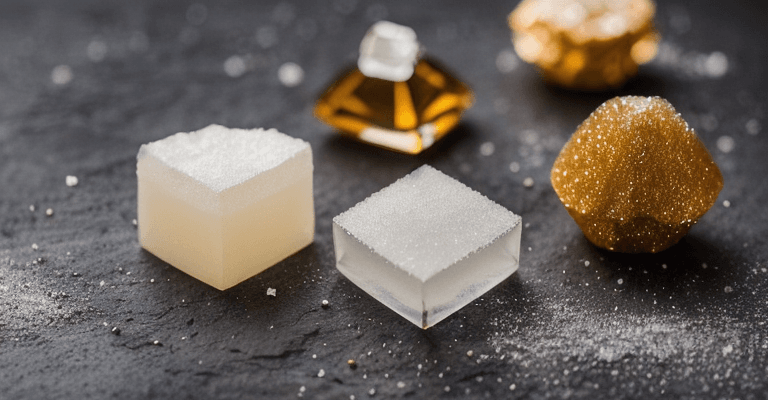
What Sugar Actually Does in Baking (Beyond Sweetness)
Sugar controls moisture, browning, spread, tenderness, and shelf life. Every function explained with adjustment tables for reducing or substituting sugar.
What Do You Actually Need to Know About What Sugar Actually Does in Baking (Beyond Sweetness)?
What are the common mistakes, the precise measurements, and the science-backed techniques that separate reliable results from guesswork? This guide provides the reference tables, ratio calculations, and decision frameworks for what sugar actually does in baking (beyond sweetness) — organized for quick lookup and practical application.
Sugar has 7 jobs in baking
Most people think sugar = sweetness. In baking, sweetness is the least important function. Removing or reducing sugar without understanding its other 6 roles destroys the product.
| Function | Mechanism | What happens without it |
|---|---|---|
| Sweetness | Taste receptor activation | Less sweet (obvious) |
| Moisture retention | Hygroscopic — attracts and holds water | Baked goods dry out faster, stale in 1–2 days |
| Tenderness | Competes with gluten for water, inhibits gluten formation | Tougher, chewier texture |
| Browning | Maillard reaction (amino acids + reducing sugars) + caramelization | Pale crust, less flavor complexity |
| Spread | Sugar melts during baking, allowing dough to flow before setting | Thicker, puffier cookies |
| Creaming | Sharp sugar crystals cut air pockets into fat | Dense crumb, less rise |
| Preservation | Low water activity inhibits microbial growth | Shorter shelf life, faster mold |
How different sugars behave
Not all sugars are interchangeable. They differ in sweetness, moisture, acidity, and browning.
| Sugar | Sweetness (sucrose = 100) | Moisture contribution | Browning | Acidity | Notes |
|---|---|---|---|---|---|
| White granulated | 100 | Baseline | Moderate | Neutral | Standard reference |
| Brown sugar (light) | 95 | +10% (molasses) | High | Slightly acidic | Add ½ tsp baking soda per cup to neutralize |
| Brown sugar (dark) | 90 | +15% (more molasses) | Very high | Acidic | More toffee flavor, more moisture |
| Powdered/confectioners | 100 | Same | Same | Neutral | Contains 3% cornstarch — affects texture |
| Honey | 120 | +20% (liquid) | Very high (fructose browns fast) | Acidic (pH 3.9) | Reduce other liquids by 25% |
| Maple syrup | 60 | +25% (liquid) | High | Slightly acidic | Reduce other liquids by 25% |
| Coconut sugar | 85 | +5% | High | Neutral | 1:1 swap for brown sugar |
| Molasses | 65 | +20% (liquid) | Very high | Very acidic | Never more than 25% of total sugar |
Caramelization temperatures
Sugar doesn’t just melt — it undergoes a complex decomposition that produces hundreds of flavor compounds at specific temperature stages.
| Stage | Temperature | Color | Flavor | Use |
|---|---|---|---|---|
| Melting | 160°C (320°F) | Clear liquid | Sweet, no browning | Sugar syrups |
| Light caramel | 165–170°C (330–340°F) | Pale gold | Buttery, mild | Crème brûlée, flan |
| Medium caramel | 170–180°C (340–355°F) | Amber | Rich, toffee | Caramel sauce, praline |
| Dark caramel | 180–190°C (355–375°F) | Deep brown | Bitter-sweet, complex | Caramel color, gravies |
| Burnt | >190°C (>375°F) | Black | Acrid, bitter | Waste |
The window between perfect dark caramel and burnt sugar is 5–10 seconds. Watch constantly and have an ice bath ready to stop the cooking.
Reducing sugar — what breaks and how to compensate
| Reduction | Effect on cookies | Effect on cakes | Compensation |
|---|---|---|---|
| 25% less | Slightly less spread, less brown | Slightly denser, still acceptable | Add 1 tbsp milk per cup of sugar removed |
| 50% less | Much less spread, pale, chewy | Noticeably drier, tough | Add 2 tbsp applesauce + extra fat. Reduce bake time 5 min |
| 75% less | Nearly unrecognizable | Tough, dry, structural failure | Not recommended — too many functions lost |
| 100% (sugar-free) | Different product entirely | Different product entirely | Requires complete reformulation with humectants |
The safe reduction ceiling for most recipes: 25%. Beyond that, you’re reformulating, not adjusting.
Sugar and yeast breads
In yeasted doughs, sugar serves different functions:
| Sugar % (baker’s) | Effect on yeast | Dough behavior |
|---|---|---|
| 0–4% | Optimal — yeast feeds on maltose from flour enzymes | Standard bread dough |
| 5–10% | Still good — sugar feeds yeast directly | Slightly sweet, softer crumb (milk bread, challah) |
| 12–20% | Osmotic stress begins — yeast slows | Rich doughs need more yeast and longer rise (brioche) |
| >20% | Yeast severely inhibited — osmotic shock | Requires osmotolerant yeast (SAF Gold). Very long fermentation |
This is why brioche and panettone take so long to rise — the sugar concentration creates osmotic pressure that pulls water out of yeast cells, slowing their metabolism.
The creaming method — why order matters
When a recipe says “cream butter and sugar until light and fluffy,” the physics:
- Sharp sugar crystal edges cut tiny air pockets into solid fat
- These air pockets are nucleation sites for CO₂ from baking powder/soda
- During baking, air pockets expand → rise
If you use liquid sugar (honey, maple) in a creaming recipe, you lose this mechanical aeration. The product will be denser. Compensate with extra baking powder (add ¼ tsp per cup of liquid sugar) or whip eggs separately and fold in.
Sugar is a structural ingredient
The takeaway: cutting sugar “to be healthier” without understanding these functions produces baked goods that are tough, dry, pale, and stale fast. If you want less sugar, it’s better to make a smaller batch of the full recipe than to halve the sugar in a large batch.
Sugar’s six functions measured
Each function sugar performs has a different mechanism, a different failure mode when removed, and a different substitute ceiling. No single substitute covers all six. This table quantifies how much of each function the best available substitute can recover.
| Function | How Sugar Does It | What Happens Without It | Substitute That Partially Covers It | % of Function Replaced |
|---|---|---|---|---|
| Moisture retention | Hygroscopic — binds water molecules, slows evaporation from crumb | Baked goods stale in 1-2 days instead of 4-5 | Honey or glycerin (humectant) | 70-80% — honey is more hygroscopic than sucrose but adds flavor and changes browning |
| Browning (Maillard + caramelization) | Reducing sugars react with amino acids above 140°C; sucrose caramelizes above 160°C | Pale crust, flat flavor profile, missing 200+ volatile compounds | Milk powder (adds lactose, a reducing sugar) + light brushing of honey | 50-60% — browning occurs but color and flavor complexity are noticeably reduced |
| Tenderness | Sugar competes with gluten for water, limiting gluten development; also interferes with protein coagulation | Tough, chewy, bread-like texture in cakes and cookies | Fat increase (add 1-2 tbsp butter per 1/4 cup sugar removed) | 40-50% — fat tenderizes via different mechanism (shortening strands) but can’t replicate sugar’s water-binding |
| Spread (cookies) | Sugar dissolves during baking, liquefying dough before proteins and starches set, allowing lateral flow | Thick, cakey, puffy cookies that hold their shape too rigidly | Corn syrup (liquid sugar, promotes flow) | 60-70% — corn syrup adds flow but less sweetness and different chew |
| Preservation | Low water activity (aw below 0.85) inhibits bacterial and mold growth | Shelf life drops from 5-7 days to 2-3 days at room temperature | Potassium sorbate or citric acid (chemical preservatives) | 30-40% — preservatives address microbial growth but don’t maintain texture freshness |
| Creaming (mechanical aeration) | Sharp-edged crystals physically cut air pockets into solid fat during mixing | Dense crumb, 20-30% less rise, flat texture | Extra baking powder (add 1/4 tsp per 1/4 cup sugar removed) | 25-35% — chemical leavening adds gas but air pockets are larger and less stable than creamed ones |
The replacement percentages reveal the core problem: sugar’s easiest function to replace is moisture (70-80%), and its hardest is creaming (25-35%). Recipes that depend heavily on the creaming method (pound cake, butter cookies, layer cakes) are the most damaged by sugar reduction. Recipes that primarily need moisture and sweetness (banana bread, muffins, quick breads) tolerate reduction better.
What sugar function analysis misses
Interaction effects between functions. The table above treats each function independently, but in reality they compound. Sugar’s moisture retention helps the creaming structure survive baking. Sugar’s browning produces flavors that mask the slight bitterness of chemical leaveners. Removing sugar doesn’t remove 6 independent functions — it removes an interconnected system where each function supports the others. A 25% sugar reduction doesn’t reduce each function by 25%; it degrades the weakest link (creaming, preservation) disproportionately.
The impossibility of replacing all 6 simultaneously. Honey replaces moisture and browning well but cannot cream. Erythritol creams reasonably but doesn’t brown or retain moisture. Monk fruit provides sweetness but contributes zero functionality to any other parameter. There is no substitute that replicates sugar across all six dimensions. Every “sugar-free” recipe is making trade-offs — the good ones acknowledge which functions they’re sacrificing and compensate. The bad ones pretend the swap is seamless.
Recipes where sugar IS the product. Caramel, meringue, candy, fondant, marshmallow, spun sugar, praline, toffee — these are sugar preparations, not recipes that happen to contain sugar. Substitution here is not reformulation; it is making a fundamentally different product. A “sugar-free caramel” is an oxymoron. Caramel is what happens when sucrose molecules break apart at 160°C. Without sucrose, you are making a flavored sauce, not caramel.
Quick Reference Summary
| Function | Mechanism | Consequence of reducing sugar |
|---|---|---|
| Sweetness | Taste receptor activation | Less sweet (obvious) |
| Moisture retention | Hygroscopic — attracts/holds water | Drier product, shorter shelf life |
| Tenderizing | Competes with gluten for water | Tougher texture, more chew |
| Browning | Maillard reaction + caramelization | Paler crust, less flavor complexity |
| Spread (cookies) | Dissolves in dough, lowers viscosity | Less spread, puffier shape |
| Creaming (leavening) | Traps air when beaten with butter | Denser crumb, less rise |
| Preservation | Lowers water activity | Shorter shelf life, mold risk |
Decision rule: Reducing sugar by more than 25% in a recipe changes structure, not just sweetness. Treat sugar as a structural ingredient, not a flavor-only ingredient.
How to apply this
Use the recipe-scaler tool to adjust portions to scale ingredient quantities based on the data above.
Start with the reference tables above to identify the correct parameters for your specific ingredient or technique.
Measure your key variables (temperature, weight, time) before beginning — precision prevents waste.
Check the comparison tables to select the best approach for your situation and equipment.
Adjust quantities using the recipe-scaler when scaling up or down from the tested ratios.
Test with a small batch first, using the exact measurements from the tables before committing to full volume.
Verify your results against the expected outcomes listed in the quick reference section.
Honest Limitations
Sugar’s functions interact — reducing sugar simultaneously affects moisture, structure, browning, and preservation, making simple substitution unreliable. Different sugars (granulated, brown, powdered, honey, maple syrup) serve different functions due to different moisture content, crystal size, and acid content. “Sugar-free” baking requires compensating for lost bulk, moisture, browning, and tenderizing — artificial sweeteners provide sweetness only. This guide covers sucrose (table sugar) primarily; other sugars (fructose, glucose, maltose) have different hygroscopic properties and browning temperatures. Caramelization and Maillard browning are distinct reactions that happen at different temperatures and involve different chemistry.
