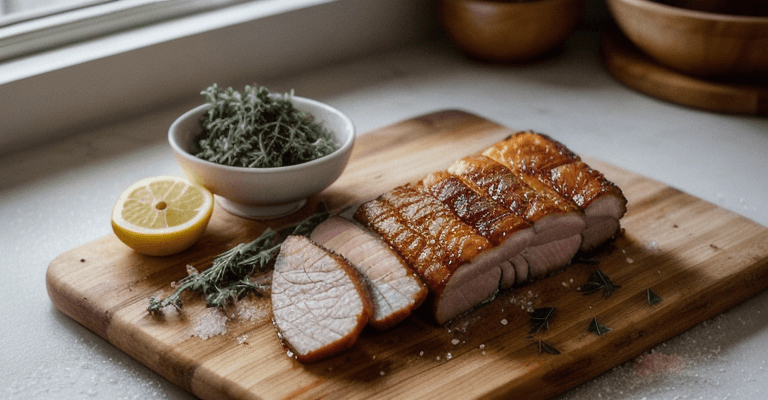
Salt Curing Science — Water Activity, Concentration Mechanics, and Safety Calculations for Every Cure Type
Water activity controls whether cured meat is safe or lethal. Complete salt concentration formulas, nitrite safety limits by jurisdiction, cure penetration rates, and water activity targets for 12 classic cured products.
Water activity controls everything — not salt percentage
What does this actually mean in practice, and when does it matter?
Salt does not kill bacteria directly. It lowers water activity (aw) — the amount of water available for microbial metabolism. Fresh meat has an aw of 0.99. Most spoilage bacteria stop growing below 0.91. Staphylococcus aureus — the most salt-tolerant pathogen in food — stops at 0.83. Clostridium botulinum stops producing toxin at 0.94. Your cure target depends on which organism you need to stop.
| Material / Product State | Water Activity (aw) | Pathogen Status | Shelf Stability |
|---|---|---|---|
| Fresh meat (beef, pork, poultry) | 0.99 | All pathogens can grow | Requires refrigeration, 3-5 day shelf life |
| Fresh fish | 0.98-0.99 | All pathogens can grow | Requires refrigeration, 1-2 day shelf life |
| Cured meat — early stage (day 1-3) | 0.96-0.98 | Most pathogens still viable | Must remain refrigerated |
| Cured bacon (finished) | 0.95-0.97 | C. botulinum inhibited by nitrite + aw | Refrigerated, 7-14 days |
| Pancetta (finished) | 0.90-0.92 | Most bacteria inhibited | Refrigerated, 3-6 months |
| Bresaola (finished) | 0.87-0.90 | Most bacteria inhibited | Refrigerated, 4-8 months |
| Country ham (long-cured) | 0.85-0.88 | Shelf-stable threshold approached | Ambient storage possible at <0.85 |
| Beef jerky (properly dried) | 0.70-0.85 | Nearly all pathogens inhibited | Shelf-stable, 6-12 months sealed |
| Prosciutto di Parma (18+ months) | 0.82-0.86 | Shelf-stable | Ambient storage for whole leg |
| Honey | 0.55-0.62 | No pathogen growth (supports spores) | Indefinite shelf life |
| Staphylococcus aureus growth limit | 0.83 | Minimum aw for growth | — |
| Clostridium botulinum toxin production limit | 0.94 | Minimum aw for toxin | — |
| Salmonella growth limit | 0.93 | Minimum aw for growth | — |
| Listeria monocytogenes growth limit | 0.90 | Minimum aw for growth | — |
Salt concentration by cure type — formulas that actually work
Three methods exist for applying salt to meat: dry cure (salt rubbed on surface), brine cure (meat submerged in salt solution), and equilibrium cure (measured salt mixed with meat in a sealed bag). The equilibrium method is the most reliable for home curers because it makes oversalting impossible.
| Cure Method | Salt as % of Meat Weight | Typical Brine Concentration | Cure Time | Precision Level | Risk of Oversalting |
|---|---|---|---|---|---|
| Dry cure (traditional) | 3-5% applied to surface | N/A | 1 day per cm thickness | Low — salt penetration uneven | High if left too long |
| Dry cure (excess salt pack) | 8-15% packed around meat | N/A | 1 day per cm, then rinse | Low — relies on feel | Very high — must rinse and soak |
| Brine cure (standard) | N/A | 3.5-6% by weight of water | 1 day per cm thickness | Moderate | Moderate — time-dependent |
| Brine cure (strong) | N/A | 8-10% by weight of water | 12-18 hours per cm | Moderate | High if over time |
| Equilibrium cure | 2-3% of total meat weight | N/A | 5-7 days regardless of thickness | High — cannot oversalt | None — equilibrium limits it |
Equilibrium cure calculation:
- Weigh the meat precisely (e.g., 1000g pork belly)
- Multiply by target salt percentage: 1000g x 0.025 = 25g salt
- Multiply by target sugar percentage (if using): 1000g x 0.01 = 10g sugar
- Add curing salt at prescribed rate (see nitrite section below)
- Mix all cure ingredients, rub on meat, vacuum seal or zip-bag with air pressed out
- Refrigerate at 2-4C for 5-7 days, flipping daily
- The meat absorbs exactly 2.5% salt — no rinsing needed, no guesswork
Brine concentration formula: Brine percentage = (salt weight / water weight) x 100. For a 5% brine: dissolve 50g salt per 1000g (1 liter) water. For accurate results, use weight, not volume — different salt types (kosher, fine, flake) have wildly different densities per tablespoon.
Curing salt types — Prague Powder #1 vs #2
Curing salts are not table salt. They contain sodium nitrite and/or sodium nitrate mixed with regular sodium chloride, dyed pink to prevent confusion with table salt. The two formulations serve different purposes and are not interchangeable.
| Property | Prague Powder #1 (Insta Cure #1) | Prague Powder #2 (Insta Cure #2) |
|---|---|---|
| Composition | 93.75% NaCl + 6.25% sodium nitrite | 89.75% NaCl + 6.25% sodium nitrite + 4% sodium nitrate |
| Color | Pink | Pink |
| Usage rate | 1g per 450g meat (1 tsp per 5 lbs) | 1g per 450g meat (1 tsp per 5 lbs) |
| Nitrite delivered at 1g/450g | ~139 ppm ingoing | ~139 ppm ingoing (plus nitrate reservoir) |
| Intended for | Short cures: bacon, sausage, corned beef, jerky | Long cures: salami, bresaola, prosciutto, country ham |
| Cure duration | Hours to 2 weeks | 2 weeks to 18+ months |
| Why nitrate is added to #2 | Not needed — nitrite acts directly | Nitrate slowly converts to nitrite over months via bacteria, providing ongoing protection |
| Can #1 replace #2? | No — nitrite depletes during long cures | — |
| Can #2 replace #1? | Technically yes, but unnecessary | — |
Nitrite safety — the dose makes the poison
Sodium nitrite is toxic in large quantities. It is also the single most important safety ingredient in cured meats, preventing botulism in conditions where salt alone is insufficient. The margin between the effective dose and the toxic dose is wide enough to be safe when used correctly, and narrow enough to demand precision.
| Nitrite Parameter | Value | Context |
|---|---|---|
| Lethal dose (LD50, oral, human estimate) | 71-180 mg per kg body weight | A 70kg adult: ~5,000-12,600 mg to reach LD50 |
| Amount in 100g cured bacon (ingoing) | 12-15 mg | You would need to eat 33-100 kg of bacon to approach LD50 |
| Residual nitrite after cooking bacon | 5-10 mg per 100g | Cooking reduces nitrite by 30-70% |
| US regulatory max (ingoing, comminuted meat) | 156 ppm (mg/kg) | USDA FSIS regulation |
| US regulatory max (ingoing, immersion-cured) | 200 ppm | USDA FSIS regulation |
| EU regulatory max (ingoing) | 150 ppm | Regulation (EC) No 1333/2008 |
| Residual limit at point of sale (EU) | 50-100 ppm depending on product | Measured, not calculated |
| Amount delivered by Prague Powder #1 at 1g/450g | ~139 ppm | Within all regulatory limits |
| Celery powder “no nitrite added” actual nitrite | 50-200+ ppm (variable, unmeasured) | Functionally identical to added nitrite, less controlled |
The “no nitrite added” label is misleading. Products cured with celery powder, cherry powder, or other vegetable-derived nitrate sources contain the same nitrite — it is just converted from plant nitrates by bacterial cultures during processing. The concentration is harder to control, making these products potentially less safe, not more.
Cure penetration rate — time calculations by thickness
Salt penetrates meat through diffusion, driven by the concentration gradient between the cure and the meat interior. The rate depends on temperature, salt concentration, and the physical structure of the meat (connective tissue barriers, bone, fat caps).
| Factor | Effect on Penetration Rate | Typical Rate |
|---|---|---|
| Dry cure, 4C, boneless | Baseline | 1 cm per day |
| Dry cure, 4C, bone-in | Bone blocks diffusion — salt must go around | 1.5 days per cm (effective) |
| Brine cure (5%), 4C | Slightly faster — liquid contact on all surfaces | 0.8 cm per day |
| Brine cure (10%), 4C | Faster gradient, but risk of surface over-cure | 1.2 cm per day |
| Higher temperature (8C vs 4C) | ~30% faster diffusion | 1.3 cm per day (but higher spoilage risk) |
| Fat cap intact | Fat blocks salt penetration almost completely | Score through fat or remove |
| Equilibrium cure (vacuum bag) | Constant contact, no evaporation | 0.7-1.0 cm per day, self-limiting |
Example calculation — dry-curing a 6cm-thick pork belly:
- Thickest point: 6cm, so salt must penetrate 3cm from each side
- Rate: 1 cm/day for dry cure at 4C
- Minimum cure time: 3 days
- Recommended cure time: 5 days (safety margin for uneven thickness)
- Equilibrium cure: 5-7 days regardless — the math is forgiving because oversalting cannot occur
Classic cures — parameters for specific products
Each product has a target salt level, water activity, and cure duration established by centuries of practice, now validated by food science.
| Product | Starting Cut | Salt % (of meat weight) | Cure Type | Sugar | Curing Salt | Cure Time | Drying/Aging | Final aw | Final Salt (eating) |
|---|---|---|---|---|---|---|---|---|---|
| Bacon (American) | Pork belly, skin-off | 2.5% | Equilibrium | 1% brown sugar | PP#1 at 0.25% | 7 days at 2-4C | Optional cold smoke | 0.95-0.97 | 1.5-2.0% |
| Pancetta (rolled) | Pork belly, skin-off | 3% | Equilibrium | 0.5% | PP#2 at 0.25% | 7-10 days at 2-4C | 2-4 weeks hang at 12-15C, 65-75% RH | 0.90-0.92 | 2.5-3.0% |
| Bresaola | Beef eye of round | 3% | Equilibrium | 0% | PP#2 at 0.25% | 14 days at 2-4C | 4-8 weeks at 12-15C, 65-70% RH | 0.87-0.90 | 3.0-4.0% |
| Gravlax | Salmon fillet, skin-on | 3.5% (mixed with sugar) | Dry pack | 3.5% white sugar | None (short cure) | 36-72 hours at 2C | No drying | 0.96-0.97 | 2.0-2.5% |
| Duck prosciutto | Whole duck breast | 3% | Dry/equilibrium | 0.5% | PP#2 at 0.25% | 24-36 hours | 2-4 weeks at 12-15C, 65-70% RH | 0.88-0.91 | 2.5-3.5% |
| Lonza (cured pork loin) | Pork loin | 3% | Equilibrium | 0% | PP#2 at 0.25% | 10-14 days at 2-4C | 4-8 weeks at 12-15C, 65-70% RH | 0.87-0.91 | 3.0-3.5% |
| Corned beef | Beef brisket | N/A | Brine (5-6%) | 1% of brine | PP#1 at 0.25% of meat | 5-7 days in brine at 2-4C | None — cook after cure | 0.96-0.97 | 2.0-2.5% |
| Guanciale | Pork jowl | 3.5% | Equilibrium | 0% | PP#2 at 0.25% | 7-10 days at 2-4C | 3-8 weeks at 12-15C, 65-75% RH | 0.88-0.92 | 3.0-3.5% |
| Coppa | Pork coppa/collar | 3% | Equilibrium | 0% | PP#2 at 0.25% | 14 days at 2-4C | 6-12 weeks at 12-15C, 65-70% RH | 0.86-0.90 | 3.0-4.0% |
| Lardo | Pork back fat | 3-4% | Dry pack in marble/container | 0% | None (pure fat, low aw risk) | 6-12 months at 10-15C | In cure container | 0.80-0.85 | 3.0-4.0% |
Botulism risk — why nitrite is non-negotiable for certain products
Clostridium botulinum is an anaerobic, spore-forming bacterium that produces a neurotoxin lethal at nanogram doses. It thrives in exactly the conditions that cured meats create: low oxygen (inside a dense meat mass or vacuum bag), moderate pH (meat pH 5.4-6.2 — well above the safe threshold of 4.6), and temperatures between 3C and 50C.
| Botulism Risk Factor | Threshold | Cured Meat Condition | Mitigation |
|---|---|---|---|
| pH for toxin production | Above 4.6 | Meat pH 5.4-6.2 — above threshold | Cannot be addressed by pH alone |
| aw for toxin production | Above 0.94 | Fresh/early cure meat 0.96-0.99 — above threshold | Dry to below 0.94 or use nitrite |
| Temperature for growth | 3-50C (optimal 25-40C) | Curing at 2-4C slows but does not stop nonproteolytic strains | Type E and B nonproteolytic grow at 3.3C |
| Oxygen requirement | Anaerobic (no oxygen) | Interior of whole-muscle cure is anaerobic | Nitrite is the primary control |
| Nitrite inhibition | 80-120 ppm ingoing inhibits toxin production | Prague Powder #1 at standard rate delivers ~139 ppm | This is the primary safety barrier |
The combination effect: No single factor (salt, nitrite, temperature, aw) eliminates botulism risk alone in cured meats. Safety comes from the combination — called the “hurdle concept.” Nitrite + salt + refrigeration + controlled aw together create conditions where C. botulinum cannot produce toxin. Remove any one hurdle, and risk increases significantly.
Products that skip nitrite (e.g., gravlax, lardo): These rely on different hurdle combinations. Gravlax is cured for only 36-72 hours, always refrigerated, and consumed quickly — the short timeframe limits spore germination. Lardo is nearly pure fat with aw below 0.85, making it inhospitable to C. botulinum regardless of nitrite.
Weight Loss as a Proxy for Water Activity
Professional curing operations measure aw directly with calibrated meters. Home curers cannot do this economically. The practical proxy is weight loss percentage — as a product dries, it loses water, and aw drops predictably. This table converts weight loss to estimated aw for whole-muscle cures.
| Weight Loss (% from green weight) | Estimated aw | Product State | Safety Status |
|---|---|---|---|
| 0–5% | 0.97–0.99 | Fresh, just cured — no drying | Must refrigerate; not shelf-stable |
| 10–15% | 0.93–0.96 | Early drying — surface firm, interior soft | Refrigerate; C. botulinum still viable above 0.94 |
| 20–25% | 0.89–0.93 | Mid-dry — sliceable, semi-firm throughout | Refrigerate; most pathogens inhibited below 0.91 |
| 30–35% | 0.84–0.89 | Mature — firm, concentrated flavor | Approaching shelf-stable below 0.85 |
| 35–40% | 0.80–0.85 | Fully dried — very firm, intense | Shelf-stable at room temperature |
| Above 40% | Below 0.80 | Over-dried — hard, possibly chalky | Safe but quality declining |
How to track: Weigh the product before curing (green weight). Weigh weekly during drying. Calculate: (green weight − current weight) / green weight × 100 = weight loss %. When the target is reached (typically 30–35% for most whole-muscle cures), the product is ready.
The limitation: Weight loss tracks average aw across the entire piece. The exterior may be at 0.82 (safe) while the interior is at 0.93 (not safe) if drying was too fast. This is why curing environments must maintain 65–75% relative humidity — to slow surface drying and allow moisture to migrate evenly from the interior. If the surface case-hardens (dries too fast, forming a crust), interior moisture is trapped and the product may appear ready by weight loss but have unsafe aw at the core.
How to apply this
Use the recipe-scaler tool to adjust portions to scale ingredient quantities based on the data above.
Start with the reference tables above to identify the correct parameters for your specific ingredient or technique.
Measure your key variables (temperature, weight, time) before beginning — precision prevents waste.
Check the comparison tables to select the best approach for your situation and equipment.
Adjust quantities using the recipe-scaler when scaling up or down from the tested ratios.
Test with a small batch first, using the exact measurements from the tables before committing to full volume.
Verify your results against the expected outcomes listed in the quick reference section.
Honest limitations
Home curing without laboratory aw measurement carries inherent uncertainty. Professional curing operations measure water activity with calibrated meters (accuracy +/- 0.003 aw). Home curers estimate based on weight loss percentage — a reasonable proxy but not a substitute. If you are making dry-cured salami or any product stored at ambient temperature, invest in a water activity meter or accept that you are operating on educated approximation. A used Rotronic or Decagon meter costs $200-400 and removes the single largest source of uncertainty in home charcuterie.
