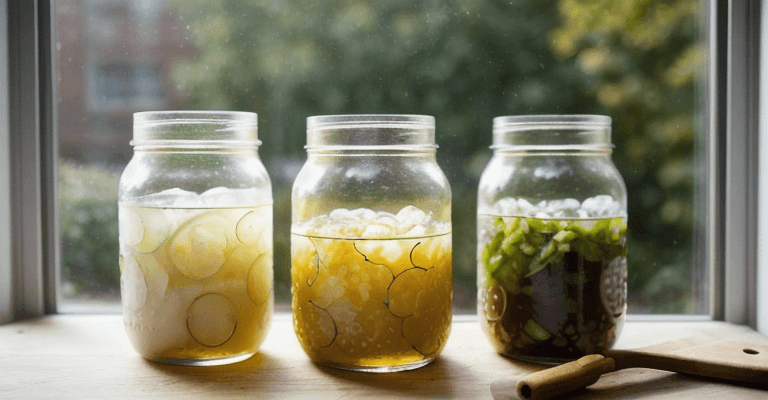
Fermentation Basics — LAB, Salt, pH, and Safety Thresholds
How lacto-fermentation actually works: the microbiology, salt ratios, pH safety targets, and a day-by-day timeline for your first ferment.
What Do You Actually Need to Know About Fermentation Basics?
What are the common mistakes, the precise measurements, and the science-backed techniques that separate reliable results from guesswork? This guide provides the reference tables, ratio calculations, and decision frameworks for fermentation basics — organized for quick lookup and practical application.
What fermentation is (and isn’t)
Fermentation is controlled microbial activity that preserves food and creates flavor. It is NOT spoilage — spoilage is uncontrolled microbial activity that makes food unsafe.
The difference: in fermentation, you create conditions that favor beneficial organisms (Lactobacillus, Saccharomyces) while suppressing harmful ones (Clostridium, E. coli, Salmonella). Salt, temperature, and anaerobic conditions are your tools.
Lacto-fermentation — the most practical method
Lacto-fermentation uses Lactobacillus bacteria (already present on vegetables) to convert sugars into lactic acid. The acid drops pH below 4.6 — the threshold below which Clostridium botulinum cannot produce toxin.
No special cultures needed. No vinegar needed. Just salt, vegetables, and time.
The microbial succession
Fermentation isn’t a single event — it’s a relay race of different bacteria:
| Phase | Days | Dominant organism | What happens | pH |
|---|---|---|---|---|
| 1. Initiation | 0–2 | Leuconostoc mesenteroides | Produces CO₂ (bubbling starts), mild acidity | 6.5→5.0 |
| 2. Primary acid | 2–5 | Lactobacillus plantarum | Major acid production, flavor development | 5.0→3.8 |
| 3. Maturation | 5–14+ | Lactobacillus brevis | Fine-tunes flavor, increases complexity | 3.8→3.4 |
| 4. Stable | 14+ | Activity slows | Acid stabilized, flavor mellows over months | 3.2–3.5 |
Each species thrives in the conditions created by its predecessor and then gets outcompeted when the environment shifts. This succession is why fermentation flavor changes over time — the 3-day sauerkraut tastes different from the 3-week sauerkraut.
Salt ratios — the critical variable
| Salt % (by weight of vegetables) | Effect | Use for |
|---|---|---|
| 1.5% | Minimal inhibition, fast fermentation, higher risk | Experienced fermenters only. Quick pickles |
| 2.0% | Standard minimum. Suppresses pathogens, allows LAB | Sauerkraut, kimchi, most vegetable ferments |
| 2.5% | Good balance of safety and speed | Recommended starting point for beginners |
| 3.0% | Slower fermentation, crunchier texture | Pickles, vegetables where crunch matters |
| 3.5% | Noticeably salty, slow ferment | Hot climates (higher temp = faster activity, need more salt to control) |
| 5.0%+ | Very salty, very slow | Long-term preservation (months), olives, capers |
How to calculate: Weigh your vegetables in grams. Multiply by your target percentage.
- 1000g cabbage × 0.025 = 25g salt (2.5% brine)
- Use non-iodized salt (iodine inhibits LAB). Sea salt or kosher salt
Equipment
| Item | Required? | Purpose |
|---|---|---|
| Glass jar (wide-mouth) | Yes | Non-reactive vessel. 1-quart/1-liter for small batches |
| Weight (glass or ceramic) | Yes | Keeps vegetables submerged below brine. Exposed = mold |
| Airlock lid or loose regular lid | Recommended | Lets CO₂ escape without letting oxygen in |
| pH strips (range 2.5–5.0) | Recommended | Confirms safety at pH <4.6 |
| Kitchen scale | Yes | Salt percentage by weight. Do not eyeball |
Your first ferment: sauerkraut
| Step | Action | Time |
|---|---|---|
| 1 | Shred 1kg cabbage (3–5mm ribbons) | 5 min |
| 2 | Toss with 25g salt (2.5%). Massage firmly 5 min until liquid pools | 5 min |
| 3 | Pack tightly into jar, pressing down until brine rises above cabbage | 3 min |
| 4 | Place weight on top. Ensure all cabbage is submerged | 1 min |
| 5 | Seal with airlock lid or loose regular lid. Place on plate (will overflow) | — |
| 6 | Room temperature (18–24°C / 65–75°F). Away from direct sunlight | — |
| 7 | Days 1–3: Bubbling starts. Brine turns cloudy. Normal | — |
| 8 | Day 5: Taste. Mildly tangy | — |
| 9 | Day 7–10: Taste again. Noticeably sour. Test pH — should be <4.6 | — |
| 10 | Day 10–21: Ferment to desired sourness. Refrigerate to halt | — |
Safety rules
| Rule | Why |
|---|---|
| Keep vegetables submerged | Anything above the brine contacts oxygen → mold. Below the brine = anaerobic = safe |
| Use 2%+ salt by weight | Below 2%, harmful bacteria can outcompete LAB |
| Ferment at 18–24°C | Below 15°C: too slow, risk of incomplete acidification. Above 30°C: too fast, mushy texture, off-flavors |
| Check pH before long storage | Must be <4.6 for room-temp safety. If >4.6 after 7 days, something went wrong |
| Discard if it smells putrid | Good ferment smells sour, tangy, funky. Bad ferment smells rotten, like garbage. Trust your nose |
| White film (kahm yeast) is ugly but safe | Skim it off. It’s a surface yeast, not harmful. Doesn’t affect food below the brine |
| Pink, black, or fuzzy mold = discard | Mold penetrates deeper than the visible surface. Don’t scrape and eat |
Beyond sauerkraut
Once you understand the salt + submerge + wait framework, you can ferment anything:
| Ferment | Salt % | Additions | Time | Notes |
|---|---|---|---|---|
| Kimchi | 2.5% | Gochugaru, garlic, ginger, fish sauce (or soy) | 3–7 days | Saltier initially — flavor balances during ferment |
| Pickled vegetables | 3% brine (salt dissolved in water) | Garlic, dill, peppercorns | 3–5 days | Submerge whole or halved vegetables in brine |
| Hot sauce | 2–3% of peppers | Garlic optional | 5–14 days | Ferment peppers, then blend with brine |
| Tepache | 5% of liquid (sugar, not salt) | Pineapple peel, piloncillo, cinnamon | 2–3 days | Yeast fermentation, mildly alcoholic |
| Ginger bug | 2 tsp sugar + 2 tsp grated ginger daily in water | — | 5–7 days | Starter culture for homemade sodas |
The compound value
Fermentation is a skill that compounds: once you understand pH, salt, and microbial succession, you can preserve any vegetable, create complex flavors no recipe can replicate, and reduce food waste permanently. The sauerkraut is just the entry point.
Quick Reference Summary
| Fermentation type | Organism | Salt/sugar | Temperature | Timeline |
|---|---|---|---|---|
| Lacto-fermentation (sauerkraut) | Lactobacillus (wild) | 2-3% salt by weight | 18-22°C (65-72°F) | 1-4 weeks |
| Yogurt | Lactobacillus + Streptococcus | None (lactose is substrate) | 43°C (110°F) | 6-12 hours |
| Sourdough | Wild yeast + LAB | None (flour is substrate) | 24-27°C (75-80°F) | 4-12 hours per rise |
| Kombucha | SCOBY (yeast + bacteria) | 5-10% sugar | 21-27°C (70-80°F) | 7-14 days |
| Kimchi | Lactobacillus (wild) | 2-3% salt + sugar | 18-22°C (65-72°F) | 3-7 days |
Decision rule: Temperature controls fermentation speed. Salt controls which organisms dominate. Time controls flavor development — taste daily and refrigerate when it reaches your preference.
How to apply this
Use the recipe-scaler tool to adjust portions to scale ingredient quantities based on the data above.
Start with the reference tables above to identify the correct parameters for your specific ingredient or technique.
Measure your key variables (temperature, weight, time) before beginning — precision prevents waste.
Check the comparison tables to select the best approach for your situation and equipment.
Adjust quantities using the recipe-scaler when scaling up or down from the tested ratios.
Test with a small batch first, using the exact measurements from the tables before committing to full volume.
Verify your results against the expected outcomes listed in the quick reference section.
Honest Limitations
Fermentation is biological and inherently variable — the same recipe produces different results depending on ambient microorganism populations, ingredient microbial load, temperature fluctuations, and vessel material. Salt percentages must be by weight, not volume (1 tbsp kosher salt ≠ 1 tbsp table salt). “Wild” fermentation relies on naturally present bacteria; results are less predictable than using commercial starter cultures. Fermentation can produce harmful outcomes if pH does not drop below 4.6 quickly enough — test pH, especially in low-salt recipes. This guide covers introductory fermentation; alcohol fermentation (beer, wine), acetic acid fermentation (vinegar), and mold fermentation (miso, tempeh) have additional complexity not covered here.
