
Sous Vide Food Safety Temperature-Time Matrix — Pathogen-Specific D-Value and Z-Value Kinetics (Salmonella + Listeria + E. coli + C. perfringens + Campylobacter), 6.5-Log vs 7-Log Reduction Targets, Risk-Stratified Time-Temp Tables, Cook-To-Order vs Cook-Chill Framework
Sous vide food-safety framework grounded in pathogen-specific D-value and z-value kinetics across Salmonella + Listeria monocytogenes + E. coli O157:H7 + Clostridium perfringens + Campylobacter, 6.5-log vs 7-log reduction target stratification by food class and consumer population (healthy adults vs immunocompromised vs pregnant vs elderly), cold-chain precursor requirements, surface-contamination management before vacuum-sealing, cook-to-order vs cook-chill operational frameworks, and the risk-stratified time-temperature tables that replace one-size-fits-all charts with pathogen + food + population-matched targets.
The Sous Vide Chart That Says “Chicken Breast 60°C for 1 Hour” Is Correct for a Healthy Adult Eating Immediately — It Is Dangerous for a Pregnant Woman Eating From a Cook-Chill Batch Stored Four Days, Because Pathogen-Reduction Targets and Post-Cook Survival Kinetics Differ By Consumer Population, Food Class, and Storage Protocol
Single-number sous-vide charts aggregate away the variables that actually determine safety: which pathogen is being targeted, what log-reduction target applies to which consumer population, whether the food is eaten immediately or stored cold, and what surface-contamination management preceded vacuum-sealing. Public-facing sous-vide guidance typically optimizes for healthy-adult cook-to-order scenarios, which understates the time-temperature requirements for cook-chill operations serving vulnerable populations. This framework replaces single-number charts with pathogen-specific kinetic math and a risk-stratified decision tree that matches target log-reduction to the actual consumer + operational context.
Pathogen-Specific D-Values and Z-Values
The D-value (decimal reduction time) is the time at a given temperature to reduce the pathogen population by 90% (1 log). The z-value is the temperature increase needed to reduce D by 90%. These constants drive all time-temperature safety math.
| Pathogen | D-value at 60°C (min) | D-value at 65°C (min) | Z-value (°C) | Primary food associations | Notes |
|---|---|---|---|---|---|
| Salmonella spp. | 1.5-3.5 | 0.15-0.4 | 5.5 | Poultry, eggs, some produce | Classic pasteurization target |
| Listeria monocytogenes | 2.0-5.0 | 0.2-0.6 | 6.0 | Deli meats, soft cheese, RTE foods | Grows at refrigeration temperatures |
| E. coli O157:H7 | 0.5-1.5 | 0.05-0.15 | 5.0 | Ground beef, leafy greens | Low infective dose |
| Clostridium perfringens (vegetative) | 5.0-8.0 | 0.5-1.0 | 6.0 | Cooked meats, stews | Spores survive — cooling is critical |
| Campylobacter jejuni | 0.3-1.0 | 0.03-0.1 | 5.0 | Poultry primarily | Heat-sensitive; easier target |
| Staphylococcus aureus (vegetative) | 1.0-3.0 | 0.1-0.3 | 5.5 | Hand-contaminated RTE | Toxin pre-formed is heat-stable — prevention over kill |
| Yersinia enterocolitica | 0.5-1.5 | 0.05-0.15 | 5.0 | Pork, dairy | Grows at 4°C |
| Vibrio parahaemolyticus | 0.1-0.5 | ~0.01 | 7.5 | Seafood | Very heat-sensitive |
The Salmonella-anchor convention: USDA-FSIS pasteurization tables default to Salmonella targets because it has the highest D-value among common poultry pathogens (Campylobacter is more heat-sensitive). Meeting Salmonella 7-log reduction implicitly meets Campylobacter and Listeria targets at the same temperature — Salmonella is the worst-case within poultry pathogens.
6.5-Log vs 7-Log Reduction Target Stratification
Different log-reduction targets apply to different risk contexts:
| Log-reduction target | Applicable context | Initial-contamination assumption | Residual risk |
|---|---|---|---|
| 4-log (10⁴-fold) | Vegetables, fermented products with lower initial pathogen load | Low initial counts (<10²/g) | 1 in 10⁴ servings may retain viable pathogen |
| 5-log (10⁵-fold) | Juice industry standard; some seafood | Moderate initial counts (10³/g) | 1 in 10⁵ servings risk |
| 6.5-log (10^6.5-fold) | Beef + some pork (USDA-FSIS minimum for ground beef) | Moderate initial (10⁴-10⁵/g) | 1 in ~3M servings risk |
| 7-log (10⁷-fold) | Poultry + ground meats (FSIS convention) | Higher initial possible (10⁵-10⁶/g) | 1 in 10⁷ servings risk |
| 9-log (10⁹-fold) | Immunocompromised population protection | Worst-case initial | Approaches commercial-sterility for vegetative cells |
| 12-log (10¹²-fold) | Low-acid canned foods (Clostridium botulinum spore target) | Assumes spore presence | Commercial sterility equivalent |
The 6.5-log standard matches beef pasteurization; the 7-log standard matches poultry. For immunocompromised consumers (post-transplant, chemotherapy patients, HIV-positive with low CD4), adding 2-log safety margin (effectively 9-log for vegetative cells) is defensible.
Time-Temperature Calculations Using D-Value
For a given reduction target, required hold time at temperature T is:
Hold time required = D-value(at T) × log-reduction target

Example: Salmonella 7-log reduction at 60°C with D = 2.5 min
→ Hold time = 2.5 × 7 = 17.5 minutes at 60°C core
However, this assumes instantaneous temperature rise. Real sous-vide cooking has a come-up time where the core is warming through lower (less lethal) temperatures. The Thermal Process Calculator approach integrates lethality across the entire cook:
Total Fo accumulated = Σ (time at each temperature × lethality rate at that temperature)Tables that specify “60°C for 1 hour” typically build in a substantial safety factor because come-up time for a 4-6cm thick piece adds 15-25% equivalent lethality on top of nominal hold time.
Risk-Stratified Time-Temperature Tables (Poultry)
Core temperature + equivalent hold time for various reduction targets:
| Core temperature (°C) | 5-log Salmonella (healthy immediate) | 6.5-log Salmonella (standard) | 7-log Salmonella (high-risk/cook-chill) | 9-log (immunocompromised) |
|---|---|---|---|---|
| 55.0 | 90 min | 150 min | 182 min | Not recommended (too slow) |
| 57.5 | 34 min | 57 min | 69 min | 100 min |
| 60.0 | 12.5 min | 20 min | 27 min | 38 min |
| 61.0 | 9 min | 15 min | 20 min | 28 min |
| 62.5 | 5.5 min | 9 min | 12 min | 17 min |
| 65.0 | 1 min | 1.7 min | 2.3 min | 3.3 min |
| 70.0 | 0.1 min | 0.17 min | 0.22 min | 0.32 min |
| 74.0 | Instant | Instant | Instant | Instant |
The 55°C floor: Below 55°C, Salmonella reduction is effectively zero — some strains grow. Hold-times at 55°C are marginal even over hours. Sous vide at 55°C is below the pasteurization floor and safety margin is inadequate for poultry regardless of time.
Risk-Stratified Time-Temperature Tables (Beef/Pork Whole Muscle)
For intact whole muscle (not ground), pathogen exposure is surface-only, and core pasteurization is less critical if surface reaches adequate temperature. For ground or mechanically-tenderized beef, pathogens are distributed throughout and core pasteurization is critical:
| Core temperature (°C) | Intact whole muscle (surface-seared) | Ground/tenderized beef 6.5-log | Ground/tenderized beef 7-log |
|---|---|---|---|
| 52.0 | Surface kill adequate | 3-4 hours | Not recommended |
| 54.0 | Surface kill adequate | 112 min | 145 min |
| 55.0 | — | 77 min | 100 min |
| 57.5 | — | 35 min | 45 min |
| 60.0 | — | 12 min | 16 min |
| 62.5 | — | 5 min | 7 min |
| 65.0 | — | 1.5 min | 2 min |
For intact steak: a 52-54°C sous vide + hard sear (>200°C surface for 60-90s) is safe because pathogens were never in the interior. Mechanical tenderization (jaccard, blade-tenderized, marinated with internal injection) disqualifies the intact-surface assumption.
Cold-Chain Precursor Requirements
Sous-vide outcomes depend on pre-cook conditions:
| Pre-cook state | Starting pathogen load | Safety implication | Required hold time adjustment |
|---|---|---|---|
| Fresh from cold storage (<4°C throughout) | 10⁴-10⁶/g worst-case | Standard pasteurization tables apply | Baseline |
| Temperature-abused during prep (0.5-2h at 10-20°C) | 10⁵-10⁸/g worst-case | Elevated initial; need +1 log margin | +1 log equivalent (~30-50% more time) |
| Obviously temperature-abused (>2h at >10°C) | 10⁸+/g worst-case; potential toxin pre-formation | Heat-stable toxins survive pasteurization | Discard — not salvageable |
| Previously frozen then thawed properly | Similar to fresh (some reduction from freeze) | Standard tables apply | Baseline |
| Previously frozen then thawed with drip loss | Potential cross-contamination from drip | Surface contamination elevated | Standard if sealed promptly |
The pre-formed-toxin rule: Staphylococcus aureus enterotoxin, Bacillus cereus emetic toxin, and some Clostridium perfringens enterotoxins are heat-stable — cooking will kill the bacteria but not deactivate the pre-formed toxin. If temperature-abuse is suspected, no pasteurization protocol can salvage the food.
Surface Contamination Management
Sous-vide cooks surface-contaminated food. Surface management before vacuum-sealing affects outcome:
| Surface treatment | Pathogen reduction before cook | Cook-stage implication |
|---|---|---|
| No treatment | 0 log | Full reliance on cook-stage kill |
| Cold-water rinse | 0-0.5 log | Minor — mostly visual cleanliness |
| Organic-acid rinse (peracetic acid, lactic acid) | 1-3 log | Useful for poultry + beef carcass surfaces |
| Surface searing pre-vacuum (120-140°C, 15-30s) | 3-5 log surface kill | Reduces total burden before cook |
| Chemical sanitizer (food-safe) | 3-6 log surface kill | Commercial operation; not home-scale |
The pre-sear practice: Searing before vacuum-sealing reduces total pathogen load and is defensible for high-risk items (poultry, ground meat). It does not replace adequate cook-stage time-temperature, but adds a safety-margin layer.
Cook-To-Order vs Cook-Chill Decision Framework
Operational context changes safety requirements:
| Scenario | Time-temperature target | Cooling protocol | Storage limit | Reheat requirement |
|---|---|---|---|---|
| Cook-to-order (immediate service) | 6.5-log standard | N/A | N/A | N/A |
| Cook-hold (kept at >54°C up to 4h) | 7-log for poultry | N/A — maintain >54°C | 4 hours maximum | N/A |
| Cook-chill (blast chill; served <48h) | 7-log | 55°C → <4°C in <90 min | 48h at <3°C | Reheat to 74°C core (or documented 6.5-log equivalent) |
| Cook-chill (blast chill; served <7 days) | 7-log + post-cook Listeria kill consideration | 55°C → <4°C in <90 min | 7 days at <3°C | Reheat to 74°C core |
| Cook-chill for immunocompromised (hospital) | 9-log equivalent | 55°C → <3°C in <90 min | 5 days at <3°C | Reheat to 74°C core |
The blast-chill requirement (55°C → <4°C in <90 minutes) prevents Clostridium perfringens spore germination and outgrowth during the cooling transit through the danger zone. Home refrigerators cannot achieve this cooling rate for thick items — home cook-chill operations should be limited to thin (<2cm) portions or served within 24h with repeat-reheat to 74°C.
The Clostridium perfringens Danger Zone
C. perfringens spores survive pasteurization. Outgrowth during cooling is the food-safety risk:
| Cooling interval | C. perfringens risk | Acceptable? |
|---|---|---|
| 55°C → 21°C in <2 hours + 21°C → 4°C in <4 hours (FSIS 2-stage) | Minimal — spores don’t outgrow | Yes — standard |
| 55°C → 4°C in <90 min (blast chill) | Very low | Yes — cook-chill standard |
| 55°C → 21°C in 4+ hours at ambient | High — spores germinate and multiply | No — discard |
| Hold at 20-45°C for >2 hours | Maximum outgrowth zone | No — absolutely avoid |
Sous-vide rigs cannot blast-chill — they cook. Cook-chill operation requires separate ice-bath or commercial blast-chill infrastructure to move through the 55°C → 4°C transition quickly enough.
Consumer-Population Stratification
Target log-reduction varies with consumer vulnerability:
| Population | Appropriate log-reduction target | Rationale |
|---|---|---|
| Healthy adults, cook-to-order | 5-6.5 log | Normal immunity; low-dose exposure tolerated |
| Healthy adults, cook-chill | 6.5-7 log | Cold storage may favor Listeria growth |
| Pregnant women | 7-log + Listeria-specific concern | Listeria crosses placenta; fetal-loss risk |
| Elderly (>65) | 7-log | Declining immunity; higher CFR for GI pathogens |
| Infants <2 years | 7-log + botulism-specific honey avoidance | Low infective dose + developing immunity |
| Immunocompromised (chemotherapy, HIV, transplant) | 9-log equivalent | Very low infective dose; septic progression likely |
The 5-log vs 7-log distinction for healthy adults is not safety critical for most pathogens at low dose — the 7-log convention is safety-margin padding, not strict necessity. But for vulnerable populations, the 7-log target is genuinely necessary.
Time-Temperature Verification Methods
Confirming that target reduction was actually achieved:
| Method | Accuracy | Cost | Home-scale? | Commercial-scale? |
|---|---|---|---|---|
| Thermocouple core-probe during cook | High — direct | $30-100 | Yes | Yes |
| Digital instant-read before + after | Moderate | $25-80 | Yes | Yes |
| Data-logger (immersion thermocouple every 30s) | Very high | $150-500 | Yes — enthusiast | Yes — standard |
| Time-temperature integrator (TTI) label | Moderate | $1-5/label | Yes | Yes |
| Microbiological challenge-testing | Definitive | $$$$ | No | Yes — validation |
| Sous-vide app pasteurization calculator | Model-based estimate | Free | Yes | Yes |
For home cooks, the thermocouple core-probe at the pull-time is the minimum verification. For commercial cook-chill operations, data-logger + periodic microbiological validation is the baseline.
Honest Limitations
This framework has boundaries. D-values vary across strains within a species — the values tabulated are typical ranges, not absolutes for every strain. Food matrix effects (fat content, pH, water activity, competing microbiota) shift actual kinetics by 20-50%; validated cook-chill operations require matrix-specific challenge-testing. The vulnerable-population stratification is defensible but coarse — truly immunocompromised individuals (severe neutropenia) may require neutropenic-diet standards beyond anything achievable by sous-vide. Home-scale cook-chill operations cannot meet commercial blast-chill requirements and should default to cook-to-order or same-day-service. And the framework addresses pathogen-reduction only — chemical contamination (heavy metals, mycotoxins, marine biotoxins) is unaffected by sous-vide pasteurization and requires different controls. Finally, regulatory food-safety management (HACCP, FSMA, EHS compliance) is the legal ground truth for commercial operations; this framework is decision-support, not regulatory substitute.

Continue reading

Acid in Cooking — Vinegar, Citrus, Wine, and How to Balance Flavor
pH levels of common cooking acids, when to add acid early vs. late, how acid reacts with heat and proteins, and the science of brightness vs. sharpness in flavor.
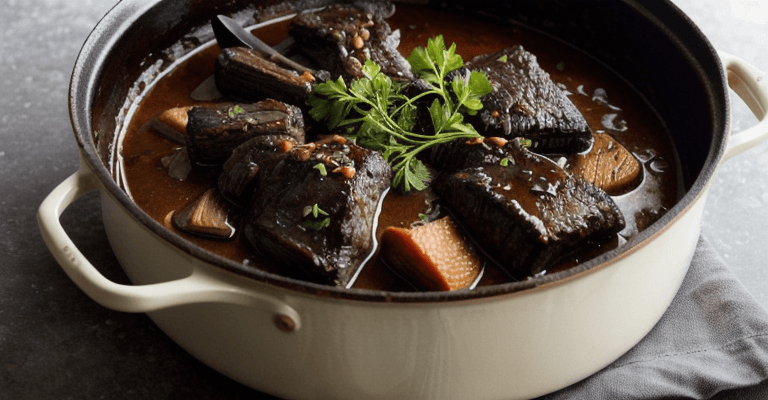
Braising Science — Collagen-to-Gelatin Conversion, Low-and-Slow Mechanics
Complete braising reference with collagen conversion rates by temperature, braising cut selection data, liquid ratios, vessel comparison, and altitude adjustments for consistent results.
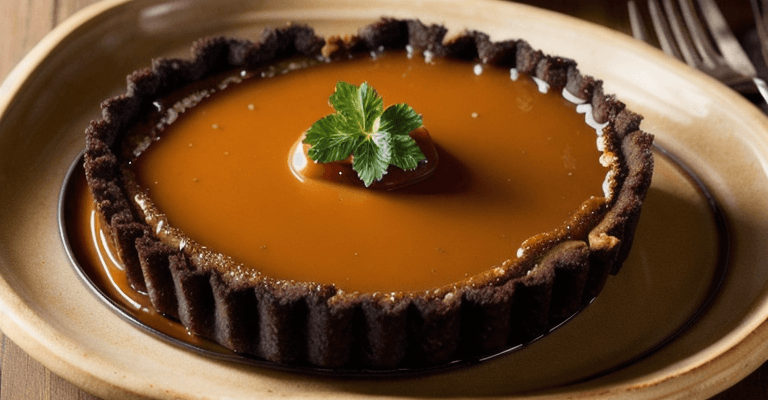
Caramelization vs. Maillard — Two Different Browning Reactions Explained
The science behind the two browning reactions in cooking: caramelization (sugar-only) and Maillard (sugar + amino acid). Temperature thresholds, sugar stages, pH effects, diagnostic tables, and practical control techniques.