Smoke Points of Cooking Oils — Which Oil for Which Heat
Complete smoke point reference for 20+ cooking oils. Refined vs. unrefined differences, health implications of overheated oil, and the best oil for every cooking method.
What is a smoke point and why it matters
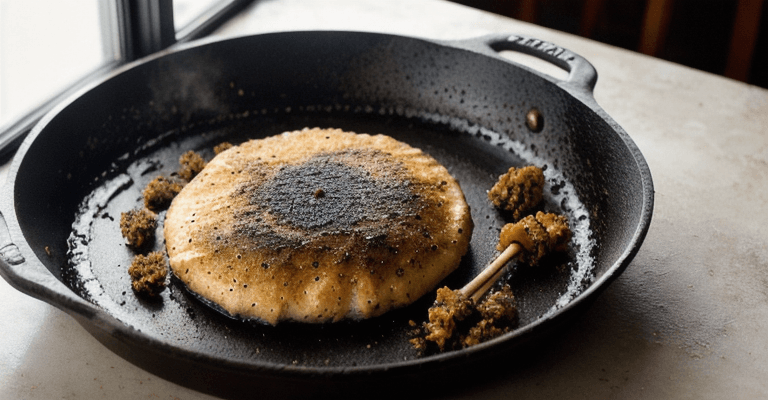
The smoke point is the temperature at which an oil begins producing visible, continuous wisps of blue-gray smoke. At this threshold, triglycerides break down into free fatty acids and glycerol. The glycerol further decomposes into acrolein — the compound that stings your eyes and gives overheated oil its acrid smell.
Cooking past the smoke point does three things simultaneously: it destroys the oil’s flavor (neutral oils turn bitter, finishing oils lose their character), it generates harmful compounds (acrolein, polycyclic aromatic hydrocarbons, and lipid peroxides), and it lowers the nutritional value by degrading fat-soluble vitamins and beneficial polyphenols.
The smoke point is not a fixed number for every bottle. It shifts based on refining level, age of the oil, how many times it has been heated, and what is being cooked in it. Breaded foods shed particles that lower effective smoke point by 10-15°C per fry cycle.
Complete smoke point table — refined vs. unrefined
| Oil | Refined Smoke Point | Unrefined Smoke Point | Dominant Fat Type |
|---|---|---|---|
| Avocado oil | 271°C / 520°F | 249°C / 480°F | Monounsaturated (71%) |
| Safflower oil | 266°C / 510°F | 107°C / 225°F | Polyunsaturated (75%) |
| Rice bran oil | 254°C / 490°F | 213°C / 415°F | Monounsaturated (39%) |
| Light/refined olive oil | 242°C / 468°F | — | Monounsaturated (73%) |
| Soybean oil | 238°C / 460°F | 160°C / 320°F | Polyunsaturated (58%) |
| Peanut oil | 232°C / 450°F | 160°C / 320°F | Monounsaturated (46%) |
| Corn oil | 232°C / 450°F | 160°C / 320°F | Polyunsaturated (55%) |
| Sunflower oil | 232°C / 450°F | 107°C / 225°F | Polyunsaturated (66%) |
| High-oleic sunflower | 232°C / 450°F | — | Monounsaturated (82%) |
| Vegetable shortening | 232°C / 450°F | — | Varies by blend |
| Canola oil | 228°C / 442°F | 107°C / 225°F | Monounsaturated (63%) |
| Grapeseed oil | 216°C / 421°F | — | Polyunsaturated (70%) |
| Ghee (clarified butter) | 252°C / 485°F | — | Saturated (62%) |
| Lard | 190°C / 374°F | — | Saturated (39%), Mono (45%) |
| Extra virgin olive oil | — | 190°C / 374°F | Monounsaturated (73%) |
| Coconut oil | 204°C / 400°F | 177°C / 350°F | Saturated (82%) |
| Sesame oil | 210°C / 410°F | 177°C / 350°F | Polyunsaturated (42%) |
| Butter | — | 150°C / 302°F | Saturated (63%) |
| Flaxseed oil | — | 107°C / 225°F | Polyunsaturated (73%) |
| Walnut oil | — | 160°C / 320°F | Polyunsaturated (63%) |
Key observation: refining can raise an oil’s smoke point by 70-160°C. The process removes free fatty acids, phospholipids, and plant pigments that burn at lower temperatures. That is why “light” olive oil handles heat that would destroy extra virgin.
What happens when you exceed the smoke point
Three stages of oil degradation happen in sequence:
Stage 1 — Smoke (at smoke point). Free fatty acids volatilize. Flavor turns harsh. Acrolein gas forms. The oil is still usable if heat is reduced immediately.
Stage 2 — Decomposition (15-30°C above smoke point). The oil darkens rapidly. Foaming increases as water-soluble glycerol escapes. Polycyclic aromatic hydrocarbons (PAHs) begin forming. Food cooked in this oil absorbs off-flavors that cannot be masked.
Stage 3 — Flash point (well above smoke point). The oil can ignite from a spark or open flame. Flash points range from 275°C for butter to 340°C for refined avocado oil. Never use water on an oil fire — smother with a lid or use a Class K extinguisher.
Health data: a 2019 study in the journal Food Chemistry measured acrolein formation rates across oils. At 30°C above their respective smoke points, polyunsaturated oils produced 2-3x more acrolein than monounsaturated oils over the same time period. High-oleic varieties are more thermally stable regardless of smoke point number.
Best oil for each cooking method
| Cooking Method | Temperature Range | Recommended Oils | Why |
|---|---|---|---|
| Deep frying | 175-190°C / 350-375°F | Peanut, refined avocado, rice bran | High smoke point + neutral flavor + good reuse stability |
| Stir-frying | 200-230°C / 400-450°F | Refined avocado, peanut, high-oleic sunflower | Needs to survive wok temps without breaking down |
| Pan searing | 200-260°C / 400-500°F | Refined avocado, ghee, rice bran | Must handle direct high heat for crust formation |
| Sauteing | 150-180°C / 300-350°F | Extra virgin olive, butter, coconut | Medium heat allows flavorful oils to contribute taste |
| Roasting | 190-230°C / 375-450°F | Refined olive, avocado, duck fat | Long exposure to oven heat; needs stability over time |
| Baking | 160-190°C / 325-375°F | Butter, coconut, canola, neutral vegetable | Flavor profile matters more than thermal ceiling |
| Salad dressing | No heat | Extra virgin olive, walnut, flaxseed, sesame | Full flavor preserved; delicate fatty acids intact |
| Finishing | No heat / residual | Toasted sesame, truffle oil, good EVOO | Applied after cooking; heat would destroy the point of using them |
Practical fixes for common oil mistakes
You heated EVOO too high and it’s smoking. Remove pan from heat. The food is fine if smoke just started — it tastes off only after sustained overheating. Transfer food, wipe pan, restart with a higher-smoke-point oil.
Your deep-fry oil foams excessively. The oil has degraded from repeated use. Discard it. Fresh oil should not foam beyond a thin ring of small bubbles around the food. Rule of thumb: discard frying oil after 3-4 uses or when it darkens noticeably.
Food tastes “off” after high-heat cooking. You likely used an unrefined oil above its threshold. The bitter, acrid notes come from decomposition products that penetrate food surfaces. Season aggressively with acid (lemon, vinegar) to partially mask it, but the real fix is oil selection before cooking.
Butter burns before your steak sears. Mix butter 50:50 with a neutral high-smoke-point oil. This raises the effective burn point to roughly 190°C while retaining butter flavor. Alternatively, sear in avocado oil first, then add butter in the last 60 seconds for basting.
Storage and shelf life
Oxidation degrades oils even without heat. Polyunsaturated oils (flaxseed, walnut, grapeseed) are most vulnerable. Store all oils in dark glass or opaque containers, away from the stove. Opened polyunsaturated oils should be refrigerated and used within 3 months. Monounsaturated oils (olive, avocado) last 6-12 months at room temperature in a dark cupboard. Saturated fats (coconut oil, ghee) are the most shelf-stable and can last 12-18 months at room temperature.
Never store oil above the stove. The constant warmth accelerates rancidity — the most common source of “my oil tastes weird” complaints.
Oil degradation and reuse
Reusing frying oil is standard practice in both home and commercial kitchens, but each heating cycle degrades the oil measurably. The smoke point drops, free fatty acid content rises, and polar compound levels increase. Once polar compounds exceed 25% (measurable with a portable oil tester), the oil is no longer safe for consumption — this is the legal discard threshold in the EU, Japan, and several other markets.
| Oil | Max Reuse Cycles | Signs of Degradation | Smoke Point Drop per Cycle |
|---|---|---|---|
| Peanut oil | 6–8 | Darkening, slight nutty-to-bitter shift | 8–12°C per cycle |
| Refined avocado oil | 5–7 | Viscosity increase, faint off-odor | 10–14°C per cycle |
| Rice bran oil | 5–7 | Foaming at edges, color shift to amber | 9–13°C per cycle |
| Canola oil | 3–5 | Fishy smell (linolenic acid oxidation), sticky residue | 12–18°C per cycle |
| Sunflower oil | 3–4 | Rapid darkening, acrid smell on heating | 15–20°C per cycle |
| Corn oil | 4–5 | Foaming, thickening, sour odor | 11–16°C per cycle |
Between uses, strain the oil through a fine-mesh sieve or cheesecloth to remove food particles. Store in a sealed container in a cool, dark place. Food debris left in the oil accelerates oxidation dramatically — a single batch of breaded food can shorten oil life by one full cycle due to particle carbonization.
Commercial deep fryers use an 80/20 top-off strategy: after each session, discard 20% of the oil and replace with fresh. This dilutes polar compounds and extends usable life by 30–40% compared to using the same oil until failure.
What smoke point charts don’t tell you
Published smoke point values are laboratory measurements taken under controlled conditions with fresh, pure oil samples. Real-world cooking introduces variables that no chart can capture.
Oil quality varies by brand. Two bottles labeled “refined avocado oil” can differ by 15–25°C in actual smoke point depending on the refining process, source fruit quality, and storage conditions before purchase. Cold-pressed oils from different harvests of the same crop can vary by 10–20°C.
Refined vs. unrefined is not always labeled clearly. “Pure olive oil” is refined. “Light olive oil” is refined. “Extra virgin” is unrefined. But terms like “cold-pressed” do not guarantee unrefined status in all markets. Without standardized labeling, the smoke point you expect may not match what is in the bottle.
Altitude affects frying temperature. Water boils at lower temperatures at elevation, and oil behaves differently too. At 1,500m (5,000 ft), the reduced atmospheric pressure means moisture in food evaporates faster during frying, which can cause oil to degrade more quickly despite the thermometer reading the same temperature. Effective smoke points at altitude are roughly 3–5°C lower than published sea-level values.
The gap between published and real-world smoke points is typically 10–30°C. A pan preheated on high for 3 minutes, food particles from previous cooking, trace moisture from unwashed pans, and oil that has been open for months all lower the real smoke point below the textbook number. Treat published values as upper-bound estimates, not guarantees.
How to apply this
Use the recipe-scaler tool to adjust portions to scale ingredient quantities based on the data above.
Start with the reference tables above to identify the correct parameters for your specific ingredient or technique.
Measure your key variables (temperature, weight, time) before beginning — precision prevents waste.
Check the comparison tables to select the best approach for your situation and equipment.
Adjust quantities using the recipe-scaler when scaling up or down from the tested ratios.
Test with a small batch first, using the exact measurements from the tables before committing to full volume.
Verify your results against the expected outcomes listed in the quick reference section.
Honest limitations
What this guide does not cover: commercial-scale production, specific dietary medical conditions, or regional ingredient variations that affect the chemistry. The measurements and ratios are based on standard home-kitchen conditions. Professional kitchens with calibrated equipment may achieve tighter tolerances than the ranges listed here.
