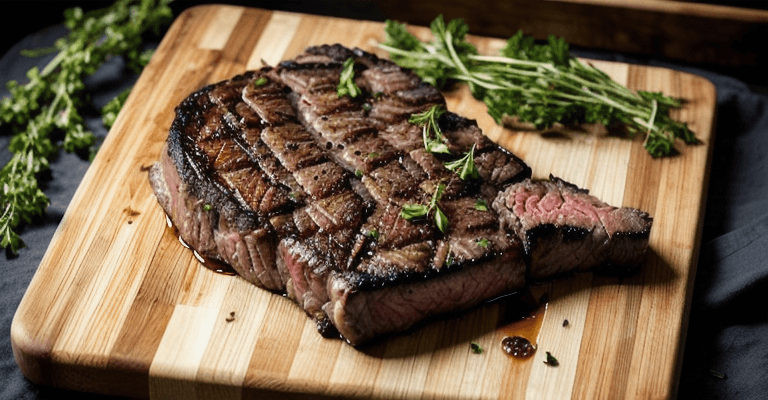
Resting Meat — Why, How Long, and What Actually Happens Inside (The Thermal Science)
Carryover cooking temperatures by cut and method, juice redistribution data from food science research, resting time per thickness, and the thermal equilibrium physics that make the last 10 minutes the most important.
What Do You Actually Need to Know About Resting Meat?
What are the common mistakes, the precise measurements, and the science-backed techniques that separate reliable results from guesswork? This guide provides the reference tables, ratio calculations, and decision frameworks for resting meat — organized for quick lookup and practical application.
Carryover cooking — your meat keeps cooking after you remove it
When you pull meat from heat, the exterior is significantly hotter than the center. That thermal energy continues to migrate inward by conduction, raising the internal temperature. The amount of carryover depends on three variables: the mass of the cut, the cooking temperature, and the thermal gradient (difference between surface and center temperature).
| Cut | Cooking Method | Surface Temp at Pull | Center Temp at Pull | Carryover Rise | Final Center Temp |
|---|---|---|---|---|---|
| Chicken breast (200g, boneless) | Pan-sear at 200C | ~180C | 70C | +3-4C | 73-74C |
| Pork chop (2.5cm thick) | Grill at 230C | ~190C | 60C | +4-5C | 64-65C |
| Beef steak (2.5cm, 300g) | Cast iron at 260C | ~220C | 52C | +4-6C | 56-58C (medium-rare) |
| Beef roast (1.5kg) | Oven at 160C | ~160C | 52C | +6-8C | 58-60C |
| Whole chicken (1.8kg) | Oven at 190C | ~190C | 70C | +5-7C | 75-77C |
| Beef brisket (4kg) | Low-and-slow at 110C | ~110C | 93C | +2-3C | 95-96C |
| Pork tenderloin (450g) | Oven at 200C | ~200C | 60C | +4-6C | 64-66C |
| Rack of lamb (1kg) | Oven at 220C | ~220C | 50C | +5-7C | 55-57C (medium-rare) |
| Duck breast (350g) | Pan-sear start, oven finish | ~180C | 52C | +4-5C | 56-57C |
The physics: Carryover is governed by Fourier’s law of heat conduction: q = -k(dT/dx). Higher thermal gradient (hotter exterior vs cooler center) = more carryover. Low-and-slow cooked meats have less carryover because the temperature gradient is smaller — the exterior and interior are closer in temperature at the point of removal.
Pull temperature rule: Remove meat when it is the expected carryover BELOW your target. For medium-rare steak at 57C (135F), pull at 52-53C (126-127F).
Juice redistribution — the measured data
At cooking temperatures above 60C, muscle fiber proteins (primarily myosin and actin) denature and contract, squeezing liquid toward the cooler center of the meat. If you cut immediately, that pooled liquid runs out onto the cutting board.
Texas A&M Food Science Department measured this directly:
| Rest Duration | Juice Loss (% of total weight) | Subjective Juiciness Rating (1-10) | Internal Temp Uniformity |
|---|---|---|---|
| 0 minutes (cut immediately) | 22% | 4.2 | Surface 85C, center 57C |
| 3 minutes | 16% | 5.8 | Surface 72C, center 58C |
| 5 minutes | 12% | 7.1 | Surface 65C, center 58C |
| 10 minutes | 9% | 8.4 | Surface 60C, center 57C |
| 15 minutes | 8% | 8.6 | Surface 58C, center 56C |
| 20 minutes | 8% | 8.3 (slightly cooler) | Surface 55C, center 54C |
The diminishing returns curve: Most juice redistribution happens in the first 5-10 minutes. Beyond 10 minutes, the improvement plateaus while the meat continues to cool. For steaks, 7-10 minutes is the sweet spot — maximum juice retention before the eating temperature drops below the enjoyment threshold (~52C for beef).
During resting, the contracted fibers relax slightly as the thermal gradient equalizes. Liquid that was squeezed toward the center redistributes more evenly throughout the muscle. The result: juice stays in the meat when you cut, not on the board.
How long to rest — the complete table by cut and mass
| Cut / Mass | Minimum Rest | Ideal Rest | Maximum Before Too Cool | Tent with Foil? |
|---|---|---|---|---|
| Steak, 2cm (200g) | 5 min | 5-7 min | 10 min | Optional — no for crispy crust |
| Steak, 3cm (350g) | 7 min | 7-10 min | 12 min | Loosely after 2 min |
| Steak, 5cm (500g+, tomahawk) | 10 min | 10-15 min | 18 min | Loosely after 3 min |
| Pork chop, 2.5cm | 5 min | 5-8 min | 10 min | Optional |
| Chicken breast (boneless) | 5 min | 5-8 min | 10 min | Loosely |
| Chicken breast (bone-in) | 7 min | 8-10 min | 12 min | Loosely |
| Pork tenderloin (450g) | 8 min | 10 min | 15 min | Loosely |
| Whole chicken (1.8kg) | 15 min | 15-20 min | 30 min | Loosely |
| Beef roast (1.5-2kg) | 15 min | 20-30 min | 40 min | Loosely |
| Prime rib (3-4kg) | 20 min | 30-45 min | 60 min | Loosely |
| Brisket (4-5kg) | 30 min | 45-60 min | 2+ hours (in cooler) | Wrapped in butcher paper |
| Pork shoulder (3-4kg) | 30 min | 45-60 min | 2+ hours (in cooler) | Wrapped in foil |
| Turkey (5-7kg) | 30 min | 30-45 min | 60 min | Loosely |
Mass-based rule of thumb: Rest for approximately 1 minute per 100 grams for roasts. For steaks and chops under 500g, 5-10 minutes covers most thicknesses. For competition barbecue (brisket, pork shoulder), resting in a preheated cooler for 1-4 hours is standard practice — the insulation maintains holding temperature above 60C (the food safety threshold) while allowing gradual equilibration.
Resting technique — what to do and what ruins it
| Technique | Effect | Recommendation |
|---|---|---|
| Warm plate or cutting board | Slows heat loss from bottom surface | Always — cold surfaces are heat sinks |
| Loose foil tent | Retains some heat, allows steam to escape | For roasts and thick cuts |
| Tight foil wrap | Traps steam, softens crispy exterior | Only for low-and-slow barbecue (brisket) |
| Wire rack | Air circulation, maintains crust on all sides | Best for skin-on poultry |
| Turned-off oven | Too much retained heat, carryover continues | Avoid — overshoots target temp |
| Cold granite countertop | Acts as heat sink, drops temp too fast | Avoid — shortens equalization window |
| Preheated cooler (no ice) | Maintains 60-70C holding temp for hours | Competition barbecue standard |
For thick steaks and roasts: Rest uncovered for the first 2 minutes (allows surface steam to escape, preserving crust), then tent loosely with foil. This two-phase approach preserves both the Maillard crust and the internal juice redistribution.
The food safety window
Resting meat at room temperature is safe within specific time limits. The USDA danger zone is 5-57C (40-135F). A properly cooked piece of meat starts resting well above 57C and cools through the danger zone slowly.
| Scenario | Internal Start Temp | Time to Reach 57C | Safety Margin |
|---|---|---|---|
| Steak resting 10 min | 57C (target) | Stays at or above 57C | Safe — above danger zone throughout |
| Roast resting 30 min | 60C | ~45-60 min to reach 57C | Safe — well within 2-hour limit |
| Brisket in cooler, 2 hours | 93C | 3-4 hours to reach 57C | Safe — insulated above danger zone |
| Leftover roast forgotten on counter | 60C → room temp | Passes through danger zone at ~90 min | Refrigerate within 2 hours of cooking |
The thermal physics of protein denaturation explain why properly rested meat is both safe and superior — the same heat transfer principles that drive carryover cooking also ensure the meat stays above the danger zone during the resting period.
Cutting direction — as important as resting time
Always slice against the grain — perpendicular to the direction of the muscle fibers. Cutting with the grain leaves long, intact fibers that are chewy. Cutting against shortens the fibers to the width of each slice, making every bite tender.
| Cut | Grain Direction | Slicing Strategy |
|---|---|---|
| Flank steak | Runs lengthwise, very visible | Slice at steep angle against grain, thin (3mm) |
| Brisket flat | Horizontal, consistent | Perpendicular cuts, pencil-thickness |
| Brisket point | Changes direction at the deckle | Rotate 90 degrees at flat-point junction |
| Tri-tip | Two different grain directions | Identify the grain line; cut in half, then slice each half against its own grain |
| Chicken breast | Diagonal, subtle | Slice on the bias at 45-degree angle |
| Pork tenderloin | Lengthwise | Cut medallions straight across |
Knife matters: Use the sharpest knife available. A dull blade compresses fibers and squeezes out juice — undoing the benefit of resting. One clean draw per slice with a sharp carving knife preserves the most juice. Sawing back and forth tears fibers and releases liquid.
The single most common mistake
Poking the meat with a thermometer repeatedly during resting “to check if it’s done.” Each puncture creates a channel for juice to escape. If you’re going to check temperature during rest, check once, at the thickest part, at the halfway point of your rest time. That single reading tells you everything: if the temperature is still rising, carryover is active. If it’s plateaued, the meat is equilibrated and ready to cut.
Quick Reference Summary
| Protein | Rest time | Temperature drop | Juice retention improvement |
|---|---|---|---|
| Steak (2.5cm thick) | 5-7 minutes | 3-5°C (5-9°F) | 15-20% less juice loss |
| Chicken breast | 5 minutes | 2-4°C (4-7°F) | 10-15% less juice loss |
| Pork chop (2.5cm) | 5-7 minutes | 3-5°C (5-9°F) | 15-20% less juice loss |
| Roast chicken (whole) | 15-20 minutes | 5-8°C (9-14°F) | 20-25% less juice loss |
| Beef roast (1.5-2kg) | 15-20 minutes | 5-10°C (9-18°F) | 20-30% less juice loss |
| Turkey (5-7kg) | 30-45 minutes | 8-12°C (14-22°F) | 25-35% less juice loss |
Decision rule: Rest time ≈ 1 minute per 100g of meat, minimum 5 minutes. Tent loosely with foil (tight foil steams and softens the crust).
How to apply this
Use the recipe-scaler tool to adjust portions to scale ingredient quantities based on the data above.
Start with the reference tables above to identify the correct parameters for your specific ingredient or technique.
Measure your key variables (temperature, weight, time) before beginning — precision prevents waste.
Check the comparison tables to select the best approach for your situation and equipment.
Adjust quantities using the recipe-scaler when scaling up or down from the tested ratios.
Test with a small batch first, using the exact measurements from the tables before committing to full volume.
Verify your results against the expected outcomes listed in the quick reference section.
Honest Limitations
Resting works because temperature equalization reduces the pressure gradient that forces juice to the surface — but the science is more complex than “juice redistribution.” Thinner cuts and higher cooking temperatures require proportionally less rest time. Carryover cooking continues during resting; account for this when setting your pull temperature. Resting in a cold environment (outdoors, cold plate) accelerates cooling and may reduce the benefit. The juice retention percentages are measured in controlled experiments; home cooking conditions introduce more variables. Resting does not apply to thin cuts like stir-fry strips or thinly sliced vegetables.
