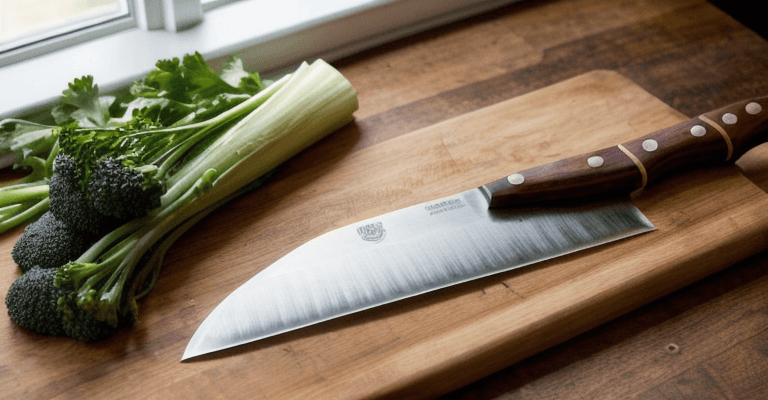
Knife Skills Reference — Cuts, Sizes, and Techniques
Every standard cut with exact dimensions, the three grip techniques, and a speed progression chart. The reference table professional kitchens use.
What Do You Actually Need to Know About Knife Skills Reference?
What are the common mistakes, the precise measurements, and the science-backed techniques that separate reliable results from guesswork? This guide provides the reference tables, ratio calculations, and decision frameworks for knife skills reference — organized for quick lookup and practical application.
Why cut size matters
Cut size controls cooking time. Uniform cuts cook evenly. These are the two laws of knife work — everything else is technique built on top of them.
A 5mm dice cooks in half the time of a 10mm dice (more surface area per volume = faster heat transfer). If one piece is 5mm and the next is 15mm, the small piece burns while the large piece is still raw.
Standard cuts reference table
| Cut name | Dimensions | Shape | Primary use |
|---|---|---|---|
| Brunoise | 3 × 3 × 3mm | Tiny cube | Garnish, soffrito base, fine salsas |
| Small dice | 6 × 6 × 6mm | Small cube | Soups, salads, fillings, fried rice |
| Medium dice | 12 × 12 × 12mm | Medium cube | Stews, roasted vegetables, chunky salsa |
| Large dice | 20 × 20 × 20mm | Large cube | Pot roast vegetables, hearty stews |
| Julienne | 3 × 3 × 50mm | Thin matchstick | Stir-fry, garnish, salads, spring rolls |
| Bâtonnet | 6 × 6 × 60mm | Thick matchstick | French fries, crudités, vegetable sticks |
| Chiffonade | 1–2mm wide ribbons | Fine shred | Herbs (basil, mint), leafy greens |
| Mince | <2mm irregular | Very fine | Garlic, ginger, shallots |
| Rough chop | 25–40mm irregular | Chunks | Mirepoix for stock (strained out), rustic dishes |
| Bias cut | 20–30mm at 45° angle | Elongated oval | Stir-fry (more surface area), presentation |
| Oblique/roll cut | 30–40mm, rotated | Irregular multi-face | Braising (maximum surface area), Asian stews |
| Paysanne | 12 × 12 × 2mm | Thin flat square | Garnish, light soups, visual contrast |
| Tourne | 50mm, 7 sides | Football shape | Classical French (mostly decorative, rarely used outside exam kitchens) |
The three knife grips
1. The pinch grip (standard chef’s grip)
- Thumb and index finger pinch the blade just forward of the bolster (heel)
- Remaining three fingers wrap around the handle
- Why: Maximum control. The blade becomes an extension of your hand. Index finger and thumb guide the knife, not the handle
- Common mistake: Gripping only the handle like a hammer — less control, more fatigue
2. The claw grip (guide hand)
- Fingertips curl inward, knuckles facing forward
- Knuckle flat acts as a guide rail for the blade
- Fingertips tucked behind knuckles, never exposed
- Why: Protects fingertips. The blade rides against the flat of the knuckle — it physically cannot reach your fingertips
- Speed rule: The knife moves faster than the guide hand retreats. Never chase the knife
3. The paring grip (for small work)
- Blade held between thumb and index finger, handle resting in palm
- Item held in other hand, cutting toward yourself
- Why: For tasks too small for the cutting board — peeling, trimming, tourning
- Risk: Higher cut risk — always cut away from your body
The three cutting motions
| Motion | Technique | Best for |
|---|---|---|
| Rock chop | Tip stays on board, heel lifts and drops in arc | Herbs, garlic, onions — fast repetitive mincing |
| Push cut | Blade pushes forward and down in one smooth stroke | Precision cuts — julienne, brunoise, anything needing clean edges |
| Pull cut | Blade draws backward through the item | Delicate items — tomatoes, bread, sashimi. Uses blade’s full length |
Onion dice — the foundational skill
The standard onion dice teaches all three knife principles (size control, uniformity, efficiency):
- Cut onion in half root-to-tip. Peel. Place flat side down
- Make horizontal cuts parallel to the board (leave root intact) — these set the vertical dimension
- Make vertical cuts from tip toward root — these set the width
- Cut crosswise from the tip end — cubes fall away
The number of horizontal and vertical cuts determines the final dice size:
- Brunoise: 4 horizontal + 6–8 vertical
- Small dice: 3 horizontal + 4–5 vertical
- Medium dice: 2 horizontal + 3 vertical
- Large dice: 1 horizontal + 2 vertical
Sharpening vs. honing
| Action | What it does | Frequency | Tool |
|---|---|---|---|
| Honing | Realigns the edge (bent, not dull) | Every use, before cutting | Honing steel/rod |
| Sharpening | Removes metal to create a new edge | Every 3–6 months (home use) | Whetstone or professional service |
A sharp knife is safer than a dull knife because:
- It cuts where you direct it (less force = more control)
- It doesn’t slip off round surfaces (tomatoes, onions)
- It requires less pressure, so if it does slip, it stops sooner
Speed progression
| Level | Onion dice speed (medium dice, one onion) | What to focus on |
|---|---|---|
| Beginner | 3–5 minutes | Correct grip, claw hand, even sizes |
| Intermediate | 1–2 minutes | Smooth motion, consistent rhythm |
| Professional | 30–45 seconds | Muscle memory, minimal wasted motion |
Speed comes from eliminating wasted movement, not from moving faster. A professional looks slow because every cut accomplishes something — no repositioning, no adjusting, no second cuts.
Mise en place — prep before cooking
Cut everything before turning on the heat. Professional kitchens call this “mise en place” (everything in its place). It prevents:
- Burning food while you frantically chop the next ingredient
- Uneven cooking from adding ingredients at wrong times
- Forgetting ingredients entirely (if it’s not in a bowl on the counter, you’ll forget it)
The cutting board should be clean before cooking begins. Everything measured, cut, and organized in bowls or on a sheet tray. This is not optional for good cooking — it’s the foundation.
Knife selection by task
Different tasks demand different tools. A chef’s knife handles 80% of kitchen work, but the remaining 20% is where the wrong knife wastes time or produces poor results.
| Task | Best knife | Blade length | Weight range | Why |
|---|---|---|---|---|
| General prep (dice, slice, chop) | Chef’s knife (Western or gyuto) | 200–250mm (8–10 in) | 170–260g | Curved belly allows rock chopping; weight aids momentum |
| Fine dice, brunoise, julienne | Santoku or nakiri | 165–180mm (6.5–7 in) | 130–180g | Flat profile gives full board contact for precise vertical cuts |
| Deboning poultry and meat | Boning knife | 140–160mm (5.5–6 in) | 90–130g | Thin, flexible blade follows contours of bone and joint |
| Bread slicing | Serrated bread knife | 240–270mm (9.5–10.5 in) | 120–170g | Serrations grip crust without compressing crumb |
| Herb chiffonade and mincing | Chef’s knife or mezzaluna | 200–250mm / dual blade | 170–260g / 200–350g | Rock chop motion covers large surface area quickly |
| Peeling, trimming, detail work | Paring knife | 75–100mm (3–4 in) | 50–80g | Short blade provides fingertip control for in-hand work |
The most common mistake is using too small a knife for the task. A 150mm (6 in) chef’s knife forces you to make multiple strokes where a 200mm knife finishes in one. More strokes means more time, more inconsistency, and more fatigue.
Cut accuracy and cooking time impact
Uniformity is not aesthetic perfectionism — it directly controls whether food cooks evenly. Here is how cut variance translates to cooking outcomes, measured for a standard 12mm target dice of potato roasted at 200 °C / 400 °F.
| Cut uniformity (variance) | Cooking time spread | Even doneness? | Quality rating |
|---|---|---|---|
| Perfect (plus or minus 1mm) | 18–20 min (2 min spread) | Yes — all pieces done within 1 minute | Professional |
| Good (plus or minus 3mm) | 16–22 min (6 min spread) | Mostly — minor variation at edges | Home cook, practiced |
| Acceptable (plus or minus 5mm) | 14–25 min (11 min spread) | No — small pieces crispy, large pieces firm | Home cook, average |
| Poor (plus or minus 10mm) | 10–30 min (20 min spread) | No — small pieces burnt, large pieces undercooked | Needs practice |
| Random (no target size) | 8–35 min (27 min spread) | No — some charred, some raw in center | Unsafe for dense vegetables |
The numbers are stark: going from plus-or-minus 3mm to plus-or-minus 10mm triples the cooking time spread from 6 minutes to 20 minutes. For proteins like chicken, this variance means some pieces reach 74 °C (safe internal temp) while others are still at 55 °C — a food safety issue, not just a quality issue.
Common injuries and prevention
Kitchen knife injuries send an estimated 350,000 Americans to emergency rooms annually. Most are preventable with basic technique and awareness.
| Injury type | Frequency (% of kitchen knife injuries) | Primary cause | Prevention | First aid |
|---|---|---|---|---|
| Fingertip nick | 42% | Guide hand fingers exposed, no claw grip | Claw grip with knuckles forward, fingertips tucked behind | Direct pressure 10 min, bandage. Seek care if deep or won’t stop bleeding |
| Knuckle cut | 18% | Blade rides over knuckle flat instead of against it | Keep blade angle below 90 degrees against guide hand knuckle | Clean, pressure, butterfly bandage if gaping |
| Tip stab | 12% | Reaching into sink or drawer with hidden knife | Never put knives in soapy water. Wash individually. Store blade-down in block | Pressure. Puncture wounds need medical evaluation if deep (infection risk) |
| Slipping on round item | 15% | Cutting tomato, onion, or avocado without flat side down | Always create a flat surface first by cutting item in half | Clean wound, pressure. Often deep due to force applied when knife slips |
| Fatigue-related | 13% | Long prep sessions, grip weakens, attention lapses | Take 5-minute breaks every 20–30 minutes of continuous cutting. Sharpen knife (dull knives require more force) | Varies — fatigue cuts are often the most serious because they involve uncontrolled motion |
Two facts dominate injury prevention: the claw grip eliminates 42% of injuries, and keeping knives out of the sink eliminates another 12%. These two habits alone reduce risk by more than half.
What technique guides can’t teach
Reading about knife skills — including this article — has real limits. Honest acknowledgment of those limits:
Muscle memory requires repetition, not comprehension. Understanding the pinch grip intellectually takes 30 seconds. Building the neural pathways so your hand defaults to it under pressure takes cutting 50–100 onions. There is no shortcut. The gap between “I know what the claw grip is” and “my hand automatically forms a claw grip when I pick up a vegetable” is bridged only by hours of practice.
Video is a better medium for motion learning. Text and photos can describe knife motions — the arc of a rock chop, the forward push of a push cut, the angle of a bias slice. But the rhythm, speed, and fluidity of the motion are better learned by watching someone do it in real time. If you are serious about improving knife skills, watch professional prep videos at normal speed, not slow-motion breakdowns. You need to see the target rhythm, not just the mechanics.
Consistent practice matters more than equipment. A $30 Victorinox Fibrox chef’s knife, sharpened regularly on a $25 whetstone, will outperform a $300 Japanese gyuto that hasn’t been honed in six months. The knife community emphasizes steel types, handle materials, and blade geometry — all of which matter — but none of it matters as much as keeping whatever knife you own sharp and using it daily with correct technique.
Speed is a trailing indicator, not a goal. Beginners who chase speed produce uneven cuts, develop sloppy habits, and cut themselves. Speed emerges naturally after 6–12 months of consistent, deliberate practice focused on accuracy and uniformity. A professional cuts fast because every motion is efficient — no repositioning, no corrections, no wasted movement. That efficiency comes from thousands of hours of repetition, not from trying to move the knife faster.
Cutting board selection and hygiene
The surface you cut on affects knife longevity, food safety, and cutting accuracy. This is not a trivial equipment choice.
| Board material | Edge friendliness | Hygiene | Weight/stability | Best for | Lifespan |
|---|---|---|---|---|---|
| End-grain hardwood (maple, walnut) | Excellent — fibers open and close around blade | Good with proper oiling (mineral oil monthly) | Heavy (2–4 kg for standard size) — stays put | All-purpose primary board | 10–20 years with resurfacing |
| Edge-grain hardwood | Good — blade slides along fibers | Good with oiling | Moderate (1.5–3 kg) | Budget primary board | 5–10 years |
| Plastic (HDPE) | Fair — harder than wood, dulls faster | Excellent — dishwasher safe, can be bleached | Light (0.5–1.5 kg) — needs damp towel underneath | Raw meat, color-coded boards for HACCP | 2–3 years before deep scoring |
| Bamboo | Poor — very hard, accelerates edge dulling | Moderate — harder to sanitize than plastic | Light to moderate | Budget option, not recommended for serious use | 3–5 years |
| Glass, ceramic, marble | Terrible — destroys edges in minutes | Excellent — non-porous | Heavy | Never use for knife work. Serving platters only | N/A |
Size matters more than material. A board smaller than 300 x 450mm (12 x 18 inches) forces you to work in cramped space, leading to poor technique and more accidents. Professional prep boards are typically 450 x 600mm (18 x 24 inches). The investment in a full-size board improves every cut you make.
Vegetable-specific cutting techniques
Different vegetables have different structures that demand adapted approaches. Applying the same technique to everything produces inconsistent results.
| Vegetable | Challenge | Technique | Cut to use | Tip |
|---|---|---|---|---|
| Onion | Layers separate; eyes water | Halve root-to-tip, use horizontal + vertical grid cut | Dice (any size) | Keep root intact — it holds layers together. Chill 15 min to reduce tearing |
| Tomato | Soft flesh, slippery skin | Use serrated knife or very sharp chef’s knife with pull cut | Dice, slice, concasse | Never push-cut a tomato — the skin deflects the blade |
| Carrot | Hard, round, rolls on board | Cut flat side first (halve lengthwise), then proceed | Bâtonnet, dice, oblique | Oblique cut maximizes surface area for braising (40% more than dice) |
| Bell pepper | Hollow interior, seeds | Cut off top and bottom, slit side, lay flat skin-down, slice | Julienne, dice | Lay flat skin-down — the flat surface gives you control |
| Herbs (basil, mint) | Bruise easily, turn black | Stack leaves, roll tight like a cigar, slice with single clean stroke | Chiffonade | Never chop back and forth — bruising oxidizes the leaf |
| Garlic | Small, sticky, hard to hold | Crush with blade flat to loosen skin, rock-chop mince | Mince, paste | Sprinkle pinch of salt before mincing — salt acts as abrasive, speeds paste formation |
| Butternut squash | Very hard flesh, dangerous to cut | Microwave whole 2 min to soften slightly. Cut top/bottom flat, peel standing up | Large dice, half-moons | Largest knife you have, heavy chef’s or cleaver. Never force a small blade through hard squash |
Quick Reference Summary
| Cut | Dimensions | French term | Primary use |
|---|---|---|---|
| Brunoise | 3mm cubes | Brunoise | Garnish, mirepoix base |
| Small dice | 6mm cubes | Macédoine | Salsas, stuffings |
| Medium dice | 12mm cubes | Parmentier | Soups, stews |
| Large dice | 20mm cubes | Carré | Roasting, rustic dishes |
| Julienne | 3mm × 3mm × 50mm | Julienne | Stir-fry, garnish, salads |
| Chiffonade | Thin ribbons (herbs/leaves) | Chiffonade | Garnish, finishing |
| Mince | <2mm irregular | Haché | Garlic, shallots, herbs |
Decision rule: Uniform size = uniform cooking. The specific cut matters less than consistency within the cut — 10mm cubes that are all 10mm cook better than a mix of 8mm and 15mm.
How to apply this
Use the recipe-scaler tool to adjust portions to scale ingredient quantities based on the data above.
Start with the reference tables above to identify the correct parameters for your specific ingredient or technique.
Measure your key variables (temperature, weight, time) before beginning — precision prevents waste.
Check the comparison tables to select the best approach for your situation and equipment.
Adjust quantities using the recipe-scaler when scaling up or down from the tested ratios.
Test with a small batch first, using the exact measurements from the tables before committing to full volume.
Verify your results against the expected outcomes listed in the quick reference section.
Honest Limitations
Knife skills develop through repetition, not reading — this guide provides dimensions and technique descriptions, but proficiency requires hundreds of hours of practice. Knife sharpness affects results more than technique; a dull knife on perfect form produces worse cuts than a sharp knife on mediocre form. Dimensions listed are classical French standards; Asian knife skills use different cut categories and different knife geometries (cleaver vs. chef’s knife). Left-handed cooks need mirrored technique. This guide does not cover butchery, fish fabrication, or pastry-specific cutting techniques, which require specialized training.
