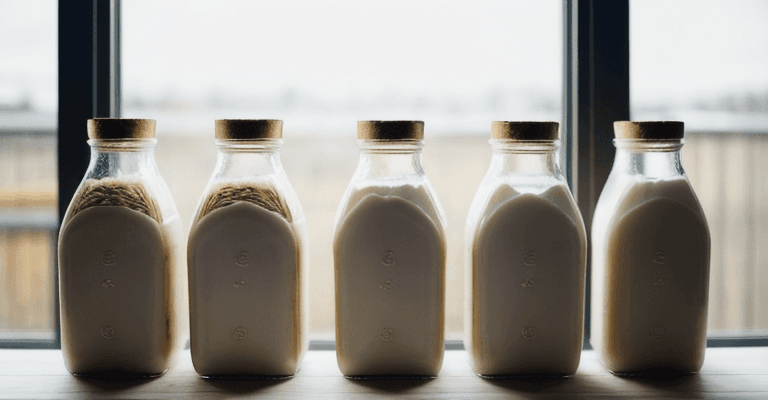
Milk Alternatives in Baking — Complete Comparison Table
Oat, soy, almond, coconut — how each plant milk behaves in baking. Fat and protein content, 1:1 swap rules, and when each one fails.
What Do You Actually Need to Know About Milk Alternatives in Baking?
What are the common mistakes, the precise measurements, and the science-backed techniques that separate reliable results from guesswork? This guide provides the reference tables, ratio calculations, and decision frameworks for milk alternatives in baking — organized for quick lookup and practical application.
Why milk matters in baking
Milk isn’t just liquid in a recipe. It provides:
- Water — hydrates flour, activates gluten, produces steam
- Fat — tenderizes crumb, carries flavor (whole milk = 3.25% fat)
- Protein (casein + whey) — contributes to Maillard browning, structure
- Lactose — feeds yeast, adds sweetness, promotes browning
- Minerals (calcium) — strengthens gluten network slightly
A milk substitute needs to cover these functions. No single plant milk matches all of them perfectly.
Plant milk comparison table
| Milk type | Fat % | Protein % | Sugar | Browning | Flavor impact | Best for |
|---|---|---|---|---|---|---|
| Whole dairy | 3.25 | 3.4 | 5.0 (lactose) | Excellent | Neutral-sweet | Baseline reference |
| Oat milk | 2.5–3.0 | 1.0 | 4.0–7.0 | Good | Slightly sweet, oaty | Cakes, muffins, pancakes — closest 1:1 swap |
| Soy milk | 2.0–3.5 | 3.0–4.0 | 1.0–4.0 | Good | Beany (reduced in barista versions) | Bread, custard, anything needing protein |
| Almond milk | 1.0–2.5 | 0.5–1.0 | 0.5–1.0 | Poor | Nutty, thin | Light cakes, muffins where fat comes from other sources |
| Coconut milk (carton) | 2.0–4.5 | 0.2–0.5 | 1.0–3.0 | Moderate | Coconut flavor | Tropical bakes, anything where coconut flavor works |
| Coconut milk (canned, full-fat) | 17–24 | 2.0 | 2.0 | Good | Strong coconut | Replace cream, not milk (too thick for 1:1) |
| Cashew milk | 1.0–2.0 | 0.5–1.0 | 1.0 | Poor | Very neutral | Where you want no added flavor |
| Rice milk | 1.0 | 0.3 | 10.0+ | Good (high sugar) | Sweet, thin | Where browning matters but fat doesn’t |
The 1:1 swap hierarchy
For most recipes, substitute dairy milk 1:1. But some plant milks need adjustments:
| Swap | Works 1:1? | Adjustment needed |
|---|---|---|
| Oat milk → dairy | Yes | None for most recipes |
| Soy milk → dairy | Yes | None. Best protein match |
| Almond milk → dairy | Mostly | Add 1 tsp oil per cup if recipe depends on milk fat |
| Cashew milk → dairy | Mostly | Add 1 tsp oil per cup |
| Rice milk → dairy | Caution | Very thin — reduce by 2 tbsp per cup in sensitive recipes (custard) |
| Coconut cream → dairy milk | No | Dilute 1:1 with water first |
| Any plant milk → buttermilk | Add acid | 1 cup plant milk + 1 tbsp lemon juice or vinegar, rest 5 min |
Protein matters for structure
Dairy milk’s 3.4% protein contributes to the set of custards, the structure of bread, and the browning of crusts. Low-protein plant milks (almond, rice, coconut) produce:
- Paler crusts — less Maillard reaction (fewer amino acids)
- Weaker custard set — flan and crème brûlée may not firm up
- Slightly denser bread — less protein contribution to gluten network
For protein-dependent recipes, soy milk (3–4% protein) is the only plant milk that truly matches dairy. Oat milk is second-best at 1%.
Fat content and tenderness
| Recipe type | Minimum fat needed from milk | Low-fat plant milks okay? |
|---|---|---|
| Lean bread | Minimal | Yes — any plant milk works |
| Muffins, quick breads | Low — recipe has oil/butter | Yes — almond/rice fine |
| Cakes (butter method) | Low — butter provides fat | Yes — any plant milk works |
| Pancakes, waffles | Moderate | Use oat or add 1 tsp oil per cup of thin plant milk |
| Custard, ice cream base | High | Use canned coconut milk or soy. Not almond/rice |
| Cream sauces | High | Use canned coconut milk or add cashew cream |
Curdling in heat
Soy milk and almond milk can curdle when combined with acid (lemon, vinegar, tomatoes) or at high temperatures. This is protein coagulation — same process that makes tofu.
- Prevent curdling: Temper the plant milk (add hot liquid gradually) instead of dumping cold milk into a hot pot
- Oat milk is the most heat-stable plant milk — its protein (beta-glucan) doesn’t coagulate the same way
- For buttermilk substitutes: curdling is desirable. Soy + acid produces the best buttermilk substitute because it actually thickens
The “barista” versions
Barista-edition plant milks contain added oils (sunflower, canola) and emulsifiers (gellan gum, dipotassium phosphate) that improve:
- Steaming/frothing (not relevant to baking)
- Fat content (closer to dairy)
- Stability under heat
For baking, barista versions are slightly better than regular versions of the same milk — but the difference is marginal. Don’t pay the premium unless you’re also making coffee.
Decision matrix
| What you’re making | Best plant milk | Why |
|---|---|---|
| Bread | Soy | Protein for structure + browning |
| Cake | Oat | Neutral flavor, good moisture |
| Cookies | Any | Milk is a minor ingredient |
| Pancakes | Oat or soy | Need some body for batter texture |
| Custard/flan | Soy or canned coconut | Need protein (soy) or fat (coconut) for set |
| Cream sauce | Canned coconut or cashew cream | Need high fat content |
| Buttermilk sub | Soy + acid | Curdles properly, thickens |
Shelf-stable vs. refrigerated performance
Shelf-stable (aseptic carton) and refrigerated plant milks of the same brand often differ in fat content, stabilizer load, and baking behavior. The ultra-high-temperature processing used for shelf-stable versions can alter protein functionality and emulsion stability.
| Milk type | Shelf-stable fat % | Refrigerated fat % | Baking difference | Recommendation |
|---|---|---|---|---|
| Oat milk | 2.0–2.5 | 2.5–3.5 | Refrigerated has slightly better browning and crumb moisture | Refrigerated preferred for cakes; shelf-stable fine for quick breads |
| Soy milk | 2.0–2.5 | 2.5–3.5 | Minimal difference — protein survives UHT processing well | Either works. Soy is the most heat-stable plant protein |
| Almond milk | 1.0–1.5 | 1.5–2.5 | Refrigerated provides marginally more fat for tenderness | Either works — almond milk is low-impact in most recipes regardless |
| Coconut milk (carton) | 2.0–3.0 | 3.0–4.5 | Refrigerated has noticeably higher fat and better emulsion | Refrigerated for custards and cream sauces; shelf-stable for bread |
For most home baking, the difference is small enough that buying whichever is available is reasonable. The gap matters most in fat-dependent recipes like custards, where a 1–1.5% fat difference changes the set.
Allergen cross-reactivity matrix
Plant milks solve the dairy allergy problem but introduce their own allergen concerns. Tree nut allergies affect approximately 1.2% of the US population, soy allergies about 0.4%, and coconut allergies are rare but exist (coconut is classified as a tree nut by the FDA despite being botanically a fruit).
| Plant milk | Tree nut allergen | Soy allergen | Gluten risk | Coconut allergen | Safe for most allergies? |
|---|---|---|---|---|---|
| Oat milk | No | No | Possible (cross-contamination during processing unless certified GF) | No | Yes, with GF certification |
| Soy milk | No | Yes | No | No | No — excludes soy-allergic individuals |
| Almond milk | Yes (almond) | No | No | No | No — excludes tree nut allergies |
| Coconut milk | Yes (FDA-classified) | No | No | Yes | No — excludes tree nut/coconut allergies |
| Cashew milk | Yes (cashew) | No | No | No | No — excludes tree nut allergies |
| Rice milk | No | No | No | No | Yes — fewest allergen concerns of any plant milk |
Rice milk is the safest option for multi-allergen households, but it is also the weakest performer in baking (very low fat at 1.0%, almost no protein at 0.3%, and an overly sweet flavor from high sugar content of 10%+). There is no perfect option — every plant milk involves a trade-off between allergen safety and baking performance.
What plant milks cannot replicate
Plant milks are useful substitutes, but honesty requires acknowledging what they cannot do:
Casein is irreplaceable in certain applications. Dairy casein is the protein that makes mozzarella stretch, gives custards their specific silky set, and creates the stable foam in a traditional souffle. No plant protein behaves like casein. Vegan cheese exists, but it uses starches and oils to simulate texture — the underlying chemistry is completely different. If a recipe depends on casein behavior (ricotta in lasagna, traditional creme caramel), the plant milk version will be a different dish, not the same dish with a swap.
Foam stability has a hard ceiling. Egg whites, not milk, provide most souffle structure — but dairy milk contributes to the base sauce stability. Plant milk bases for souffles are more fragile. Expect 10–15% less rise and faster deflation. This is manageable but not eliminable.
Ultra-processed concerns cut both ways. Many plant milks contain dipotassium phosphate, gellan gum, sunflower lecithin, and added oils. These are generally recognized as safe, but the argument that plant milk is “cleaner” than dairy milk is not straightforward. Read the ingredient list. Some oat milks contain 8–12 ingredients; whole dairy milk contains one.
“Dairy-free baking” is its own discipline. Treating plant milk as a drop-in replacement works for simple recipes (muffins, pancakes, quick breads). For complex pastry work — laminated doughs, custard-based fillings, enriched breads — dairy-free baking requires its own techniques, ratios, and expectations. The best dairy-free bakers do not try to replicate dairy results; they develop recipes designed around plant-based ingredients from the start.
Cost per liter and practical economics
Plant milks cost significantly more than dairy in most markets. This matters for frequent bakers.
| Milk type | Typical price per liter (US, 2025) | Price relative to dairy | Homemade cost per liter | Worth making at home? |
|---|---|---|---|---|
| Whole dairy milk | $1.10–1.40 | Baseline | N/A | N/A |
| Oat milk (store) | $3.50–5.00 | 2.5–3.6x dairy | $0.40–0.60 (100g oats) | Yes — easiest, cheapest homemade option |
| Soy milk (store) | $3.00–4.50 | 2.2–3.2x dairy | $0.50–0.80 (100g dry soybeans) | Yes if you have a soy milk maker; labor-intensive otherwise |
| Almond milk (store) | $3.50–5.50 | 2.5–3.9x dairy | $1.50–2.50 (100g almonds) | Marginal savings; store-bought is already mostly water |
| Coconut milk (canned) | $2.00–3.50 per 400ml can | 3.3–5.8x dairy per liter equivalent | Not practical | No — canned is already the raw product |
| Cashew milk (store) | $4.00–5.50 | 2.9–3.9x dairy | $2.00–3.50 (100g cashews) | No — cashews are expensive regardless |
For bakers who use milk frequently, homemade oat milk at $0.40–0.60 per liter is the most economical plant milk option. The recipe is simple: blend 100g rolled oats with 1 liter of water for 30 seconds, strain through cheesecloth. Do not over-blend (releases starch, becomes slimy). The result has approximately 2.0% fat and 1.0% protein — adequate for most baking applications.
Storage and shelf life after opening
Opened plant milks spoil faster than dairy milk because they lack the standardized pasteurization and cold chain that dairy infrastructure provides. Spoiled plant milk in batter will not produce food safety issues at baking temperatures (oven kills bacteria), but it will produce off flavors.
| Milk type | Shelf life after opening (refrigerated) | Signs of spoilage | Safe to bake with if slightly off? |
|---|---|---|---|
| Dairy milk | 5–7 days | Sour smell, lumps, off taste | Yes if only mildly sour — essentially buttermilk |
| Oat milk | 5–7 days | Slimy texture, sour smell, separation that won’t re-mix | No — slimy oat starch affects batter texture |
| Soy milk | 5–7 days | Sour smell, chunky texture | Yes if mildly sour — acidified soy works like buttermilk sub |
| Almond milk | 7–10 days | Bitter taste, off smell | No — bitter almond flavor transfers to baked goods |
| Coconut milk (canned, opened) | 3–5 days | Pink or gray discoloration, sour smell | No — rancid coconut fat is distinctly unpleasant |
The practical rule: smell it before adding it to batter. If it smells fine, it’s fine. If you’re unsure, it’s not fine. Plant milks do not have dairy’s predictable souring pattern — they go from fine to unusable with less warning.
Recipe adjustment cheat sheet by category
When switching from dairy to plant milk across different recipe types, the adjustment varies. This table consolidates the key modifications for each baking category so you don’t need to cross-reference multiple sections.
| Recipe category | Plant milk swap | Fat adjustment | Protein adjustment | Browning fix | Other notes |
|---|---|---|---|---|---|
| Lean bread | Any plant milk 1:1 | None needed — bread fat comes from other sources | Add 1 tbsp vital wheat gluten per 500g flour if using low-protein milk | Brush with soy milk before baking for color | Soy milk gives best dough strength |
| Quick breads and muffins | Oat or soy 1:1 | Add 1 tsp neutral oil per cup if using almond or rice milk | Not critical — eggs provide structure | Usually adequate without changes | Oat milk adds slight sweetness — reduce sugar by 1 tsp per cup if sensitive |
| Layer cakes | Oat milk 1:1 | None for butter cakes (butter provides fat) | Not critical — flour and eggs provide structure | Brush exposed surface with soy milk wash | Oat milk’s beta-glucan adds minimal body — closest texture match |
| Pancakes and waffles | Oat or soy 1:1 | Add 1 tsp oil for almond/rice | Not critical — eggs and flour carry structure | N/A — griddle browning comes from butter, not milk | Soy milk produces slightly crispier edges due to protein |
| Custards and puddings | Soy or canned coconut only | Canned coconut for richness, soy for lighter result | Soy is essential if no eggs present. 3–4% protein required for set | No fix needed — custards brown by torch or broiler | Add 1 tsp cornstarch per cup as insurance for set with plant milk |
| Enriched yeast doughs (brioche, challah) | Soy milk | Add 1 tbsp oil per cup if not using soy | Soy essential — enriched dough needs protein for tall rise | Egg wash for browning regardless of milk type | Enriched doughs are the hardest category for dairy-free baking |
This table assumes unsweetened, unflavored plant milk. Vanilla-flavored varieties add 3–8g sugar per cup and a flavor that may or may not suit your recipe. For baking, always buy unsweetened.
Quick Reference Summary
| Alternative | Fat content | Protein | Best substitute for | Avoid in |
|---|---|---|---|---|
| Oat milk | 2-3% | Low | Whole milk in cakes, muffins | High-protein needs (custard) |
| Soy milk | 2-3% | Medium (closest to dairy) | Any milk application | People with soy allergy |
| Coconut milk (full-fat) | 17-24% | Low | Heavy cream, rich batters | Recipes where coconut flavor conflicts |
| Almond milk | 1-2% | Very low | Light applications, washes | Structure-dependent recipes |
| Cashew milk | 1-2% | Low | Cream sauces, frosting base | Nut-free requirements |
Decision rule: Match fat content first (fat affects moisture/richness), then protein content (protein affects browning and structure). Soy milk is the closest all-purpose dairy substitute.
Honest Limitations
Plant milk formulations vary dramatically between brands — stabilizers (gellan gum, carrageenan), added oils, and fortification change baking behavior. “Barista” versions of plant milks have added fats and stabilizers that perform differently than standard versions. Acidification for buttermilk substitutes (plant milk + vinegar) works inconsistently — soy curdles predictably, oat thickens somewhat, almond barely reacts. Coconut milk separates when heated in some applications. This guide covers common Western plant milks; rice milk, hemp milk, and pea milk have different properties. Nutritional profiles (calcium, vitamin D) differ from dairy and between brands.
